When Competitors Go Continuous, the Market Notices First
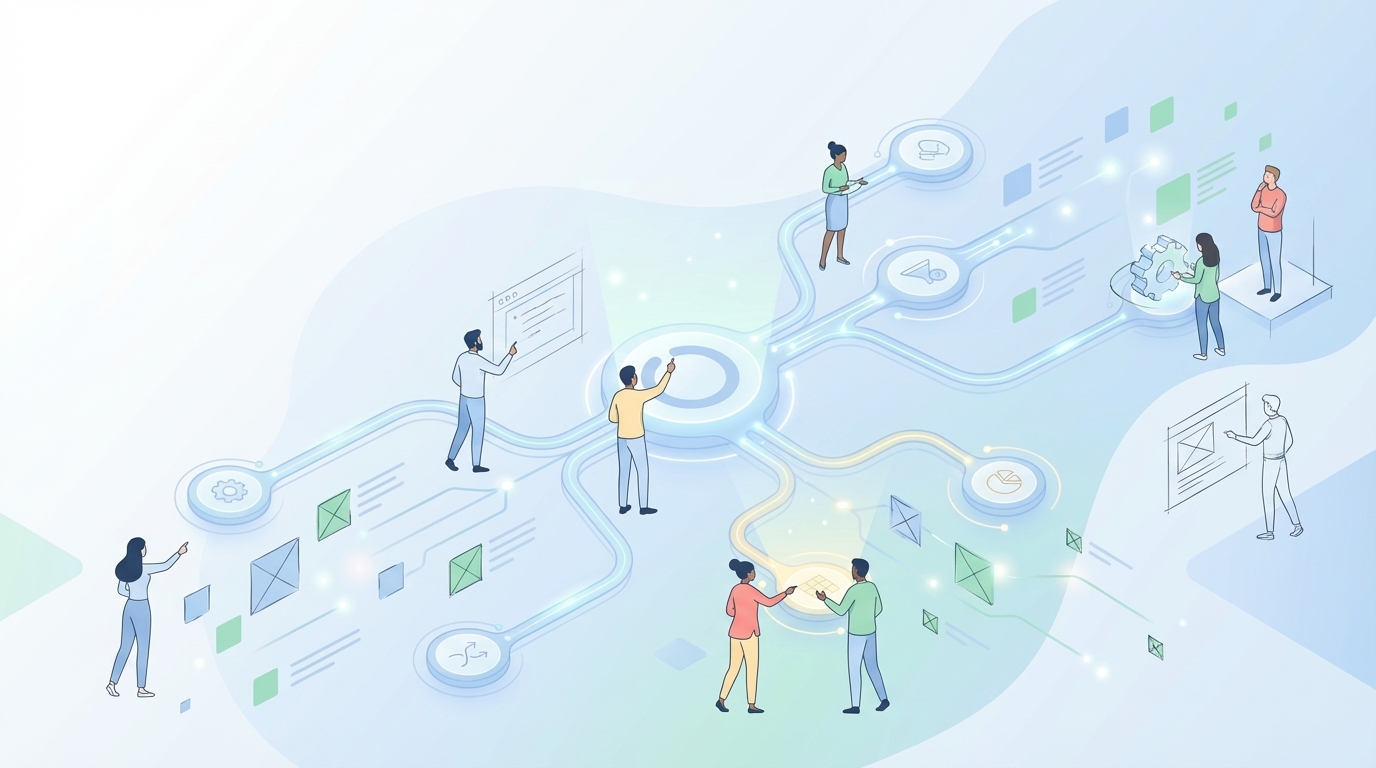
When your competitors go continuous, you’ll feel it before you can explain it. Demand-generation execution software is a governed marketing system that turns strategy, positioning, product truth, and audience context into continuous, consistent execution across content, SEO, distribution, and buyer education. Unlike SEO platforms, AI writers, or agencies, demand-generation execution software is the operating layer that makes your marketing strategy executable over time. It showed up because LLM-driven discovery made fragmented, campaign-by-campaign marketing way harder to sustain.
Most teams don’t have a content problem. They have a Fragmented Demand Generation problem. Content lives in one place. Product truth lives somewhere else. Positioning is in a doc nobody opens. Voice sits in a founder’s head. Then a bunch of smart people try to stitch it all together under deadline pressure. It looks manageable for a while. Then a competitor gets continuous. Then your competitors go continuous. And the market starts hearing one clear story from them while your team is still resetting every quarter.
Key Takeaways:
- Continuous execution is becoming a bigger advantage than occasional bursts of output.
- Fragmented Demand Generation hides inside competent teams and gets worse as more contributors join.
- GEO rewards repeated, clear market signals, not disconnected content wins.
- More writers, more agencies, or more prompts won’t fix a broken execution model on their own.
- The category shift is from campaign production to demand-generation execution software.
Continuous Execution Is Starting To Separate The Market
When your competitors go continuous, the gap doesn’t show up all at once. It shows up in how the market starts to understand them faster than it understands you. That’s the difference. Not just output. Signal. Repetition. Reinforcement. And over time, that compounds in ways a quarterly sprint usually can’t.
Content volume is not the real threat when your competitors go continuous. The real threat is that they stop acting like every article, page, and campaign is a separate project. They build a system that keeps publishing, reinforcing, and teaching the same market point of view over time. That compounds. Your quarterly sprint usually doesn’t.
More Output Is Not The Same Thing As Continuous Execution
AI made it easier to produce drafts. It did not make demand generation hold together. That’s the part a lot of teams miss.
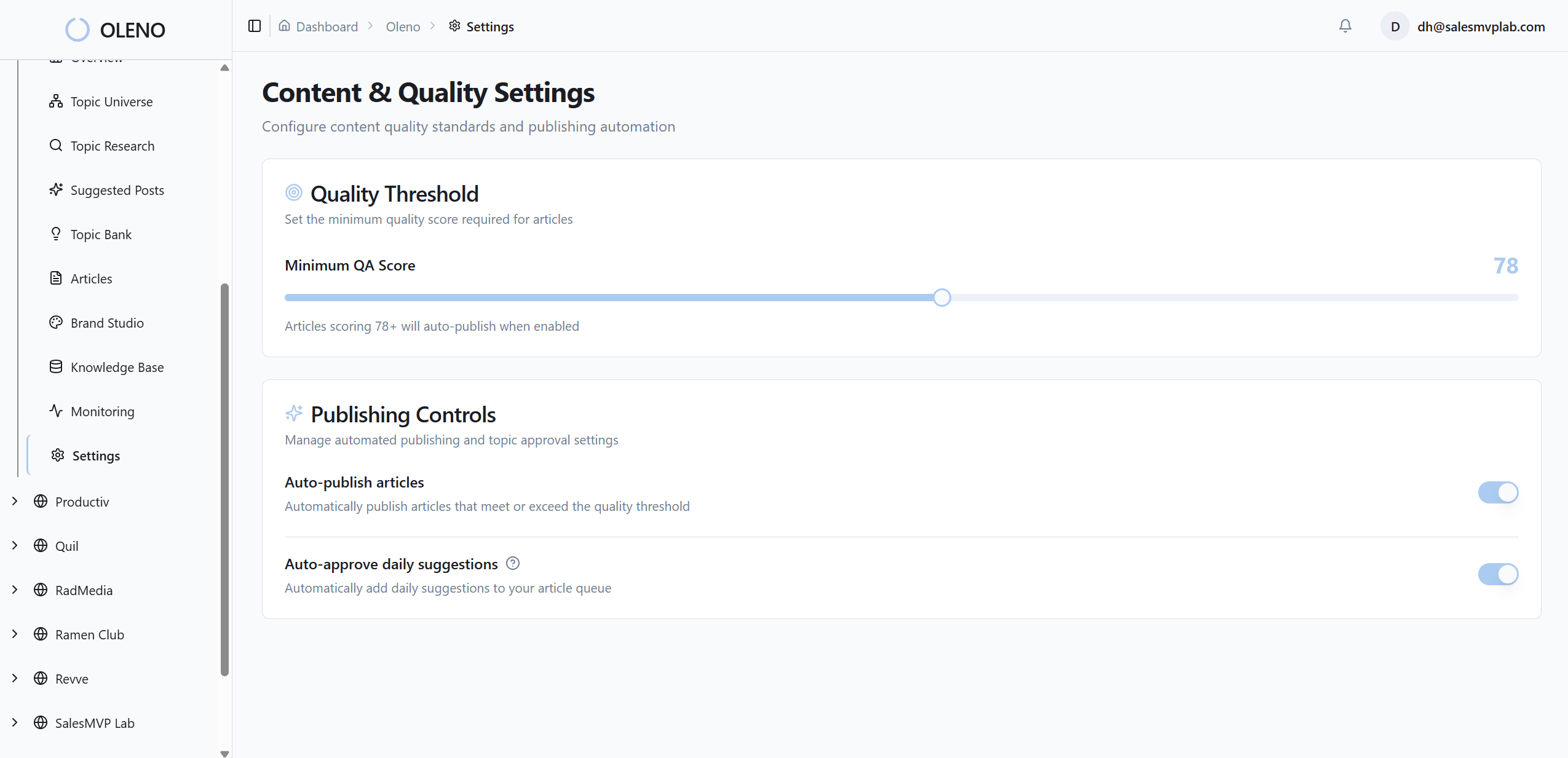
Prompting feels like progress because text shows up fast. We’ve all felt that little hit of relief when a blank page turns into 1,500 words in five minutes. But demand gen is not a draft. It’s the full chain. Topic choice. angle. product truth. audience fit. narrative consistency. review. publishing. distribution. reinforcement. If those pieces live in different places, you’re still doing fragmented work, just faster.
I’ve seen this pattern more than once. Back in 2012-2016 I ran a website called Steamfeed. At our peak, we hit 120k unique visitors a month. We had 80 regular contributors and over 300 guest contributors. What made that work wasn’t random output. It was depth and breadth compounding together. We started seeing SEO spikes at 500 pages, 1000, 2500, 5000, then 10000. Most pages got less than 100 views a month, but the catalog kept reinforcing itself. Volume + quality worked because it was cumulative.
That same logic is getting stronger again. Only now LLMs are in the loop too.
Fragmented Demand Generation Usually Hides Inside Good Teams
This is why when your competitors go continuous, good teams feel blindsided. The market has a Fragmented Demand Generation problem. And most teams don’t notice it right away because the pieces all look reasonable on their own.
You’ve got a solid PMM team. Good writers. Maybe an SEO lead. Maybe an agency. Maybe a founder who jumps in with spicy ideas now and then. None of that is bad. The problem is that narrative, voice, product context, and execution are split across tools, prompts, docs, vendors, and people. So each asset gets rebuilt from scratch, a little differently, every time. Not wildly wrong. Just different enough to weaken the signal.
That’s why the danger feels sneaky. You don’t wake up one day and say, “our system is broken.” You say things like:
- “Why are we rewriting this again?”
- “Why does this sound generic?”
- “Why are we ranking for things that don’t convert?”
- “Why does every new campaign feel like a fresh start?”
That pattern is the problem.
GEO Rewards Repetition With Clarity
When your competitors go continuous, GEO tends to reward the team that teaches the same truth clearly, over and over, from different angles. That’s the shift. Search used to reward pages. LLMs are more likely to reward clarity across many pages, many mentions, many patterns, many repeated truths. Different game.
A brand that publishes in bursts can still have a few wins. A brand that repeats a clear market position across acquisition content, buyer education, comparison pages, category content, and product-led pages has a better shot at being understood. And if you’re understood, you’re more likely to get surfaced.
That’s why when your competitors go continuous, the market notices first. Buyers notice. Search notices. LLMs notice. Pipeline tends to notice later.
The Market Keeps Misdiagnosing The Problem
Most teams are still treating this like a staffing issue or a tooling issue. I don’t think that’s the real problem. When your competitors go continuous, what usually breaks first is the execution model underneath your marketing. And if you misdiagnose that, you spend money in all the wrong places.
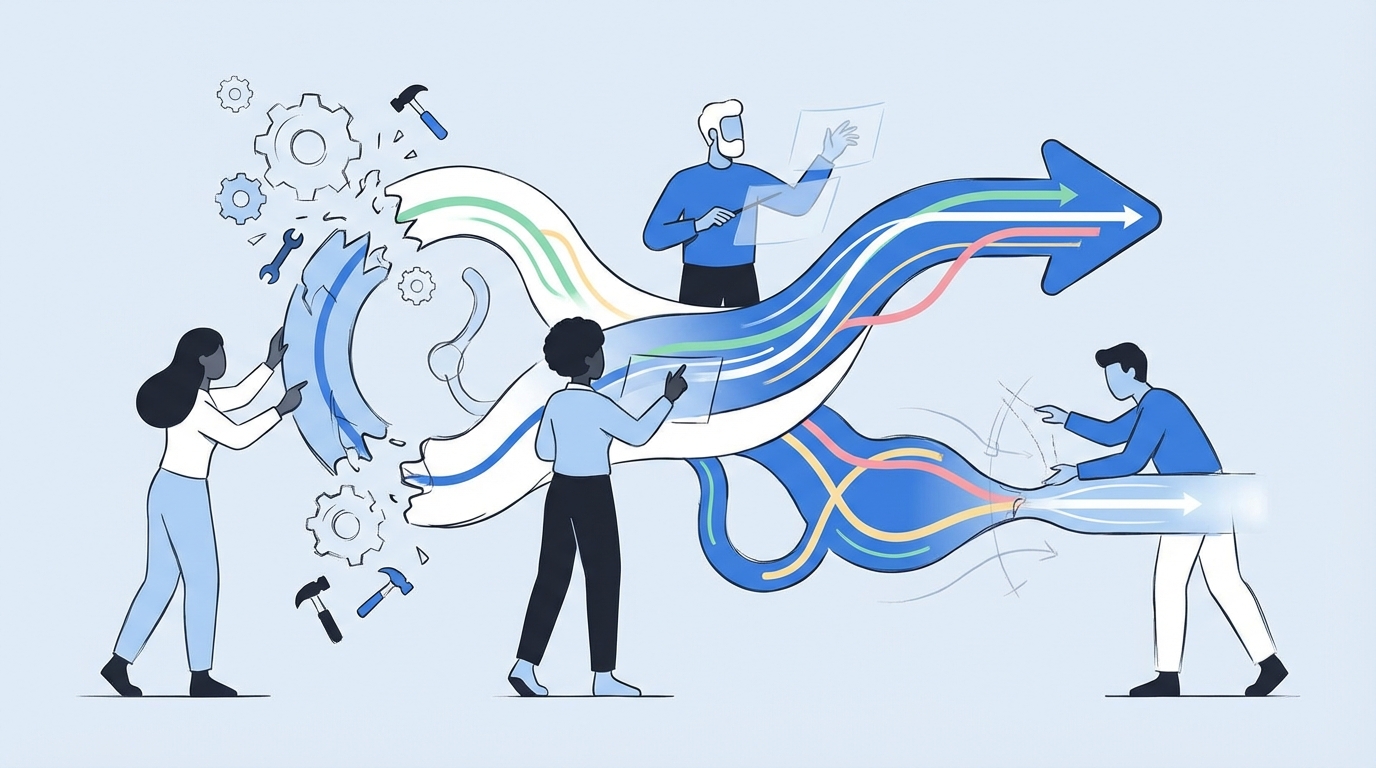
Most teams still think scale is a staffing problem, an agency problem, or a prompting problem. I get why. Those are visible problems. They’re easy to point at. But they’re often downstream of a deeper issue: the execution model is broken.
More Headcount Often Adds More Drift
When I started at PostBeyond, I was the sole marketer on the team. I could crank out 3-4 high quality blog posts per week because I had the full context in my head and I was using a structured writing framework. As the team grew, output didn’t really get easier. It got harder. The writer didn’t have all the context I had. I had less time to write because I was in meetings and managing the team. So quality dropped, speed slowed, and the workload felt heavier even with more people involved.
That story sticks with me because it’s not really about writing. It’s about context transfer. If your system can’t transfer context cleanly, every new contributor increases the chance of drift. More hands. More rework. More reviews. More coordination cost.
So no, more headcount doesn’t automatically fix it. Sometimes it exposes the issue faster.
Point Tools Fix Tasks While The Whole System Slips
This is another reason when your competitors go continuous, it can feel confusing at first. You may already own good tools. You may already have smart people. You may already have agency support. And still, the whole machine feels weirdly loose.
SEO platforms are useful for search data. AI writers are useful for drafts. Agencies are useful for capacity. Content tools are useful for editing and workflow. Fair point, all of those can add value in the right setup.
But they mostly optimize pieces. They don’t necessarily keep the whole demand gen motion aligned. They don’t decide what should exist across the funnel. They don’t hold your market point of view steady across dozens or hundreds of assets. They don’t always keep product truth, audience nuance, and brand voice connected to execution every single time.
That’s why teams keep buying another thing and still feel behind. Each tool improves a local problem. The global problem stays put.
| Dimension | Old Way | Category Way |
|---|---|---|
| Strategic Context | Lives across people, prompts, docs, and tools | Centralized and enforced through shared rules |
| Content Production | Batch-based and reactive | Continuous and system-driven |
| Narrative Consistency | Drifts across contributors and channels | Repeats a clear market signal across assets |
| Coordination Model | Heavy reviews, handoffs, and resets | Execution stays inside defined boundaries |
| GEO Readiness | Weak, uneven LLM signal | Strong repeated signal built for recall and citation |
This Category Is Not “AI Writing, But More”
This is the reframe a lot of people miss when your competitors go continuous. They assume the answer is just better content generation. It’s not.
Demand-generation execution software is not an AI writer with extra tabs. It’s for marketing teams that already know what scattered execution feels like and are tired of paying the tax on it.
That distinction matters. An AI writer gives you output. An SEO platform gives you search data. An agency gives you labor. Demand-generation execution software gives you a way to turn positioning, product truth, audience context, and content priorities into repeatable execution. That’s a different job.
I’d argue this is the category buyers are actually looking for, even if they’re still searching with older words, especially when evaluating when your competitors go.
Discover how leading teams turn fragmented demand gen into repeatable execution: explore the approach
The Cost Of Staying Fragmented Adds Up Faster Than You Think
When your competitors go continuous, your costs don’t rise in one clean line item. They leak out everywhere. In rework. In drift. In weak conversion from decent traffic. In content that keeps moving but doesn’t really compound. That’s what makes Fragmented Demand Generation so expensive.
Fragmentation is expensive long before it shows up in a board deck. The painful part is that the costs hide in different lines. Some show up in traffic. Some in conversion. Some in team time. Some in the weird feeling that your marketing should be working better than it is.
LLM Invisibility Starts Before Organic Traffic Falls
You can still be publishing and still become less visible. That’s the trap.
If your message shifts from page to page, if your product gets described three different ways, if your category point of view only shows up once every few months, then you’re sending a muddy signal. LLMs have less reason to trust your framing. You become harder to cite. Harder to summarize. Harder to remember.
At Proposify, we had a strong content team and ranked really well for a lot of topics. But a lot of that content sat too far from the product and too far from the demand-gen story. So even when the traffic was real, the business impact was weaker than it should’ve been. We had rankings. We didn’t always have narrative pull. Big difference.
Rework Tax Usually Becomes The Biggest Hidden Cost
Let’s pretend you’ve got four contributors touching a single article: demand gen, PMM, content, and an executive reviewer. If each person spends just 45 extra minutes correcting missing context, weak positioning, generic language, or product inaccuracies, that’s three hours of overhead on one asset. Run that across 20 assets in a month and you’re looking at 60 hours. That’s a week and a half of senior marketing time gone to cleanup.
And that’s the conservative version.
What I’ve seen in real teams is that coordination cost starts exceeding creation cost. People think the expensive part is writing. Often it isn’t. The expensive part is all the stitching around the writing. The back-and-forth. The resets. The “this isn’t quite us” feedback. The product correction pass. The strategy correction pass. The SEO correction pass.
That’s not a content issue. That’s a system issue.
Positioning Drift Hurts Pipeline Even When Activity Looks Fine
This is the brutal part when your competitors go continuous. Your dashboard can still look okay while your market signal gets weaker. Activity stays high. Compounding stays low.
I learned this the hard way at LevelJump. We were stuck because we were trying to be too many things to too many people. Messaging got generic. Outreach got generic. The sales story got generic. Then we got clear on the actual entry point buyers cared about. Onboarding sales reps. That focus changed everything. In 90 days, we moved from $20k MRR to $35k MRR.
When you’re everything, you’re nothing. Buyers need a frame. Without it, they get confused. And confused buyers don’t move.
Good Teams Feel This Pain The Most for When your competitors go
This is the part I think people underestimate. When your competitors go continuous, the teams that feel the pain most are often the competent ones. Not the sloppy ones. The ones doing a lot. The ones trying hard. The ones carrying too much context in too many places.
The frustrating part is that this problem usually hits capable teams, not sloppy ones. You can have budget. Talent. vendors. a decent process. And still feel like every quarter starts from zero.
You Can Have Resources And Still Feel Stuck
This is common in scaling SaaS. You’ve got more people than the scrappy early days, but not enough system for all that complexity. So work keeps moving, but it doesn’t really compound.
One person owns SEO. One owns PMM. One owns content. Someone else owns lifecycle. Leadership has a point of view, but it doesn’t always make it into the brief. The product changes, but not everyone updates their language at the same pace. You’re busy all the time. Still, something feels off.
Sound familiar?
The Team Is Not Failing, The Context Is
I think this matters because leaders often blame the wrong thing. They think the writer isn’t strong enough. Or the PMM is too slow. Or the agency doesn’t get it. Sometimes that’s true. Often it’s not.
Often the system keeps dropping context. That’s why the same mistakes keep showing up in different places. Not because people are careless. Because the operating model makes it hard to stay aligned over time.
We recorded videos with the CEO at LevelJump and transcribed them into content because it was faster. Smart move, on paper. But we still missed SEO structure and topic discovery, so the output didn’t compound the way we hoped. Good intent. Incomplete system.
Busy Teams Can Still Lose To Better Execution
When your competitors go continuous, this is where the threat gets real. You don’t lose only to companies with bigger budgets. You can lose to teams with better continuity. Better reinforcement. Better alignment.
A smaller team that reinforces one clear story every week can beat a larger team that keeps changing angles, resetting plans, and fixing drift after the fact. Not always. But often enough that it should worry you.
Category Leaders Build Continuity Before They Chase More Volume
The best teams don’t start with volume. They start with continuity. They decide what has to remain true every time they publish, then they build around that. That’s how you respond when your competitors go continuous without turning your own team into a content factory with no center of gravity.
Demand-generation execution software is designed for B2B marketing teams that need content, SEO, narrative, and buyer education to reinforce the same market signal over time, especially when multiple contributors and channels are involved.
1. Governed Strategy: The system operationalizes positioning, audience context, product truth, and messaging rules before it generates output.
2. Continuous Execution: Demand generation runs as an always-on system that reinforces signal across the funnel instead of resetting each quarter.
3. Compounding Signal: Every asset strengthens market understanding, LLM visibility, and pipeline efficiency by repeating a coherent narrative over time, especially when evaluating when your competitors go.**
Strong Teams Lock The Truth First
Category leaders centralize what matters before they accelerate. Market point of view. audience definitions. persona nuance. use cases. product boundaries. brand voice. They don’t leave that stuff scattered across Slack threads, old decks, random prompts, and someone’s memory.
That sounds obvious. It rarely happens cleanly.
April Dunford said something years ago on a panel that stuck with me: tactics without strategy are shit. Crude phrasing. True point. A lot of AI content and SEO tools are still anchored in tactics. They optimize the channel but ignore the marketing plan underneath it. So the human has to do the real marketing work after the machine spits something out. Review it. argue with it. fix it. rewrite it. At that point, you start wondering why you didn’t just write it yourself.
See how strong teams operationalize strategy before they scale content: learn how Oleno works
Continuity Comes From Shared Context
The best teams keep strategy, audience, and product truth connected all the way through execution. That’s why the same topic can be framed differently for a CMO versus a content lead without losing the core message. That’s why content across the funnel still sounds like the same company. That’s why product-led content doesn’t drift into invented claims or fuzzy definitions.
You don’t need software to start thinking this way. You can begin with operating rules. One market POV. Clear enemy framing. Defined audiences. Strong use cases. Product definitions with boundaries. A small set of repeatable content motions that map to the funnel.
That’s the behavior change. Not “publish more.” Publish from a shared source of truth.
The Best Systems Reinforce Instead Of Reset
Most teams reset far too often. New quarter. New campaign. New theme. New prompts. New docs. New agency kickoff. New messaging deck. Then they wonder why nothing compounds.
Category leaders reinforce. They teach the same core idea from different angles. They build acquisition content, category content, product marketing content, and buyer education that all point back to the same truth. They reuse insights. Refresh old assets. Extend what’s already working. Add depth instead of starting over.
Back when I built content at scale, the gains came from coverage that kept building on itself. Same thing here. Compounding doesn’t come from novelty. It comes from reinforcement with clarity.
What This Looks Like When A Team Actually Implements It
This is where it gets practical. When your competitors go continuous, the answer is not more random activity. It’s a system that stores context, enforces standards, and keeps execution moving without making your team rebuild the same logic every week.
This is where the category gets practical. Oleno is one example of demand-generation execution software. The point isn’t that a tool replaces marketing judgment. It doesn’t. The point is that the right system can hold the context, rules, and rhythm together so your team stops rebuilding execution from scratch.
Oleno Turns Stored Context Into Ongoing Execution
Oleno starts by capturing the stuff most teams leave loose. marketing studio holds category framing and narrative rules. product studio keeps product descriptions, boundaries, and approved claims accurate. audience & persona targeting and use case studio keep the content tied to who you sell to and what they’re trying to get done.
Then that context gets used repeatedly instead of getting re-explained in every brief.
That matters a lot. Because when product truth, audience nuance, and positioning are loaded once and reused across jobs, the rework tax can drop. Not disappear completely. But drop enough that your team gets time back.
One System Changes The Coordination Math
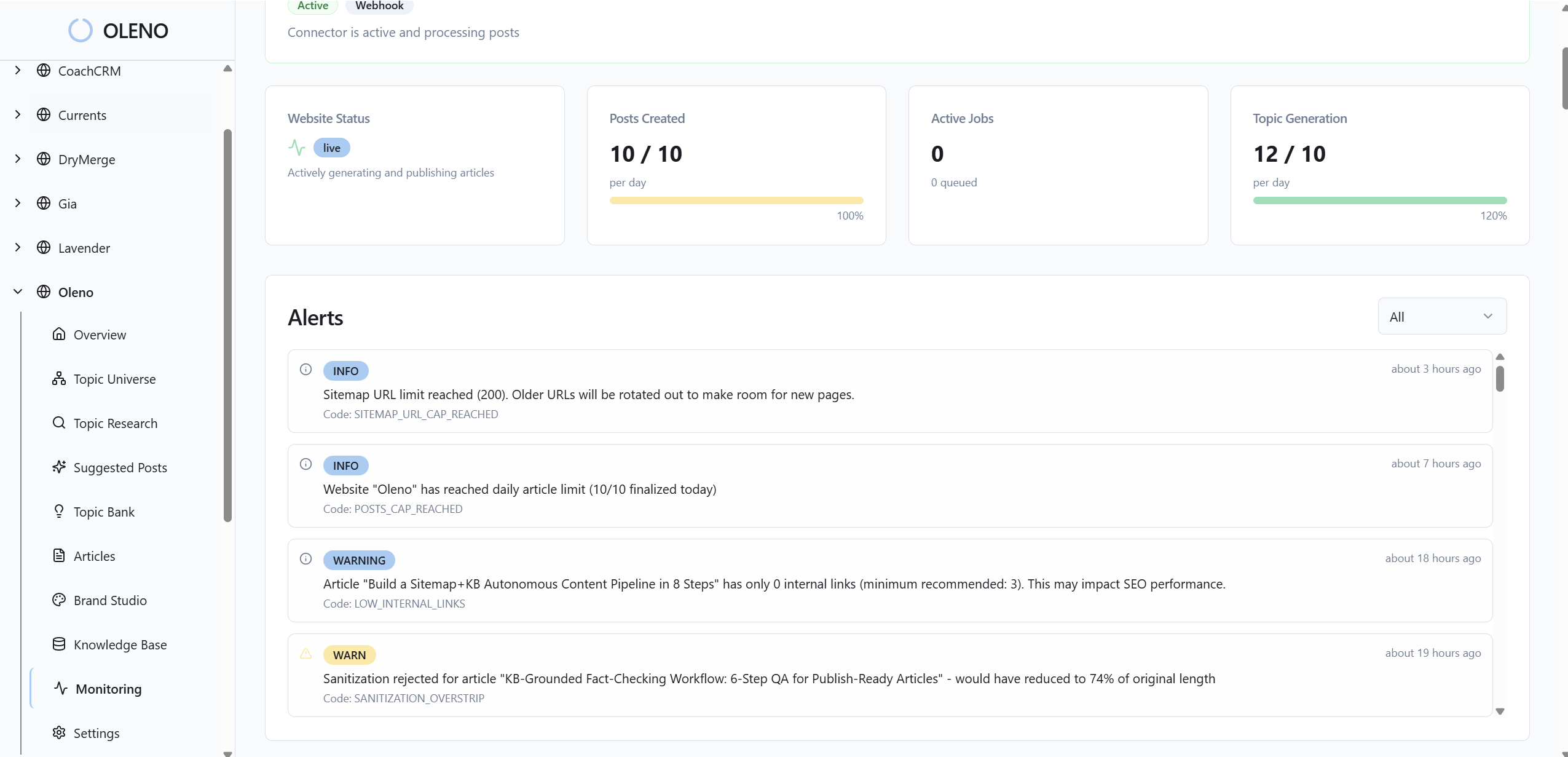
Programmatic seo studio, category studio, competitive studio, product marketing studio, and buyer enablement studio give teams defined content motions instead of one giant generic writing workflow. storyboard and orchestrator give the work pacing and priorities. quality gate blocks weak or inaccurate output before it creates more review headaches. cms publishing closes the loop so publishing isn’t another manual bottleneck.
That’s what continuous demand generation looks like in practice. Fewer disconnected handoffs. Fewer resets. More governed repetition.
Start turning strategy into governed execution with Oleno: try a live demo
Leaders Need Visibility Into Whether The Signal Is Compounding
Execs don’t just need more assets. They need to know whether the machine is producing coverage, staying aligned, and actually maintaining quality as volume rises.
That’s where executive dashboard matters. So does storyboard. So does having one place to see what’s being produced, where the gaps are, and whether output is reinforcing the strategy you said you wanted in the first place.
A lot of teams have activity. Fewer teams have visibility. That difference gets expensive fast.
Ready to stop resetting every quarter and build continuous demand gen? get started with a demo
When Your Competitors Go Continuous, Waiting Gets Riskier
When your competitors go continuous, waiting is its own decision. The market keeps moving. Buyer expectations keep shifting. LLM-driven discovery keeps rewarding clearer, more repeated signals. And if you stay fragmented, you don’t just stand still. You fall further behind.
The shift is already underway. Some teams are still treating demand gen like a set of separate campaigns. Others are turning it into an always-on system. That gap won’t stay hidden for long.
If your competitors go continuous first, you’ll feel it in the market narrative before you feel it neatly in a spreadsheet. Their story will sound tighter. Their content will connect better. Their presence in AI-generated results may strengthen. Their buyer education will feel more complete. And your team will start spending even more time explaining, rewriting, and resetting.
That’s the real issue. Not that they published more. That they built a system and you’re still relying on activity.
About Daniel Hebert
I'm the founder of Oleno, SalesMVP Lab, and yourLumira. Been working in B2B SaaS in both sales and marketing leadership for 13+ years. I specialize in building revenue engines from the ground up. Over the years, I've codified writing frameworks, which are now powering Oleno.
Frequently Asked Questions