Why AI Writing Assistants Aren't Execution Systems

AI writing assistants arent the real problem. The real problem is Fragmented Demand Generation, where your prompts, writers, product context, SEO work, reviews, and publishing flow all live in different places. Demand-generation execution software is a governed marketing system that turns strategy into consistent, multi-channel execution by unifying narrative, product truth, audience targeting, and publishing workflows inside one operational layer. Unlike an AI writing tool, demand-generation execution software keeps the whole system aligned over time, not just the draft in front of you.
Most teams don’t notice this right away. They see faster output and assume the machine is working. I get why. Faster drafts feel like progress. But GEO changed the standard. You’re not just trying to get words on a page anymore. You’re trying to show humans, search engines, and LLMs the same clear signal over and over again. That’s where the old setup starts to crack.
Key Takeaways:
- AI writing assistants can speed up drafting, but drafting is only one small part of demand generation.
- Fragmented Demand Generation is a systems problem, not a talent problem.
- GEO rewards repeated, coherent signals across many assets, not isolated content wins.
- The missing category is demand-generation execution software, which connects planning, creation, review, and publishing.
- Teams compound when judgment is defined once and reused, not manually rebuilt in every cycle.
Why AI Writing Assistants Aren't Enough for Demand Generation
AI writing assistants are useful. They can generate text fast, rewrite, summarize, and give you a running start. But they do not run demand generation. That gap matters more now because most teams are trying to win in a market where visibility depends on consistency, not just output.

Back in the summer when the founder was marketing a B2C app, he built a bunch of GPTs and kept prompting and copy-pasting the same patterns over and over, then manually loading the output into the CMS. It was taking 3-4 hours a day. That story matters because it gets to the truth fast. The draft was not the problem. The system around the draft was the problem.
Faster Writing Created a Visibility Illusion
Faster writing gave a lot of teams a false sense of progress. A page appears faster. A first draft shows up in minutes. Review starts sooner. On paper, that looks like a win.
But demand generation isn't a drafting contest. You still need to decide what should exist, what angle fits your positioning, which audience you're speaking to, what claims are safe, how it connects to pipeline, and where it gets published and reused. If all of that still depends on scattered judgment, you didn't remove the problem. You moved it around.
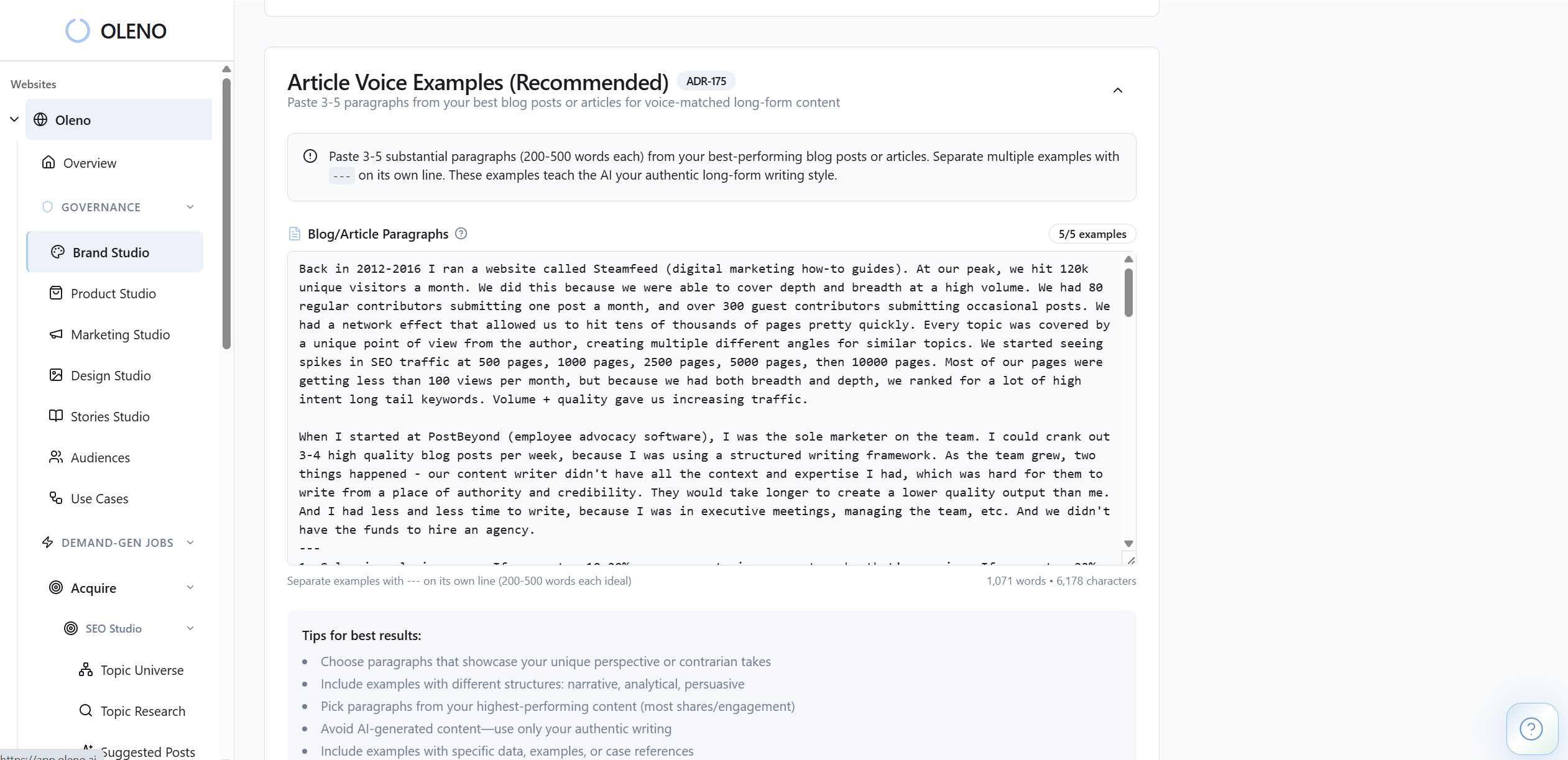
I've seen this movie before. At PostBeyond, I could write 3-4 good blog posts a week because I had the context in my head and I was using a structured writing framework. As the team grew, output didn't get easier. It got messier. Our writer didn't have the same product context and authority I had, so drafts took longer and came out weaker. And I had less time to write myself. More people did not automatically mean more leverage.
Fragmented Demand Generation Is the Real Bottleneck
Fragmented Demand Generation is what happens when content, SEO, narrative, product truth, and publishing all get treated like separate jobs with separate tools and separate owners. That setup looks normal because most SaaS teams grew into it slowly. One tool for SEO. Another for writing. A PMM doc somewhere. A founder POV buried in Slack. A CMS waiting at the end. Then a review queue glued together with meetings.
That’s the bottleneck. Not the writer. Not the prompt.
The real issue isn’t that teams can’t produce text. It’s that text gets produced inside a broken operating model. Every asset becomes a fresh coordination event. Every draft needs someone to remember the angle, re-explain the product, fix the voice, catch the risky claim, and push it live. Humans still carry the system. As output goes up, the cost goes up too.
GEO Rewards Consistency That Prompts Cannot Guarantee
GEO raised the bar. It used to be enough to write for readers. Then search engines mattered too. Now LLMs are part of the equation, and they’re not just indexing pages. They’re trying to synthesize who actually has a clear point of view, a defined category stance, and a repeated signal across many assets.
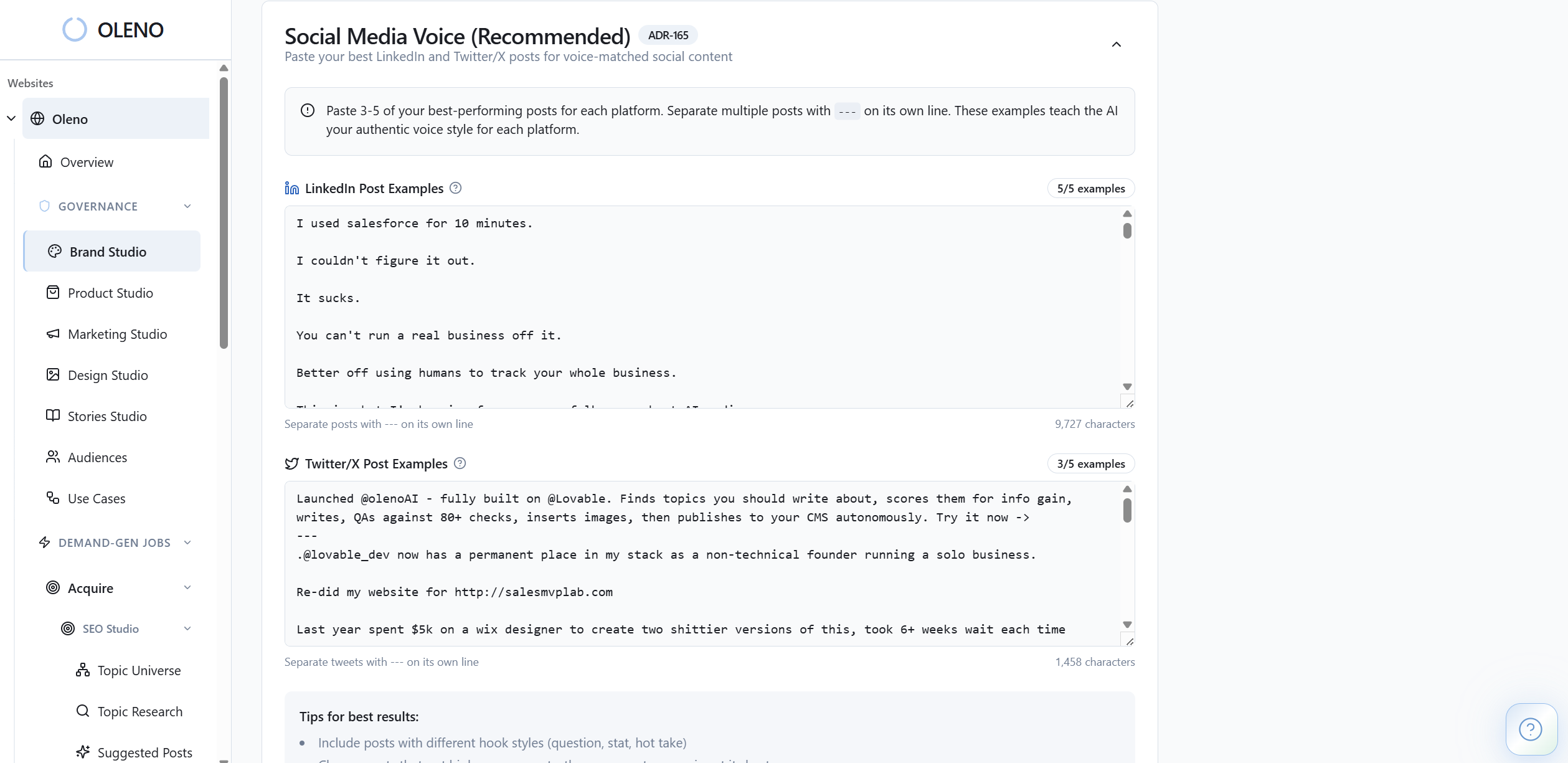
Prompt-first work doesn't naturally produce that. It produces episodes. One draft here. One rewrite there. A decent article on Tuesday that doesn't sound like the article from Thursday. A comparison page that uses different terms than the product page. A thought leadership post that sounds founder-led, then a product-led page that sounds like a freelancer wrote it. Sound familiar?
That inconsistency is expensive because LLM visibility depends on repeated signal. If your market point of view shifts article to article, the machine has less reason to trust your version of the category.
Why the Missing Category Isn't Another Writing Tool
Demand-generation execution software is a different category because it solves a different problem. It doesn't just generate content. It carries the rules that shape content operations over time, your market narrative, product truth, brand standards, planning logic, QA, publishing, and distribution. That's a very different job.
Most teams buy point solutions because each one makes sense on its own. Better drafts. Better keyword research. Better project tracking. Better editing. Fair enough. Each tool can be useful. But if the full system still depends on people stitching all of it together manually, the biggest problem remains untouched.
A Writing Tool Cannot Hold a Market Narrative Together
A market narrative has to survive repetition. It has to show up in your SEO pages, your thought leadership, your buyer education, your product content, and your competitive pages without drifting all over the place. A writing tool doesn't own that job. It waits for the prompt.
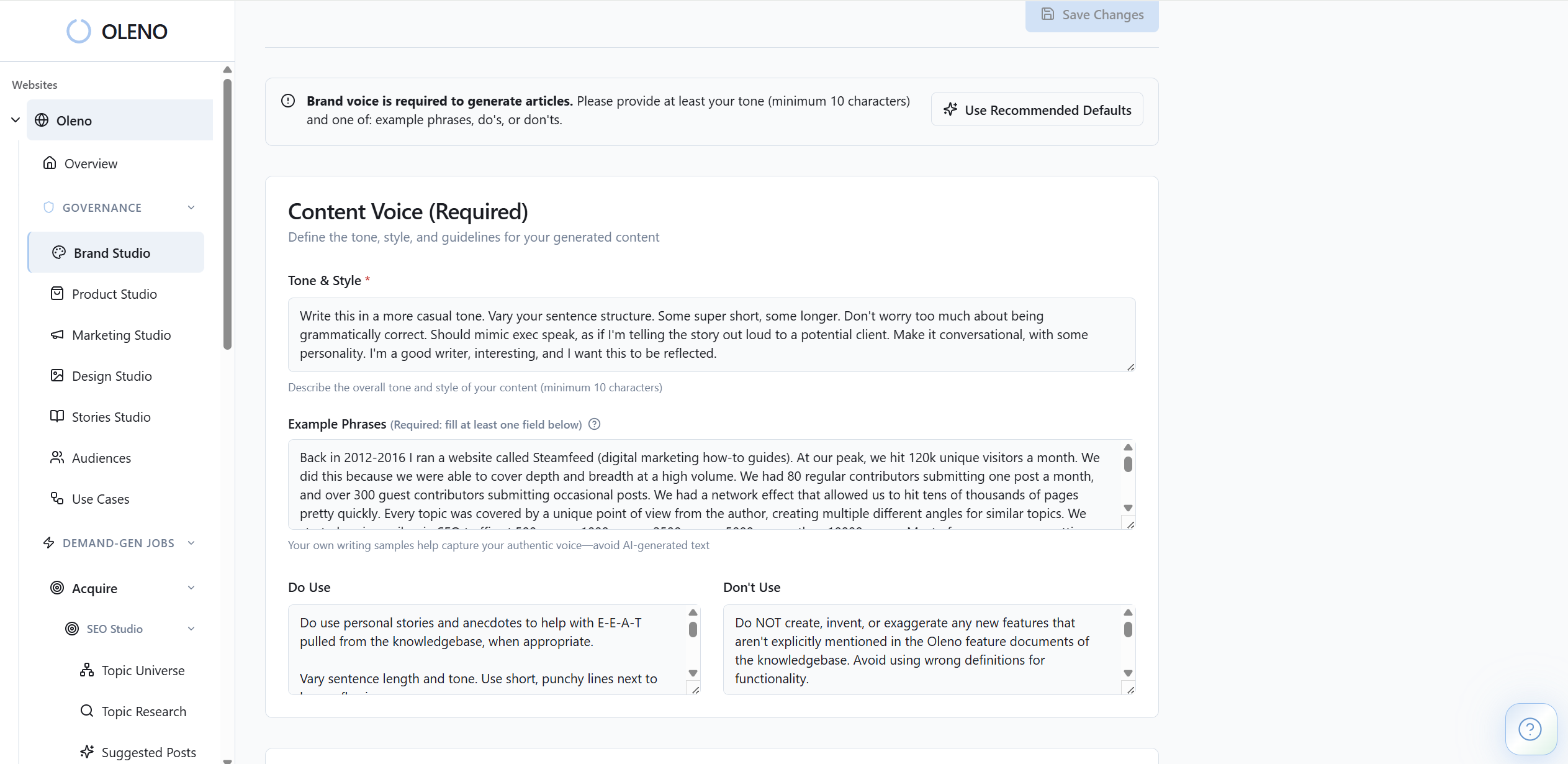
That creates a hidden problem. The person writing the prompt becomes the carrier of strategy. If that person is sharp, the output can be good. If they're rushed, new, or missing context, the output slips. You rarely notice after one article. You definitely notice after fifty.
Back in the Steamfeed days, we hit 120k unique visitors a month because we had both depth and breadth at volume. We had 80 regular contributors and 300+ guest contributors. But there was still a logic to the system. We saw traffic spikes at 500 pages, 1000, 2500, 5000, then 10000. Most pages got under 100 views a month. Still, the catalog compounded because the content base was broad, useful, and persistent. Volume plus quality created the lift. Random output wouldn't have done that.
Point Solutions Optimize Pieces While the System Breaks
This is where a lot of teams get stuck. The writing tool is fine. The SEO platform is fine. The freelancer is fine. The agency may even be fine. Each piece works well enough on its own. But the system between them is broken.
You see it when PMM says the article is off-message. You see it when sales says the pain point is wrong. You see it when SEO asks for a rewrite because the structure drifted. You see it when legal or product reviews catch claims late. And then everyone quietly accepts the rework as normal.
It isn't normal. It's just common.
| Dimension | Old Way | Category Way |
|---|---|---|
| Operating Model | Separate tools, prompts, people, and reviews | Governed content execution across planning, drafting, QA, publishing, and distribution |
| Narrative Consistency | Drifts across contributors and channels | Stays aligned to one defined market POV |
| Product Accuracy | Re-explained and rechecked every cycle | Anchored in shared product truth and rules |
| Output Scaling | More volume creates more coordination cost | More volume runs through repeatable workflows |
The Missing Layer Is Governed Execution Across the Funnel
The missing layer is the one that defines the rules once, then carries them through planning, writing, review, publishing, and reuse. Not as a style doc someone forgets to open. As the actual system of execution.
Oleno is designed for teams that already have people, ideas, channels, and pressure to perform, but don't have a reliable way to keep content aligned. It gives them governed planning with Storyboard, narrative control through Marketing Studio and Brand Studio, product accuracy through Product Studio, quality enforcement through Quality Gate, and direct publishing and social distribution once content is approved.
If you're a CMO or VP Marketing on a scaling SaaS team, this is usually the point where the pain becomes obvious. You don't lack effort. You lack consistency at scale.
Why Fragmentation Gets More Expensive as You Scale
Fragmentation always has a cost. The tricky part is that the cost looks manageable at first. One rewrite here. One Slack thread there. One extra review because the claim felt off. No single moment feels like failure. But stack enough of those moments together and the economics get ugly fast.
More Contributors Often Create More Rework, Not More Leverage
At PostBeyond, adding a writer didn't create the lift you might expect. It created context gaps. And context gaps create rework. That’s not a knock on the writer. It’s just what happens when the expertise, positioning, and product truth live in someone’s head instead of a system.
Scaling SaaS teams know this feeling. You add content people, PMMs, demand gen managers, maybe an SEO lead. You’d think output should climb in a straight line. Often it doesn’t. Reviews multiply. Opinions collide. Handovers get slower. Drafts become safer. Messaging gets blurry. So you add process. Then the process needs managing too.
Let’s pretend you publish 20 articles a month and each one triggers two extra review cycles because positioning drifted or product context was incomplete. If each cycle burns 45 minutes across PMM, content, and leadership, you’re losing 30 hours a month on preventable resets. And that’s a polite version.
LLM Visibility Depends on Repeated Signals, Not Isolated Wins
One good article won't carry your category. One clever prompt won't either. LLMs tend to trust patterns. Same language. Same distinctions. Same product framing. Same audience logic. Repeated over time.
That’s why teams can rank decently and still miss demand-gen impact. I saw a version of this at Proposify. The content team was strong. We had personality. We ranked for a lot of topics. But the content drifted too far from the product and the actual demand-gen narrative, so pipeline connection got weak. Traffic looked good. The system under it wasn’t tight enough.
That’s a costly mistake because visibility without narrative alignment doesn't compound the way people assume it will. You get attention without enough pull toward the product or category you want to own.
Coordination Cost Quietly Becomes the Biggest Tax in Content
Most teams think content cost is writer cost. It isn't. The hidden cost is coordination.
The cost lives in the rebriefing. The cross-functional edits. The stakeholder cleanup. The Slack messages asking whether a claim is still true. The last-mile CMS work. The social post that needs to be rewritten because it doesn't match the article. The founder quote that should have been in the draft from the start but wasn't.
Honestly, this surprised a lot of people when prompt tools took off. Everyone focused on speed. Very few looked closely at reliability. But reliability is what determines whether a team compounds or just stays busy.
Why Smart Teams End Up Stuck in Reset Mode for Ai writing assistants arent
When every asset needs a reset, the team never really gets ahead. You feel it on the fifth review of the week, when the draft is decent but still not quite right, and someone has to explain the same positioning again, fix the same voice issue again, and check the same product facts again before manually pushing the piece through. Nothing looks broken in isolation. You’re just tired. And the tired part is the signal. It means smart people are carrying too much judgment by hand.
What Replaces Prompt-First Content Operations
Category leaders don't start from prompts. They start from rules, structure, and repetition. They decide what they want the market to understand, what is true about the product, who they are speaking to, and how execution should run before volume starts climbing.
That shift matters because prompt-first workflows are reactive. Systems-first workflows are designed to repeat without drift.
Category Leaders Encode Judgment Before They Scale Output
The first move is simple, though not easy. Put judgment into the system before you chase volume.
That means defining your market point of view, your enemy framing, your product boundaries, your audience language, and your use-case logic upfront. It also means being honest about what you want repeated. Not just what sounds smart in one article. What should show up across dozens of assets.
- Governed Strategy: The system starts with explicit narrative, product truth, voice, and audience rules so execution stays aligned without constant human correction.
- Orchestrated Execution: Planning, drafting, review, publishing, and distribution run as one coordinated workflow instead of disconnected tasks across tools and people, especially when evaluating ai writing assistants arent.
- Compounding Reinforcement: Every asset strengthens the same market signals over time, improving consistency, discoverability, and demand-generation efficiency.
Most teams skip this and go straight to output. I understand why. Output feels measurable. Strategy setup feels slower. But if the setup is weak, scale just magnifies the weakness.
A lot of founders learn this the hard way with positioning. We did at LevelJump. We were an everything software. Which made our messaging generic. Once we narrowed the entry point and leaned into the use case that actually got customers to buy, growth got much clearer. Focus changed the economics.
Ready to replace constant rebriefing with repeatable execution? request a demo
Reliable Execution Requires Coordination Across the Funnel
Execution has to hold together from acquisition to education to conversion and reinforcement. If each stage runs on separate assumptions, the system leaks value all over the place.
So what do category leaders do instead? They create one operating logic for the whole funnel. Topic selection connects to audience and use case. Drafting connects to category stance and product truth. Review checks against known rules, not whoever speaks loudest in the meeting. Publishing and reuse are built into the same workflow, not treated like afterthoughts.
Some teams prefer keeping more of this manual, and that's valid if output is low and the team is tiny. But once you're trying to ship consistently across channels, manual judgment starts to crack. The problem isn't that people are bad at the work. The problem is that humans aren't great as permanent middleware.
Compounding Visibility Comes From Reinforcement, Not One-Off Drafts
This is the part most teams miss. Visibility compounds when your message gets reinforced across many useful assets, for many relevant contexts, without losing the thread.
Back at Steamfeed, most pages got less than 100 visits a month. That could make the whole effort look weak if you only judge page by page. But the catalog as a whole kept getting stronger because breadth and depth were both growing. The system was compounding even when individual pieces looked small.
Demand gen works a lot like that. A founder story reinforces a category page. A use-case article reinforces a comparison page. A product-led article reinforces a thought leadership piece. A social post extends the signal. One-off drafts don't do that. Systems do.
24 publish-ready articles a month from a lean team is the kind of outcome this category aims for. If you want to see what that looks like in practice, request a demo.
What an Execution System Looks Like When It's Real
Oleno is an example of demand-generation execution software because it was built around the missing layer, not just the drafting step. The point isn't to replace strategy. The point is to put strategy into a working system so small and mid-sized marketing teams can publish consistently without rebuilding context every time.
Oleno Operationalizes Judgment Instead of Outsourcing It
Oleno uses marketing studio to encode category framing, key messages, and narrative rules so content argues a clear position instead of drifting into neutral filler. Product studio holds approved product descriptions, feature boundaries, supported use cases, pricing, and screenshots so product-led content stays accurate. Audience & persona targeting and use case studio make the same topic land differently for different buyers and situations.
That combination matters. Narrative, product truth, and audience context stop living in different documents and different people. They get used in the work itself.
Stop paying the rework tax. Start running a governed content system with book a demo.
Oleno Connects Planning, Creation, Review, and Publishing
Oleno also connects the run of work. Programmatic seo studio builds acquisition content from discovered topics and a locked outline flow. Category studio handles long-form market-defining content. Product marketing studio and competitive studio cover evaluator content. Stories studio brings founder stories, customer anecdotes, and sales insight into thought leadership. The orchestrator schedules and runs the pipeline, quality gate blocks weak or risky output, and cms publishing pushes approved work directly to your CMS.
That doesn't mean no human judgment exists. It means the judgment gets applied where it belongs, upfront and at the right checkpoints, instead of being re-created from scratch in every draft. For teams trying to move from 4-8 articles a month to 20-40+, that difference is usually the whole story.
The Real Shift Is From Faster Drafts to Repeatable Execution
AI writing assistants aren't useless. They just aren't execution systems. That's the distinction.
If your demand gen still depends on scattered prompts, manual review, context trapped in people's heads, and last-mile publishing work, you probably don't have a speed problem. You have a system problem. Fragmented Demand Generation creates drift, waste, and weak market signal. Demand-generation execution software is the category built to replace that.
And that's why the conversation is changing. Less obsession with draft speed. More attention on whether the whole machine can hold together long enough to compound.
About Daniel Hebert
I'm the founder of Oleno, SalesMVP Lab, and yourLumira. Been working in B2B SaaS in both sales and marketing leadership for 13+ years. I specialize in building revenue engines from the ground up. Over the years, I've codified writing frameworks, which are now powering Oleno.
Frequently Asked Questions