Your Stack Is Not a Demand Gen System
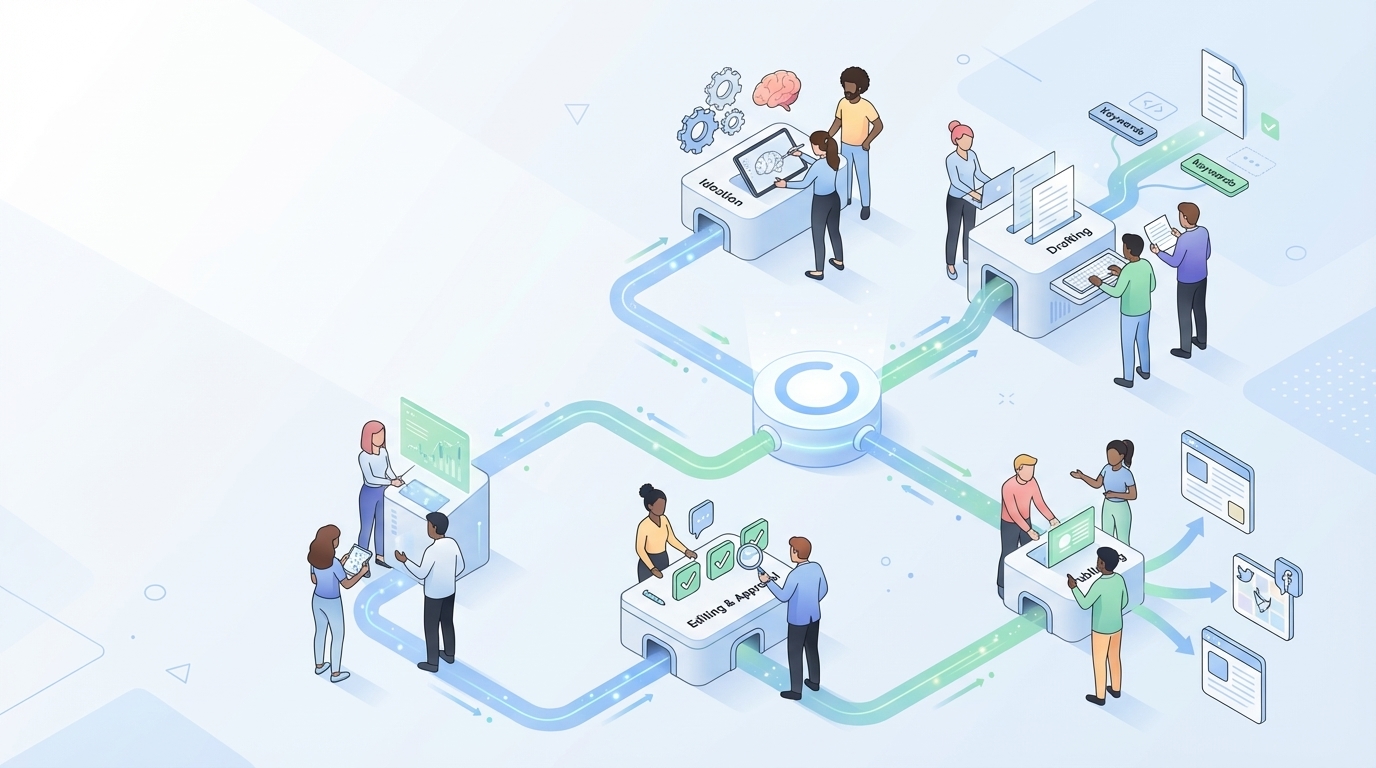
Your stack is not a system.
That phrase matters more now because your stack is not just powering blog posts anymore. It is shaping whether buyers, search engines, and LLMs can understand what your company stands for. Demand-generation execution software is a governed marketing system that turns strategy, narrative, product truth, and audience context into consistent, end-to-end execution across content, SEO, distribution, and buyer education. Unlike SEO tools or AI writing assistants, demand-generation execution software operationalizes market strategy across repeated execution, instead of optimizing single assets in isolation.
Most teams have a Fragmented Demand Generation problem. They don't call it that, of course. They call it content ops, workflow issues, review bottlenecks, or "we just need better prompts." But the pattern is the same. Narrative lives in one place. Product truth lives somewhere else. Audience nuance is buried in a sales deck. Brand voice is trapped in a doc no one opens. So every asset starts over.
The GEO shift made this more expensive. It used to be possible to get by with isolated content wins. Rank a few pages. Publish enough articles. Maybe get a nice traffic chart. But LLM-driven discovery rewards repeated, coherent signals across a large body of work. That's a different bar. And if your team is still stitching together tools, prompts, reviews, and publishing steps, you don't really have a demand gen system. You have activity.
Key Takeaways:
- A modern marketing stack can create motion while still failing to create compounding demand.
- Fragmented Demand Generation starts before the draft, because strategy, audience, product truth, and voice live in different places.
- GEO raises the standard by rewarding consistent market signals across many assets, not one-off wins.
- Adding more people or more prompts usually increases coordination cost unless the system carries context.
- Category leaders treat demand generation like a governed execution system, not a pile of channel tools.
Your Stack Is Not Creating Compounding Demand
Most Teams Confuse A Tool Stack With An Operating System
Most teams think buying enough tools gets them close to a system. It doesn't. A stack is a collection of parts. A system is what makes those parts work together in a repeatable way.
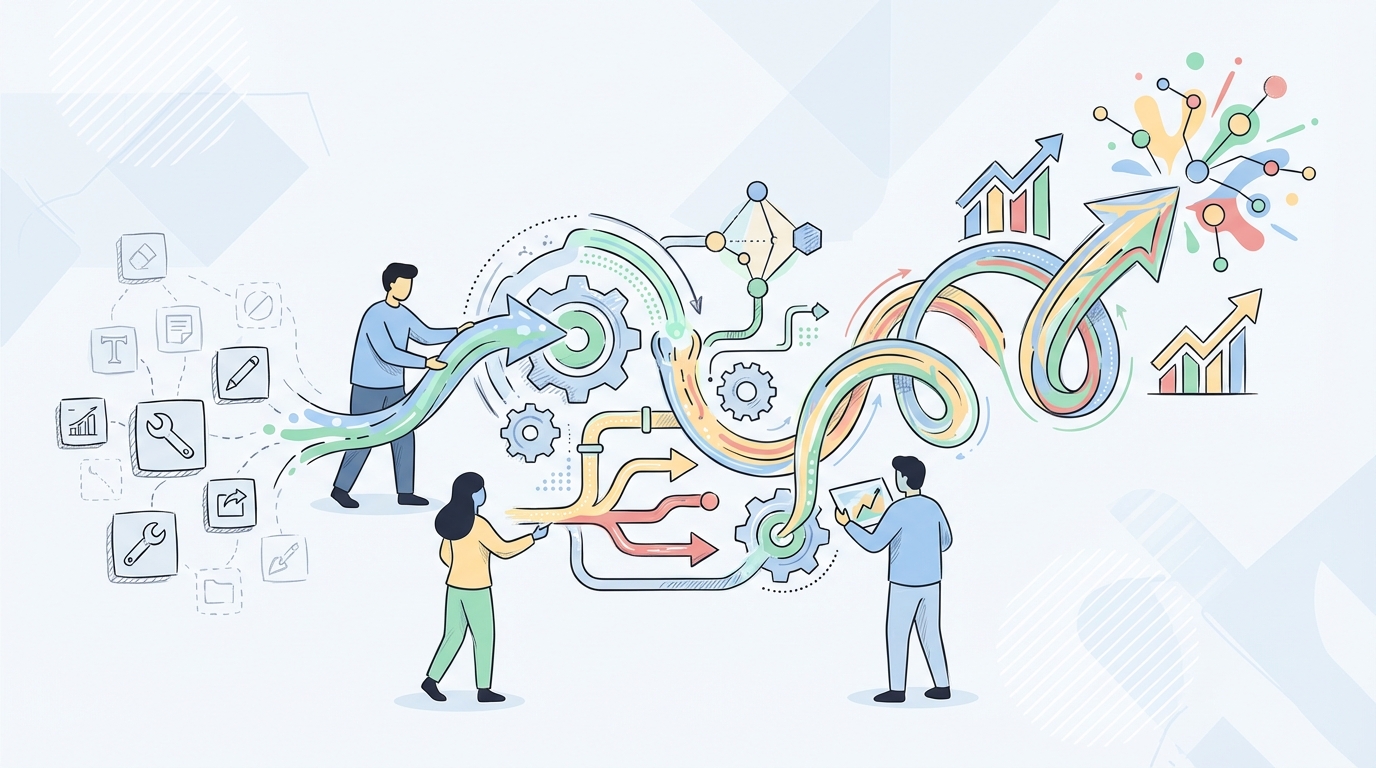
You can have a content tool, an SEO platform, an AI writer, a CMS, a social scheduler, a PMM team, an agency, and a demand gen lead. Still broken. In fact, sometimes more broken, because every extra tool or person creates another handoff, another interpretation layer, another place where context goes missing.
I learned this the hard way years ago. Back in 2012-2016 I ran a website called Steamfeed. At our peak, we hit 120k unique visitors a month. We had 80 regular contributors and 300+ guest contributors. What made that work wasn't just volume. It was the fact that there was enough structure holding all that volume together. We saw spikes at 500 pages, 1000 pages, 2500 pages, 5000 pages, then 10000 pages. Most pages got under 100 views a month. But breadth plus depth compounded.
That's the part a lot of teams miss. They look at output and think output is the win. It isn't. Compounding is the win.
More Prompts Won't Repair Broken Execution
Prompting feels productive because text shows up fast. You type something in, get a draft back, tweak a few things, and for a minute it feels like the bottleneck is gone. But prompt speed and execution quality are two different things.
If the underlying system is fragmented, prompting just makes the fragmentation move faster. You still need someone to remember the positioning. Someone to catch bad claims. Someone to make sure the tone sounds right. Someone to connect the topic to a real audience pain. Someone to publish. Someone to repurpose. Someone to explain why this piece exists in the first place.
So the human is still carrying the system. That's the hidden problem.
Last summer I built a bunch of GPTs to market a B2C app. I kept prompting, copy-pasting, cleaning things up, manually loading the output into my CMS. It was taking 3-4 hours a day. For a while, it looked efficient from the outside. But it was a total waste of time because I was still the glue holding it all together. If I stopped, the machine stopped.
That's why "we just need better prompts" is usually the wrong diagnosis.
GEO Rewards Repeated Signal, Not Random Wins
GEO changed what good marketing execution looks like. Search used to reward a lot of tactical wins. Pick a keyword. Write the page. Build links. Get rankings. Fair enough. Some of that still matters.
But LLMs don't just rank pages one by one. They synthesize across a body of work. They look for clear positioning, stable definitions, product clarity, audience specificity, and a point of view that doesn't drift every time a new writer touches the keyboard. That's why consistency across scale matters more than raw volume now.
And this is where Fragmented Demand Generation gets expensive. You might still publish a lot. You might even rank. But if each piece sounds like it came from a different company, uses slightly different framing, and explains the product in a different way, your signal weakens as output grows.
That sounds backward. But it's true.
Your Stack Is Not Failing At Writing, It Is Failing At Coordination
The Real Problem Is Broken Coordination Logic
Most teams don't have a bad writing problem. They have a broken coordination problem. Writing is just where the damage shows up.
The old model assumes demand generation is a workflow you can stitch together from tools and people. Content team does one part. PMM does another. SEO adds keywords. Sales adds pain points. Founder drops in a hot take. Agency drafts. Editor rewrites. Then everyone wonders why the process feels heavy and the final output still misses.
The issue isn't effort. Usually there's plenty of effort. The issue is that nobody owns the system that preserves strategy across execution.
I remember listening to a panel years ago at the DMZ in Toronto. Someone was going on and on about tools. Use this tool for the list, that tool for this step, another tool for that step. Then April Dunford jumped in and cut through the whole thing. Tactics without strategy are shit. Crude phrasing. Accurate point. When positioning is clear, tactics get clearer fast. When positioning is fuzzy, your stack just gives you more ways to be inconsistent.
Channel Tools Cannot Carry Your Market Point Of View
Channel tools are built around channel tasks. That's the problem. SEO tools think in keywords. Writing tools think in drafts. Social tools think in posts. CMS platforms think in publishing. None of those categories were built around the full job of demand generation.
Demand generation is not a content task. It's not an SEO task either. It's the repeated job of getting the market to understand your problem framing, your point of view, your product truth, and why your approach matters. Across many assets. Over time.
That requires continuity.
A channel tool can optimize a piece. It usually can't hold the market argument across the whole system. It can't tell you whether this article, that product page, and those buyer-facing assets are reinforcing the same message or quietly drifting apart. And if you're a CMO or VP Marketing, that's the real headache. You don't need one more tool that makes one step 20% better. You need the whole machine to stop resetting every week.
When Narrative, Audience, And Product Truth Live Apart
This is where stacks quietly fail.
Your product truth lives in docs, Slack threads, and a PMM's head. Your narrative lives in a strategy deck from last quarter. Your audience detail lives in sales calls and Gong clips. Your brand voice lives in a notion page nobody opens once the quarter gets busy. So every draft becomes a negotiation.
Is this the right angle? Is this how we define the product? Would the CMO care about this use case? Does this sound like us? Can we actually say this?
You can get away with that for a while. Especially when output is low and one strong operator is carrying most of it. I had that experience at PostBeyond. I could crank out 3-4 solid blog posts a week because I had the context in my head and a structured writing framework in how I worked. As the team grew, output didn't get easier. It got messier. New contributors had less context. Reviews got heavier. Quality got shakier. And I had less time, not more.
That's a system problem. Not a talent problem.
Your Stack Is Not Cheap Once You Count The Rework
Every New Contributor Adds Coordination Cost
Fragmentation gets more expensive as you scale because each new contributor increases the number of context transfers required to ship good work. More people can mean more capacity. It can also mean more rework tax.
Let's pretend you have a writer, a PMM, an SEO lead, a demand gen manager, and a founder reviewing category content. On paper, that looks like a strong team. In practice, if each person is carrying a different version of the strategy, every article picks up friction at every step. Brief gets rewritten. Product wording gets corrected. CTA gets softened. Audience framing changes. The founder wants more opinion. SEO wants more structure. PMM wants safer language. No one is wrong. But the system is.
That cost compounds quietly. Ten extra review comments here. Forty-five minutes of context-setting there. A draft that should have shipped Tuesday slips to Friday. Then the social cutdowns don't happen because the article barely got approved. Then next week's brief starts from zero again, especially when evaluating your stack is not.
Most teams don't track this. They should.
Ranking Alone Does Not Mean Demand Generation Is Working
I saw this at Proposify. We had a really strong content team. Great writers. Great designers. We ranked well for a lot of topics. But too much of the content sat too far away from the solution. So even when traffic was healthy, the demand gen tie-back was weak. We had activity. Not enough compounding demand.
That's a brutal problem because it looks like success from the outside. The dashboard says traffic is up. The content calendar is full. The team is busy. But pipeline impact is fuzzy, positioning is diluted, and nobody can confidently say which assets are reinforcing the story that actually moves buyers.
This is where a lot of executive teams get frustrated. Not because content is bad. Because it's disconnected.
LLM Visibility Punishes Mixed Signals
LLM visibility makes this worse. If your company publishes 200 assets that define the category three different ways, describe your product inconsistently, and speak to different audiences with no shared thread, you are teaching the market to be confused about you.
LLMs pick up on that. So do buyers.
| Dimension | Old Way | Category Way |
|---|---|---|
| Source Of Truth | Strategy lives in decks, docs, and people's heads | Strategy is structured inside the execution system |
| Content Creation | Every asset starts with prompts, briefs, and manual interpretation | Every asset carries shared positioning, audience, and product context |
| Consistency At Scale | Voice and claims drift as more contributors join | Rules persist across output so consistency improves |
| GEO Visibility | Weak signals make citation and recall less likely | Repeated signal makes authority easier to recognize |
| Team Efficiency | Reviews and rewrites grow with output | Context travels with the work, so handoffs shrink |
| Pipeline Impact | Activity is hard to connect to demand generation | Execution maps back to audience, use case, and buying motion |
Worth noting, none of this means SEO no longer matters. It does. Same with strong writing. Same with creative. The point is that isolated excellence can't fully rescue a fragmented system.
Your Stack Is Not Taking Stress Off The Team
Review Becomes A Stand-In For Strategy
When the system can't carry context, review becomes the safety net. Then the safety net becomes the operating model.
You know the pattern. Draft goes out. PMM rewrites the product section. Founder punches up the opinion. SEO adjusts headers. Demand gen wants a clearer tie to the campaign. Editor fixes tone. Nobody feels fully confident, so one more round gets added. Busy team. Smart people. Still no real confidence that what ships is accurate, differentiated, and worth scaling.
That doesn't feel like a content issue. It feels like carrying water uphill.
And if you're leading the team, the frustrating part is that everybody looks busy while the machine still feels unreliable. You're worried about what slipped through. You're worried about what got softened. You're worried about whether the next ten pieces will repeat the same mess.
When Human Memory Is The Workflow
When everything depends on people remembering what matters, nothing really scales.
The founder remembers the category angle. The PMM remembers the approved feature framing. The demand gen lead remembers the campaign theme. The writer remembers the brief. The editor remembers the voice.
Until they don't.
That was the whole problem with the manual GPT grind I mentioned earlier. I was doing the remembering. Prompting. Copy-pasting. Publishing. Fixing. Repeating. It felt productive right until I stepped back and realized I had built a pile of recurring tasks, not a system that could carry knowledge forward.
That's the emotional tax of Fragmented Demand Generation. You keep producing. But you never quite trust the machine.
Your Stack Is Not A System Until Strategy Carries Through Execution
Demand-generation execution software is designed for teams that already have strategy, message, and product context, but keep losing it in execution. It is especially relevant for scaling B2B SaaS marketing teams where output spans content, PMM, SEO, distribution, and buyer education, and where each extra contributor increases the risk of drift.
Category leaders handle this differently. They don't start with drafts. They start with what must remain true across every draft.
- Governed Strategy: The system encodes positioning, category framing, product truth, audience context, and brand rules before any content is created.
- Orchestrated Execution: Workflows connect planning, creation, optimization, distribution, and buyer education so execution does not depend on prompts and handoffs alone, especially when evaluating your stack is not.
- Compounding Signal: Every asset reinforces the same market narrative over time, improving consistency, visibility, and demand-gen efficiency across channels.
Governance Has To Come Before Generation
If you skip this part, everything downstream gets shaky fast.
Before a team generates anything at scale, it needs to define a few core things clearly. What do we believe about the market. What category are we trying to shape. Who is the enemy. What is true about the product. Who are we talking to. How do we sound. What claims are fair. What should never be said. Without that, generation becomes fancy guessing.
Some people don't like hearing this because it's less exciting than talking about AI speed. Fair point. Speed is visible. Foundations are not. But weak foundations are why so many teams try AI content for a few months, get disappointed, and fall back to writing everything manually.
See how teams run this with a governed system: request a demo
Execution Should Carry Strategy, Not Reinterpret It
Once the strategy is clear, the next job is making sure execution preserves it. Not loosely references it. Preserves it.
That means a use case doesn't get explained one way on Monday and a different way on Thursday. It means a product definition doesn't drift because a new writer used a different source doc. It means category content, SEO content, competitive pages, and buyer education all reinforce the same market story, even when the formats differ.
This is where most stacks fall apart. They assume each asset is a fresh act of creation. Category leaders treat each asset as an extension of a larger system.
I've seen the opposite play out too. At LevelJump, we were pumping out founder-led content by recording videos and turning them into written pieces. It was faster. It got useful ideas onto the page. But it lacked the structure and topic discovery needed for search intent. So we had thought leadership without enough search pull. Good raw material. Weak system.
Demand Compounds When The System Learns In Public
Compounding demand doesn't come from publishing a lot of disconnected work. It comes from repeatedly expressing the same market truth across different surfaces so buyers and LLMs start to associate your brand with a clear point of view.
That's why category leaders think across the full motion. Acquire. Educate. Convert. Reinforce. They don't treat each asset like a standalone event. They make each one strengthen the rest.
And this creates a useful test for your current setup. When you publish a new piece, does it make the rest of the system stronger? Does it reinforce your definitions, your audience framing, your product truth, your category point of view? Or does it just add one more item to the queue?
Small difference on paper. Big difference in results.
Get a closer look at how this kind of execution works in practice: request a demo
What Oleno Looks Like When The System Is Finally Connected for Your stack is not
Oleno Turns Strategy Into Repeatable Daily Execution
Oleno is built around the idea that marketers should define the rules once, then have execution run within those rules repeatedly. That's why the platform starts with the parts most stacks leave scattered around.
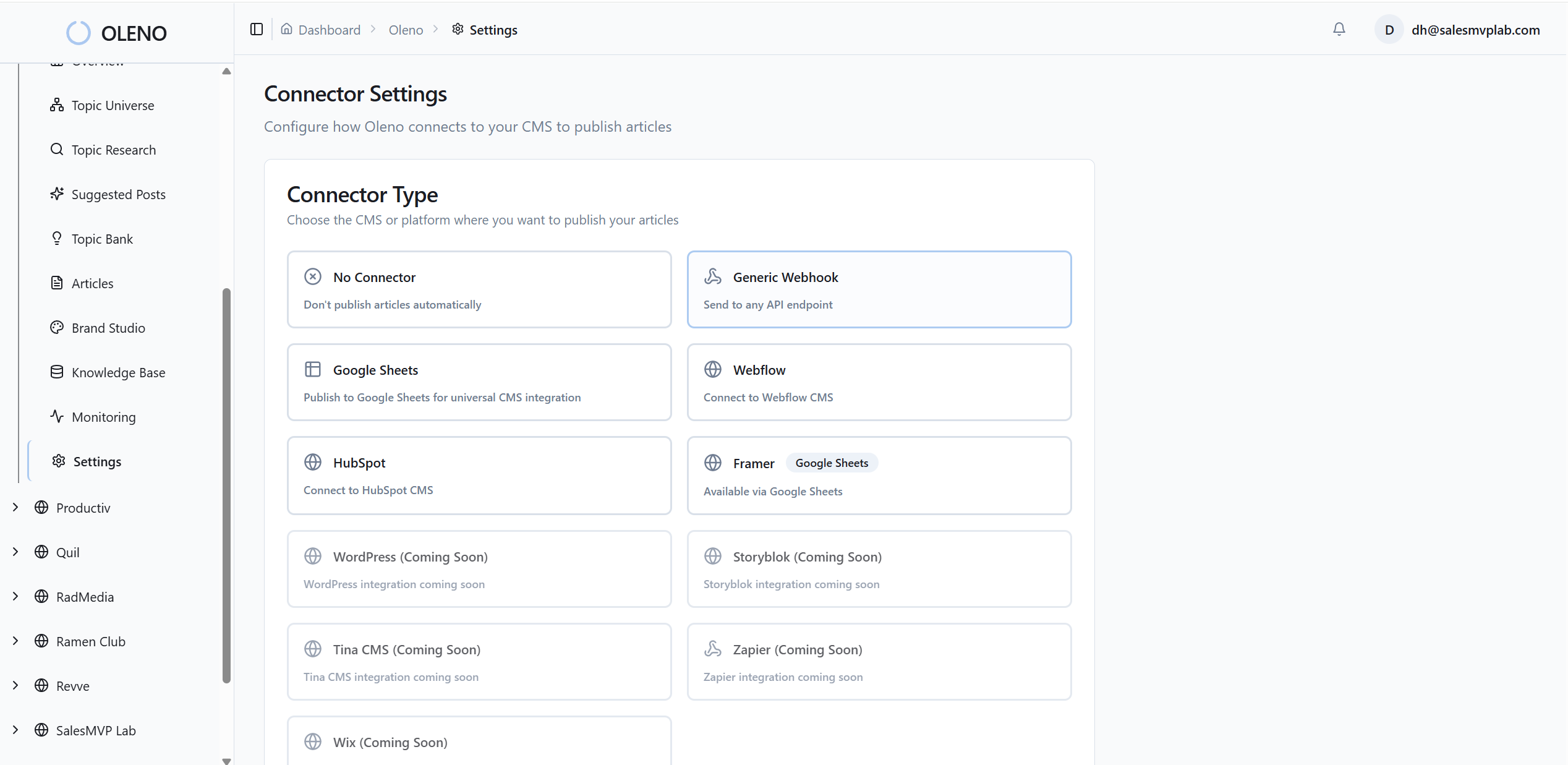
Marketing studio holds category framing, key messages, and narrative structure so the system can carry the market argument forward. Product studio keeps approved product descriptions, feature boundaries, and real support context in one place, which lowers the risk of invented claims or outdated product wording. Audience & persona targeting and use case studio make sure the same topic gets framed differently for the right buyer and workflow, instead of speaking to a vague "marketer" audience.
That matters because Fragmented Demand Generation usually starts long before the draft. Oleno is trying to fix that upstream.
The Platform Cuts Review Tax Without Taking Control Away
This is the part I think a lot of marketing leaders care about most. You want scale, but you don't want to lose control. Fair concern. A lot of teams have been burned by fast content that creates more headaches later.
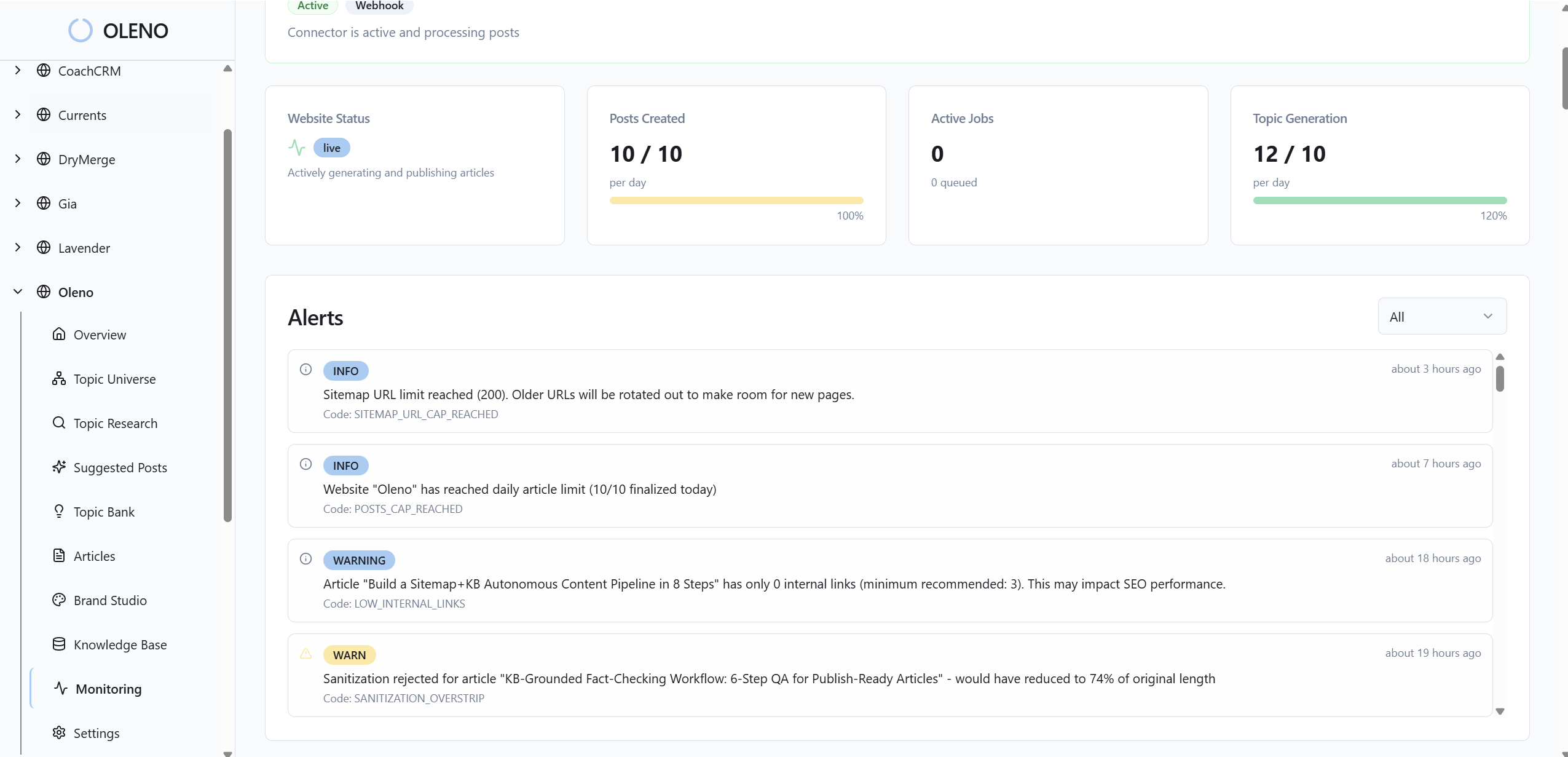
Oleno keeps the control with marketing, then uses the system to carry that context through execution. Programmatic seo studio can run acquisition content on a steady cadence. Category studio supports long-form narrative content that defines the market frame. Product marketing studio handles product-led education. Buyer enablement studio supports decision-stage content. The orchestrator schedules and runs those workflows, while quality gate blocks content that fails objective checks before it moves forward. Cms publishing closes the loop by pushing finished work into the CMS.
Teams using Oleno for SEO content scaling can move from roughly 4-8 articles per month to 20-40+ without adding headcount, based on the documented use case. That doesn't mean every team will hit the same number. It does show the kind of throughput shift a real system can create when coordination stops eating the work.
This Is What A Real Demand Gen System Looks Like
A real system doesn't just make drafts faster. It makes strategy portable.
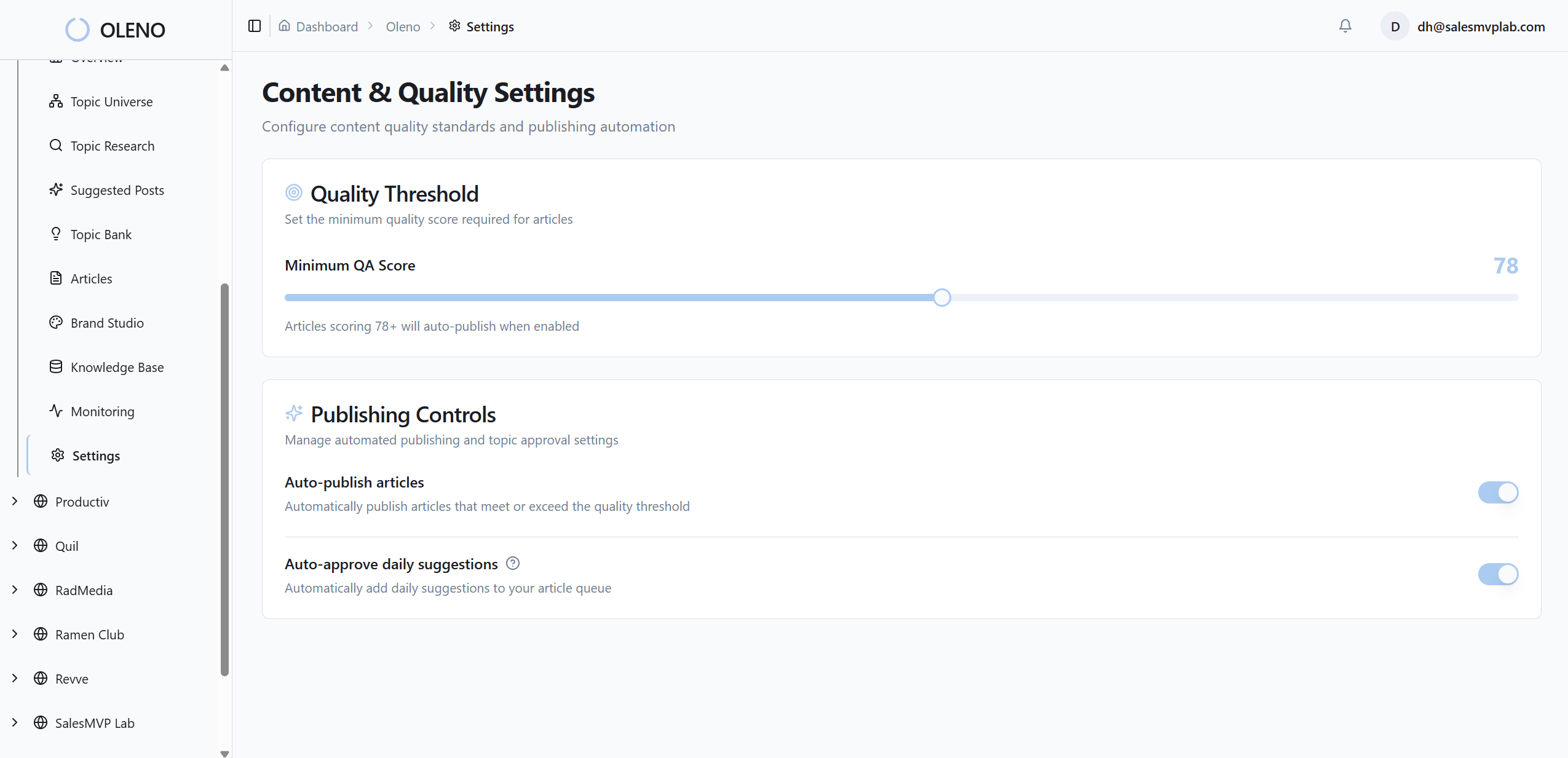
With Oleno, stories studio can capture founder stories, customer anecdotes, and sales insight so thought leadership doesn't lose its lived-in feel. Storyboard can shape what gets prioritized across audiences, personas, products, and use cases. Executive dashboard gives leaders visibility into cadence, quality trends, and coverage gaps, so they aren't managing by gut feel alone.
That's the bigger point. A real demand gen system carries truth, context, and priorities through the work itself. It reduces the amount of remembering, re-explaining, and rewriting humans have to do every week.
Want to see what that looks like with your own workflow, audience model, and content motion? book a demo
Your Stack Is Not A System Until The Work Reinforces Itself
The market is shifting back toward fundamentals. Clear positioning. Strong definitions. Repeatable execution. Tight audience framing. Real product truth. Consistent signal across scale.
For a while, stacks were enough to hide weak systems. You could piece together content, SEO, and distribution and still get some wins. GEO makes that harder. Mixed signals cost more. Drift gets punished faster. Activity alone doesn't compound.
So that's the real divide now. Not AI vs non-AI. Not in-house vs agency. Not content team vs SEO team.
System vs patchwork.
If your current setup keeps resetting context, increasing review load, and weakening the signal as output grows, your stack is not a system. And once you see that, the evaluation lens changes pretty quickly.
About Daniel Hebert
I'm the founder of Oleno, SalesMVP Lab, and yourLumira. Been working in B2B SaaS in both sales and marketing leadership for 13+ years. I specialize in building revenue engines from the ground up. Over the years, I've codified writing frameworks, which are now powering Oleno.
Frequently Asked Questions