Your Stack Isn’t a Demand Generation System
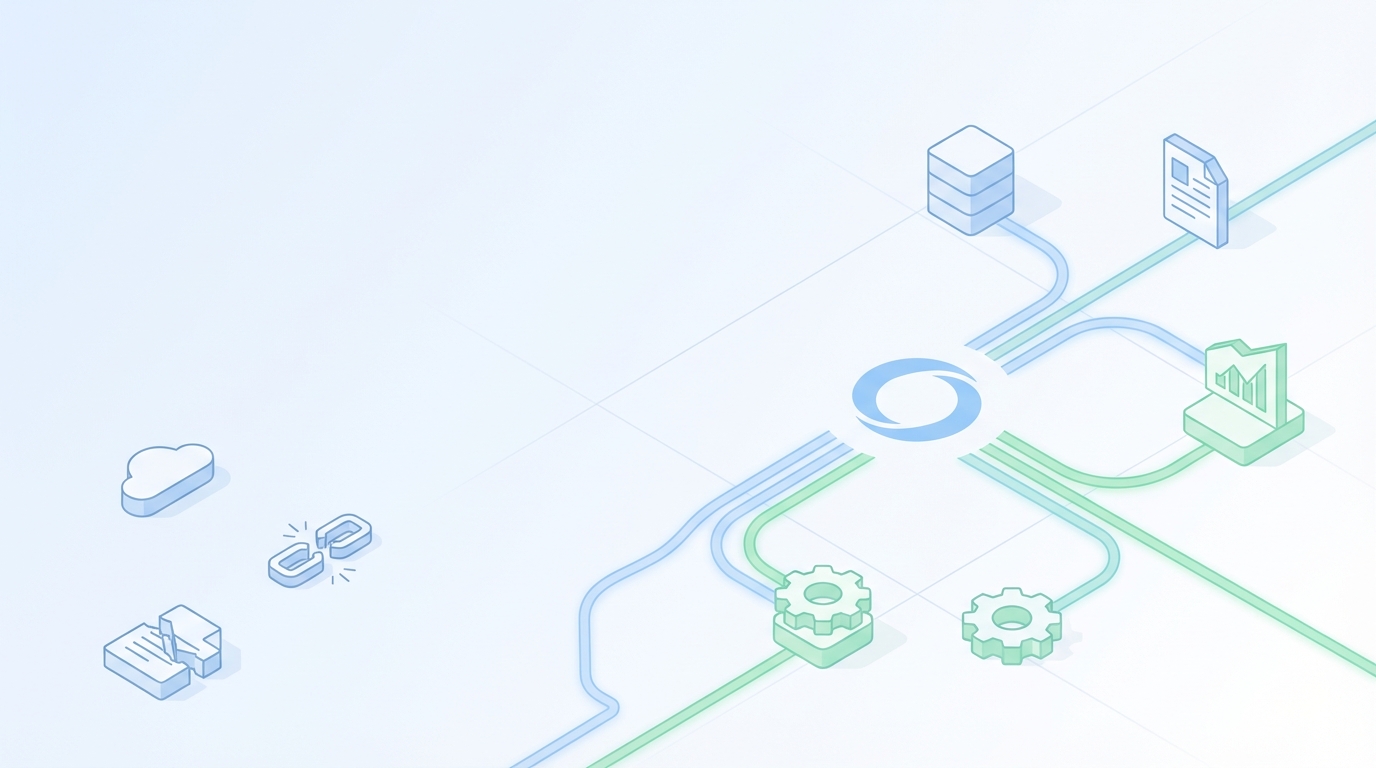
Demand-generation execution software is an operational system that turns positioning, product truth, and brand voice into consistent, cross-channel output by orchestrating governance, creation, and distribution end to end. Unlike a “bigger stack” of tools, demand-generation execution software makes your demand gen repeatable, so your message compounds instead of resetting every time a new campaign, writer, or prompt shows up.
And yeah, I’m going to say the quiet part out loud: your stack isn’t a demand generation system. Most stacks are just a bunch of point solutions sitting beside a bunch of humans, with Slack and meetings acting as the glue. That glue breaks the second you try to scale, or the second the CEO asks for “more content,” or the second an LLM starts answering your buyers’ questions without sending them to your site.
Fragmented Demand Generation is the enemy here. It’s the patchwork behavior where content, SEO, narrative, distribution, and even basic product facts live in different places, owned by different people, so nothing stays consistent and nothing compounds.
Key Takeaways:
- A tool stack creates output, but a demand generation system creates compounding signal across months, channels, and formats.
- GEO rewards brands with repeated, consistent definitions and POV, not one-off “good posts” that don’t connect to each other.
- Fragmented Demand Generation looks normal, but it creates drift, endless rework, and invisible costs that spike as you publish more.
- You can start fixing this without buying anything: centralize truth, run job-based pipelines, and measure signal density instead of raw volume.
- Demand-generation execution software exists because Slack-based coordination can’t carry the load anymore.
Your Stack Produces Content, Not Compounding Demand Generation System Results
Most marketing teams confuse a full stack with a functioning demand generation system. A “system” is the thing that keeps producing the same quality outcome even when you’re busy, even when the calendar is chaos, even when a new freelancer shows up, even when priorities change mid-week.
Stacks don’t do that. Stacks create options. Systems create consistency.
Most Marketing Teams Confuse A Full Stack With A Functioning Demand Generation System
You probably recognize this setup.
You’ve got a doc for positioning. Another doc for messaging. A half-updated Notion page for product stuff. A separate SEO tool. A content tool. Some prompts. A freelancer or two. Maybe an agency. Then you’ve got the “real process,” which is really just a bunch of handoffs and tribal knowledge and someone on the team acting as the quality police.
That’s Fragmented Demand Generation. It’s not that anyone’s lazy or dumb. It’s that the work is split across tools and people that don’t share a single source of truth, so every asset becomes a mini reinvention of your brand, your POV, and your product facts.
The cost shows up in boring ways at first. A rewrite here. A “can you make this sound more like us” there. A random sales request that forces a detour. Then it gets ugly.
- Voice drifts.
- Product claims get fuzzy.
- Every new piece needs a long review thread.
- Every quarter feels like a reset.
You’re working. You’re producing. But you don’t have a demand generation system. You have activity.
GEO Doesn’t Rank Pages; It Elevates Coherent Brands
GEO is where a lot of teams get blindsided, because they keep playing the old game.
Search used to be “write a page, rank the page.” Now a big chunk of discovery is an LLM taking a question, scanning a ton of sources, and deciding which brand it’s comfortable repeating back to the user. That’s not a page-level contest. That’s a coherence contest.
LLMs don’t just want one good article. They want a pattern.
They look for the same definitions, the same point of view, the same way you talk about the problem, the same way you explain the solution space. If you sound different every time, the model can’t confidently surface you. It’s a risk for it. So it picks someone else.
That’s why Fragmented Demand Generation is such a problem right now. It creates drift by default, and GEO punishes drift.
The New Bar Is Compounding Signal, Not Isolated Wins
Most teams still celebrate isolated wins.
“This post ranked.” “This campaign got clicks.” “This LinkedIn thread did numbers.”
All good. None of it compounds if the next 20 assets don’t reinforce the same signal.
Compounding signal is simple to describe, but hard to execute: your positioning, your definitions, and your POV show up the same way across lots of content, across lots of channels, over time. Not word-for-word, but truth-for-truth.
And that “over time” part matters. A demand generation system doesn’t just ship. It repeats. It reinforces. It builds memory in the market.
Fragmented Demand Generation can’t do that, because every asset is made in isolation, with humans trying to stitch consistency back in after the fact. That’s why the bottleneck isn’t ideas. It isn’t prompts. It’s the lack of a system.
Treating SEO, Content, And Narrative As Separate Tracks Breaks Your Demand Generation System
The hidden flaw is treating content, SEO, and narrative as separate efforts, then hoping they line up later. They won’t. Not consistently. Not at scale. Not when GEO is part of the game.
The old category assumption was “optimize pieces.” The new reality is “brands are the unit of value.”
Separation Creates Drift, While Unified Governance Creates Authority
Most teams have governance, they just don’t call it that.
They’ve got rules for voice. A POV on the market. Product truths and boundaries. Audience language. Stuff they won’t say. Stuff they always say.
The problem is all of it lives in different places, and it doesn’t travel into the work automatically. So every asset is a manual effort to “remember the rules,” and that’s where the drift creeps in.
Centralizing your truth fixes more than people expect. When voice, POV, product definitions, and audience context are in one place, you stop arguing about basics every time you publish. You get fewer rewrites. You get fewer “wait, do we say it like that?” comments. You also stop leaking credibility through tiny inconsistencies.
Authority isn’t just being right. It’s being consistently right, in public, for a long time.
Prompt Chains Aren’t Orchestration, They’re Brittle Macros
I like prompts. Prompts are useful. But prompt chains aren’t orchestration.
Prompting is basically saying: “Here’s a task. Please output something.” The human still has to do the system work.
- decide what’s next
- check if it’s accurate
- check if it matches voice
- make sure it connects to the narrative
- make sure it fits the funnel stage
- publish it
- repurpose it
- do it again next week
As volume goes up, that human judgment load doesn’t stay flat. It spikes. That’s the part nobody budgets for.
I’ve seen this movie. A team gets excited about “AI content.” Output increases for a month. Then review time becomes the new bottleneck, because you’re now reading more drafts, not fewer. Then you add more people to review. Then you add more meetings to coordinate. Then you’re back where you started, just with more moving parts.
Prompting scales text. It doesn’t scale consistency.
Measure By Signal Density, Not Asset Count
If you measure demand gen by asset count, you’ll keep shipping random stuff that doesn’t stack.
Signal density is a better leading indicator. It’s not perfect, but it’s closer to what GEO rewards and what pipeline needs.
Signal density means: how often do your governed truths show up, clearly, across your output?
- Do you repeat your category POV in a way that’s easy to quote?
- Do you define your product and approach the same way in multiple places?
- Do you connect the problem to the next step consistently?
- Do you sound like one company, or like five vendors pretending to be one company?
If you can’t answer those questions quickly, you don’t have a demand generation system. You’ve got a publishing habit.
The Cost Of Fragmented Demand Generation Gets Worse As You Publish More
Proof isn’t hard to find here. You can feel it in your week.
Fragmented Demand Generation creates a debt that compounds. Not a moral debt. An operational one. More output creates more coordination, more review, more drift risk, and more resets.
Fragmentation Compounds Debt As Output Scales
Let’s pretend you publish 8 pieces a month. A couple blog posts, a couple LinkedIn posts, maybe a case study, maybe a competitive page you keep delaying. You can kind of brute force that.
Now pretend leadership wants 25 pieces a month, because “AI should make it easy.” So you add a freelancer, maybe two. You add more drafts. Now what happens?
Someone has to brief them. Someone has to check the drafts. Someone has to make sure the product claims aren’t wrong. Someone has to make sure the POV is consistent. Someone has to polish voice. Someone has to publish and repurpose.
If you’re honest, the real cost becomes coordination. The calendar fills up with review cycles and feedback loops. Slack becomes a crime scene.
And the worst part is the drift is subtle. It’s not like the content is obviously bad. It’s just inconsistent enough that you keep rewriting it. That’s the waste. That’s the headache.
That’s also why “just add another tool” rarely fixes it. You’re adding another surface area for drift.
Strong Rankings Don’t Become Pipeline Without Narrative Coherence
I’ve lived this one.
At Proposify, we had a great content team. Great writers. Great design. We ranked insanely well for a lot of topics. The problem was the content was detached from the solution narrative. We’d rank for stuff like “how to manage an SDR team.” Useful topic. Big search volume. But the path back to our product story was thin.
So we got the traffic. We didn’t get the demand.
That’s not an SEO failure. That’s a demand generation system failure. The system didn’t enforce a consistent “why us” and “what we believe” across the catalog. It let content become a library of unrelated wins.
GEO makes that mistake more expensive, because LLM visibility depends on coherent repetition, not just ranking a few pages.
Breadth And Structure Win Only When Governed
Back in 2012 to 2016, I ran a site called Steamfeed. At our peak we hit 120k unique visitors a month, mostly because we had volume plus quality. We had 80 regular contributors and 300+ guest contributors. We saw traffic spikes at 500 pages, 1000, 2500, 5000, then 10000 pages.
Most pages got under 100 views a month. That part always surprises people. But the catalog compounded because we had breadth, we had depth, and we had enough consistency that Google could trust the site across a huge long tail.
That’s the lesson a lot of teams miss. Breadth alone isn’t the win. Structure and consistency are the win.
Now layer in today’s reality. The bar isn’t just “Google can index it.” The bar is “humans, search engines, and LLMs can all extract the same coherent signal from it.” Without governed consistency, you can publish a thousand pieces and still be invisible in the moments that matter.
Fragmented Demand Generation Feels Like A Slow Leak In Your Week
You feel it on Tuesday afternoon, when you’re trying to ship something and you realize you need three people to sign off, and everyone has a different opinion, and sales just dropped a “quick change” that isn’t quick, and you’re worried the draft is subtly wrong, and you’re pretty sure you already said this exact thing last month but you can’t find where.
That’s the human tax. Death by a thousand small resets.
More Meetings, Fewer Publishes, And The Creeping Fear Of Drift
Most teams don’t wake up and say “let’s be fragmented.”
Fragmentation happens because it’s the default. You pick the best tool for each job. You hire specialists. You outsource what you can. You move fast. Then six months later, you’ve got three Slack threads debating tone, two docs that disagree on positioning, and a draft that’s 80% good but still needs another hour of edits.
Multiply that by 20 pieces a month and you can see the problem.
People start hedging. They write safer. They avoid being specific because specifics create review comments. The brand gets blander over time, even though everyone’s working hard.
When Everything Is Urgent, Nothing Compounds
Urgency is normal. Marketing is always dealing with launches, competitive moves, sales requests, and “we need this yesterday” stuff.
But if everything is urgent, you never build repetition. You never reinforce the same idea across the catalog. You keep reacting.
That’s why a demand generation system matters. It creates a steady cadence that keeps running even when the week gets messy, and it keeps the narrative consistent so you don’t reset every time a new fire shows up.
How Category Leaders Build A Demand Generation System That Compounds
Category leaders run demand gen like an operating system. Not like a series of campaigns. Not like a content calendar you constantly rewrite.

This is where demand-generation execution software as a category shows up. Not as a product pitch yet, but as a lens. The category exists because the “stack + humans + Slack” approach can’t hold coherence at scale, especially when GEO is part of the game.
Before we get into the mechanics, here’s the three-part model. It’s not fancy. It’s just the stuff that actually reduces drift.
- Unified Governance: Centralize voice, positioning, product definitions, audiences, and use cases so every asset expresses the same truths without manual enforcement.
- Orchestrated Jobs: Run content as coordinated jobs with blueprints, cadence, and quality gates that scale output without drift across the entire funnel.
- GEO Signal Management: Measure and reinforce narrative repetition and definitional clarity so LLMs and search engines surface a coherent, authoritative brand.
Now let’s make it real.
Centralize Truth Once, Then Force It Into Every Asset
Start here. Always.
Your job is to create one place where the truth lives. Not “a doc.” A living source of truth that someone owns, that gets updated, and that every piece of content pulls from.
What goes in it?
- how you talk (voice rules)
- what you believe (market POV)
- what’s true about the product (definitions, boundaries, claims you can defend)
- who you’re talking to (audiences, personas)
- what they’re trying to do (use cases)
And yes, this takes work. You’re basically converting tribal knowledge into something operational.
The payoff is massive though, because you stop having the same arguments in every review cycle. You also stop relying on one person’s brain to keep the narrative consistent. That person quits, goes on vacation, or gets pulled into exec meetings, and then the whole machine starts to wobble. I’ve been that person. It sucks.
A simple operating rhythm helps:
- one owner for “truth”
- a monthly update window
- a hard rule that content inherits it, not negotiates it
Orchestrate Jobs Across The Funnel, Not Random Tasks
Most teams run tasks. “Write a blog.” “Make a LinkedIn post.” “Do a competitive page.” That’s not a system. That’s a to-do list.
A job is different. A job has inputs, steps, standards, and a cadence. It also has a purpose in the funnel.
A few common demand gen jobs:
- acquisition content (SEO, topic clusters, definitional posts)
- evaluation content (comparisons, alternatives, teardown pages)
- product-led content (use cases, workflows, feature education)
- narrative content (founder POV, stories, category framing)
- distribution (social derivatives, email, reuse)
When you define jobs, you can blueprint them. When you blueprint them, you can repeat them. When you repeat them, you can improve them. That’s a demand generation system.
One interjection.
If your “job” requires five ad-hoc approvals every time, it’s not a job yet.
The goal isn’t to remove humans from judgment. The goal is to remove humans from re-litigating the basics. Voice shouldn’t be up for debate every time. Product truth shouldn’t be re-checked from scratch every time. The job should carry the rules.
Track GEO Signal Density And Cadence Reliability Like A Real KPI
Most teams track output and traffic because it’s easy.
Signal density and cadence reliability are harder, but they tell you if the system is working.
A basic weekly review looks like this:
- Did we publish what we said we’d publish, on schedule?
- Did the content repeat our key definitions and POV clearly, or did it drift?
- Did we cover the funnel, or did we accidentally publish 10 top-of-funnel posts again?
- Did review time go up or down, and why?
- Which assets got reused for distribution, and which died after one publish?
This is the part that starts compounding. You’re not just shipping content. You’re tightening the machine.
And if you want the category label for the approach, this is what demand-generation execution software is trying to encode: truth that travels, jobs that repeat, and a feedback loop that keeps the signal coherent.
Soft CTA, if you want to see what this looks like in a product: request a demo
Fragmented Demand Generation Vs Demand-Generation Execution Software
A lot of people ask “okay, what’s the actual difference?” This table is the cleanest way I know to show it, without getting lost in tool names.
| Dimension | Old Way | Category Way |
|---|---|---|
| Narrative source | Scattered across tools, docs, and people | Single governed source travels to every asset |
| Execution model | Ad-hoc tasks and prompts | Orchestrated jobs with cadence and quality gates |
| Consistency at scale | Degrades as volume increases | Improves as governance compounds across output |
| Review overhead | Endless resets and manual QA | Policy-encoded creation reduces reviews |
| Discovery outcomes | Inconsistent SEO, poor LLM visibility | Compounding signal for humans, SEO, and LLMs |
| Pipeline alignment | Detached content, weak next steps | Repeated, product-connected narratives across the funnel |
How Oleno Makes The Demand Generation System Real In Weekly Execution
Oleno operationalizes the demand-generation execution software idea by separating “what’s true and allowed” from “the work that runs every week,” so you can publish consistently without re-briefing, re-checking, and re-arguing every single asset.
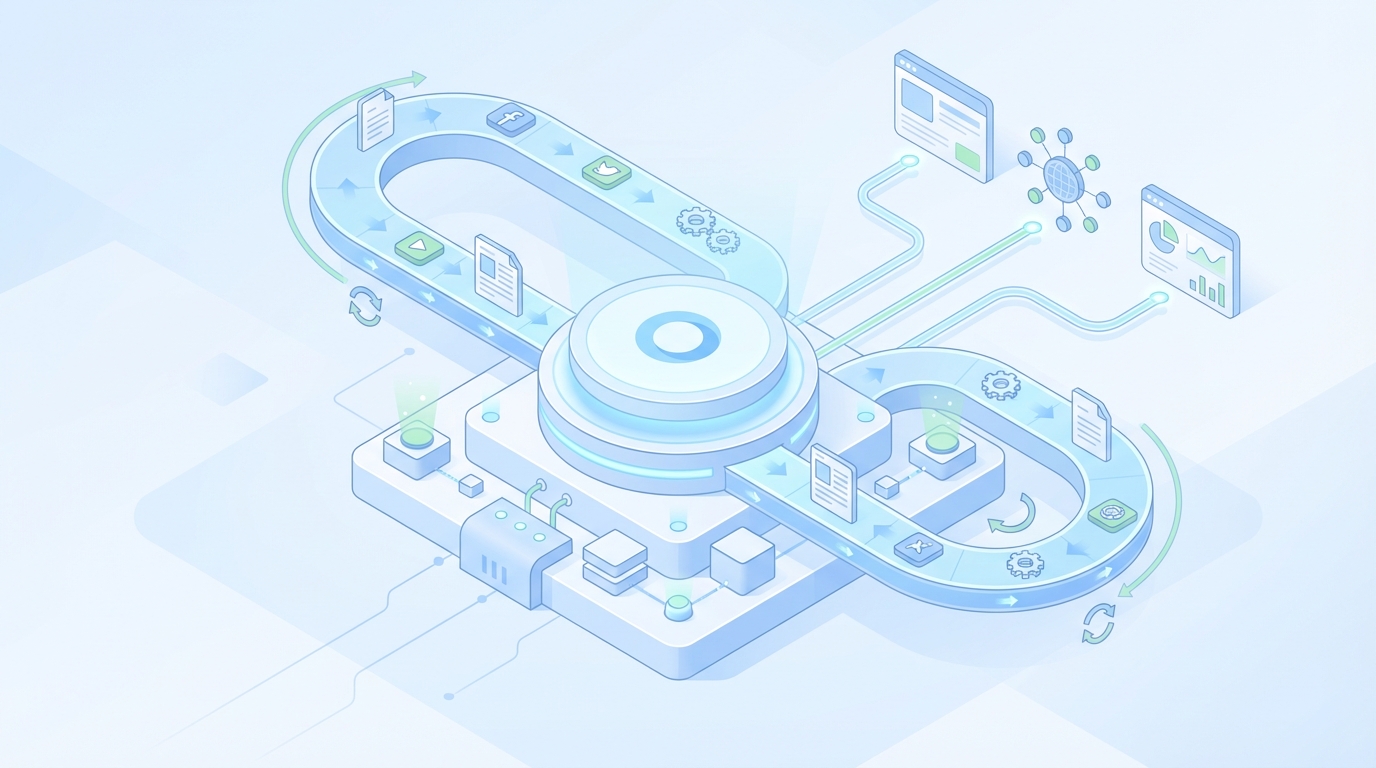
I built the first version of this for myself. Last summer I had a B2C app, wanted to invest in SEO and GEO, and I did the classic grind: a bunch of GPTs, tons of prompting, copy paste into my CMS. It was taking me 3 to 4 hours a day. Complete waste of time. So I hard-coded an autonomous content engine inside my site, so it would queue topics, write, QA, and post. When I showed it to coaching clients, like 15 of them asked the same thing: “can I use this?” That’s what turned into Oleno.
Oleno Encodes Your Governance So Reviews Stop Being A Constant Reset
Oleno uses brand studio, marketing studio, product studio, and knowledge archive to centralize how you sound, what you believe, and what’s true about your product. Then it pushes that into the work so every draft inherits the same rules, instead of relying on someone to remember them.
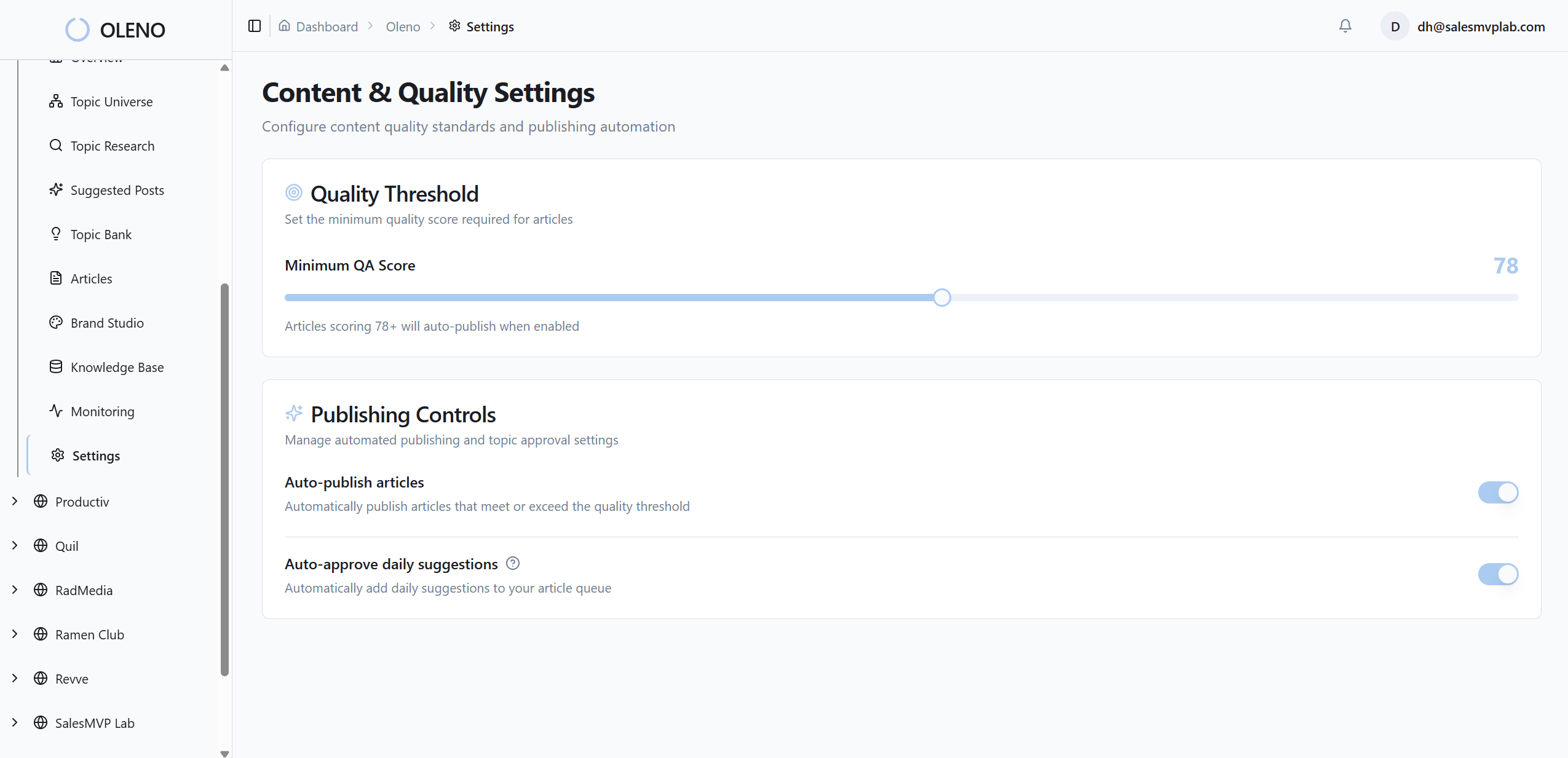
The practical outcome is fewer rewrites and less worry about publishing something that’s subtly wrong. Product studio boundaries plus knowledge archive grounding also reduce the “fabrication risk” problem that makes teams afraid to scale output with AI in the first place.
If you’ve ever had that moment where you’re reading a draft and thinking “I’m pretty sure we don’t do that,” you already get why this matters.
Oleno Runs Job-Based Pipelines On A Cadence, With Quality Gate And CMS Publishing
Oleno is built around a topic universe that organizes what should exist, an orchestrator that paces production to weekly and monthly targets, and a quality gate that blocks work that doesn’t meet objective standards before it goes out.
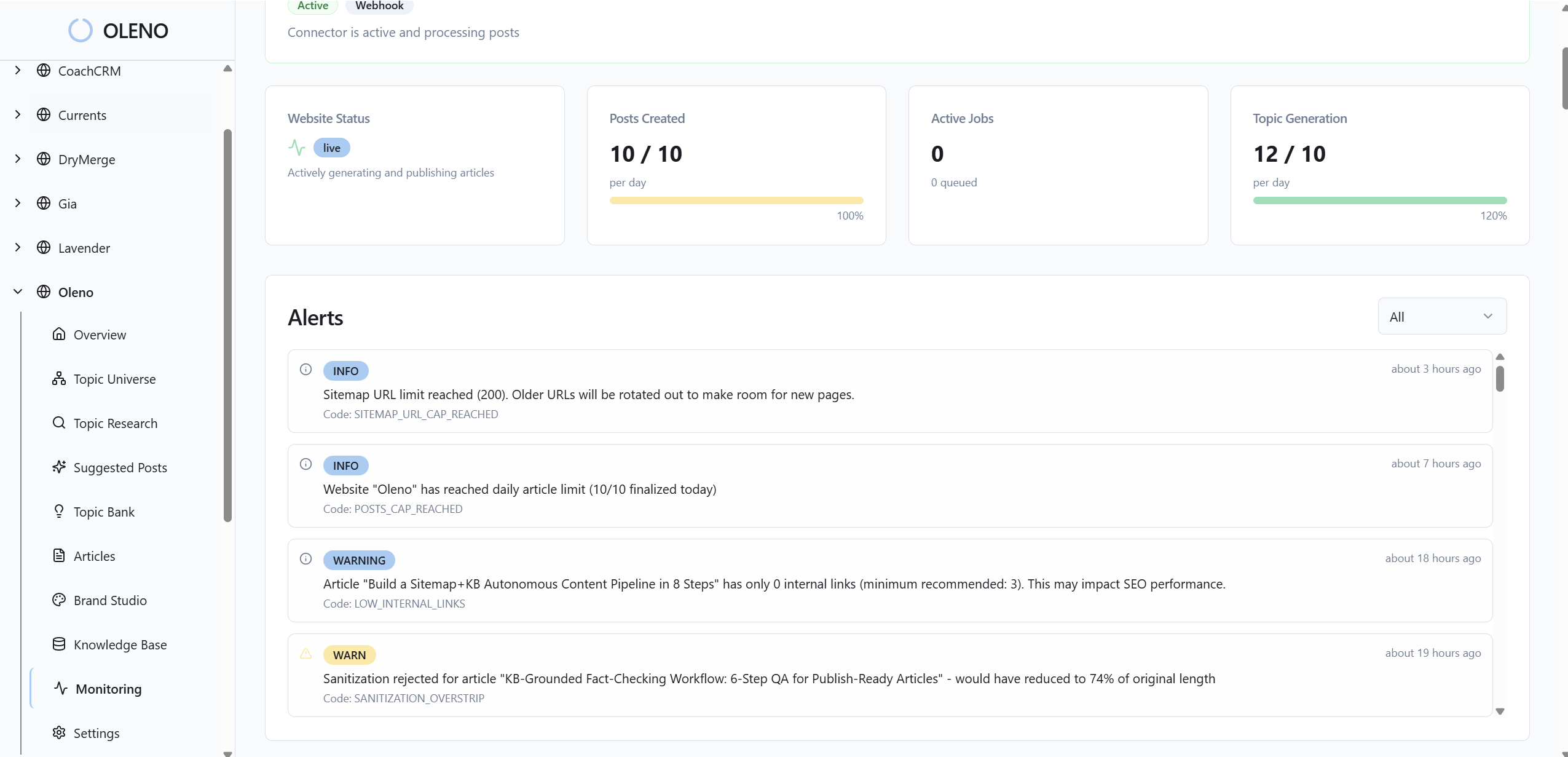
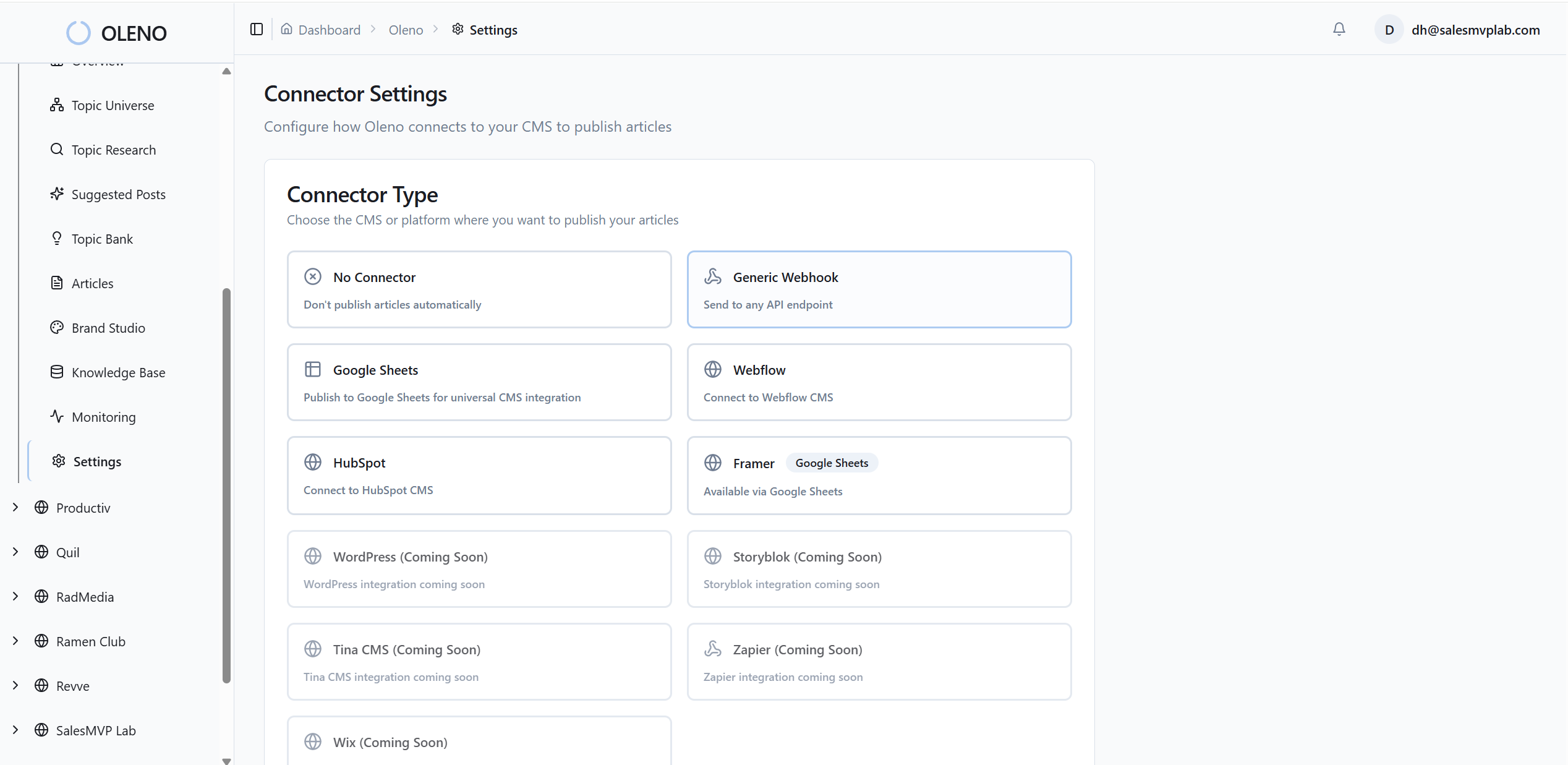
Then cms publishing closes the loop, so publishing doesn’t become a manual copy-paste step that steals time and introduces mistakes.
Mid-solution CTA, if you want to see the job-based workflow end to end: request a demo
You Don’t Need More Tools, You Need A Demand Generation System That Compounds
Your stack isn’t a system. And Fragmented Demand Generation is expensive, because it turns every new piece of output into more coordination, more review, more drift, and more resets.
A demand generation system does the opposite. It turns your best thinking into something that repeats, on purpose, so GEO can surface you, buyers can remember you, and the market can actually learn what you stand for.
If you want to walk through how this would look for your team, from governance to weekly cadence, you can book a demo.
About Daniel Hebert
I'm the founder of Oleno, SalesMVP Lab, and yourLumira. Been working in B2B SaaS in both sales and marketing leadership for 13+ years. I specialize in building revenue engines from the ground up. Over the years, I've codified writing frameworks, which are now powering Oleno.
Frequently Asked Questions