Zero-Based Demand Gen Budget: 12-Week Allocation Playbook for Early SaaS

Most early SaaS budgets look tidy on paper. A few paid channels, a content line, a couple of tools, and a “misc” bucket that somehow grows every quarter. It feels disciplined because you’re sticking to the plan. But the plan is built on last year’s assumptions, not next week’s reality.
When I ran growth with tiny teams, the budget always lagged the work. At PostBeyond, I could ship 3-4 strong posts a week solo. As soon as we added people and lines, coordination crept in, quality slipped, and spend drifted from the jobs that actually moved pipeline. At LevelJump, we were doing great thought leadership, but it didn’t map cleanly to evaluation moments, so paid dollars did the heavy lifting while content wandered. You know the pattern. Busy, not compounding.
Key Takeaways:
- Anchor budget to jobs and unit economics, not channels or legacy lines
- Run a rolling 12-week cycle with clear stop or scale rules
- Track CAC and payback by motion, not averages
- Keep a reserve pool for fast tests and weekly reallocations
- Treat governance and repeatable execution as budget protections
- Use operational signals to guide moves, not opinions
Why Traditional Budgets Stall Early SaaS Growth
Traditional budgets stall early SaaS growth because they lock in old assumptions and group spend by channels, not buying jobs. That creates activity that looks good in dashboards, but doesn’t move buyers to the next milestone at a healthy CAC. A rolling 12-week view forces faster learning and reallocation.

What Most Teams Get Wrong About “Budget Discipline”
“Discipline” often means protecting lines, not protecting outcomes. Teams inherit last year’s mix, tweak 5 to 10 percent, and call it prudent. The problem is you’re preserving spend that no longer clears your CAC and payback gates. The math is hidden by averages, and the narrative is shaped by sunk cost.
Early teams feel this fast. One or two misfit lines can crowd out dollars for the work you need now, like conversion content or a comparison series that supports evaluation. I’ve kept lines longer than I should have because they were familiar. It felt responsible. It wasn’t. It was a slow bleed disguised as discipline.
Zero-based thinking fixes this by making every dollar earn its spot weekly. It’s uncomfortable the first month. Then it gets freeing, because you’re deciding from fresh signal, not memory. If you want a rigorous frame for the approach, the principles behind zero-based budgeting from McKinsey map well to early-stage marketing.
The Hidden Mismatch Between Channels And Jobs
Budgets are usually grouped by channel, not by job to be done. That’s how you get a campaign that crushes engagement while evaluation stalls. Channels are inputs. Jobs are why the work exists: acquisition, education, evaluation, reinforcement. When you budget by job, you judge each dollar by its ability to move the buyer one step, at a known cost.
I saw this at Proposify from the sales side. We were ranking like crazy, getting traffic, and yet the pipeline story was lumpy. The content was fun, but too far from the moments that shaped evaluation. When you reframe around jobs, the plan changes. Category education dollars earn their place by lifting product-qualified traffic, not by pageviews. Evaluation dollars earn their place by increasing win rate or deal speed, not by impressions. Bessemer’s lens on growth discipline in the 10 Laws of Cloud Growth is a useful counterpart here.
Why A Rolling 12 Weeks Beats Annual Planning
Annual plans hide slow feedback loops. By the time a channel underperforms, you’re two quarters in and overcommitted. A rolling 12 weeks forces tight test windows, visible measurement, and fast reallocation. You see if something works in days or weeks, not quarters, and you adjust before budget calcifies.
This matters more when headcount is frozen. You can’t hire your way out of drift. You need a system that runs the work, even when priorities shift. When we moved from campaign bursts to continuous weekly execution, quality improved and the budget started acting like a lever again. If you want a finance partner’s take, Sage’s material on SaaS planning and signal cadence is solid context, like their SaaS metrics overview.
Ready to pilot a 12-week zero-based plan without adding headcount? Oleno can run the execution while you set the rules. Request A Demo.
Put Dollars Against Jobs and Unit Economics, Not Channels
Putting dollars against jobs means every line must show how it advances buyers at a sustainable CAC and payback. You start at zero, then fund the highest expected impact by job, with clear gates by motion. It cuts legacy commitments, reduces drift, and speeds up learning.
What Is Zero-Based For Marketing And Why It Matters
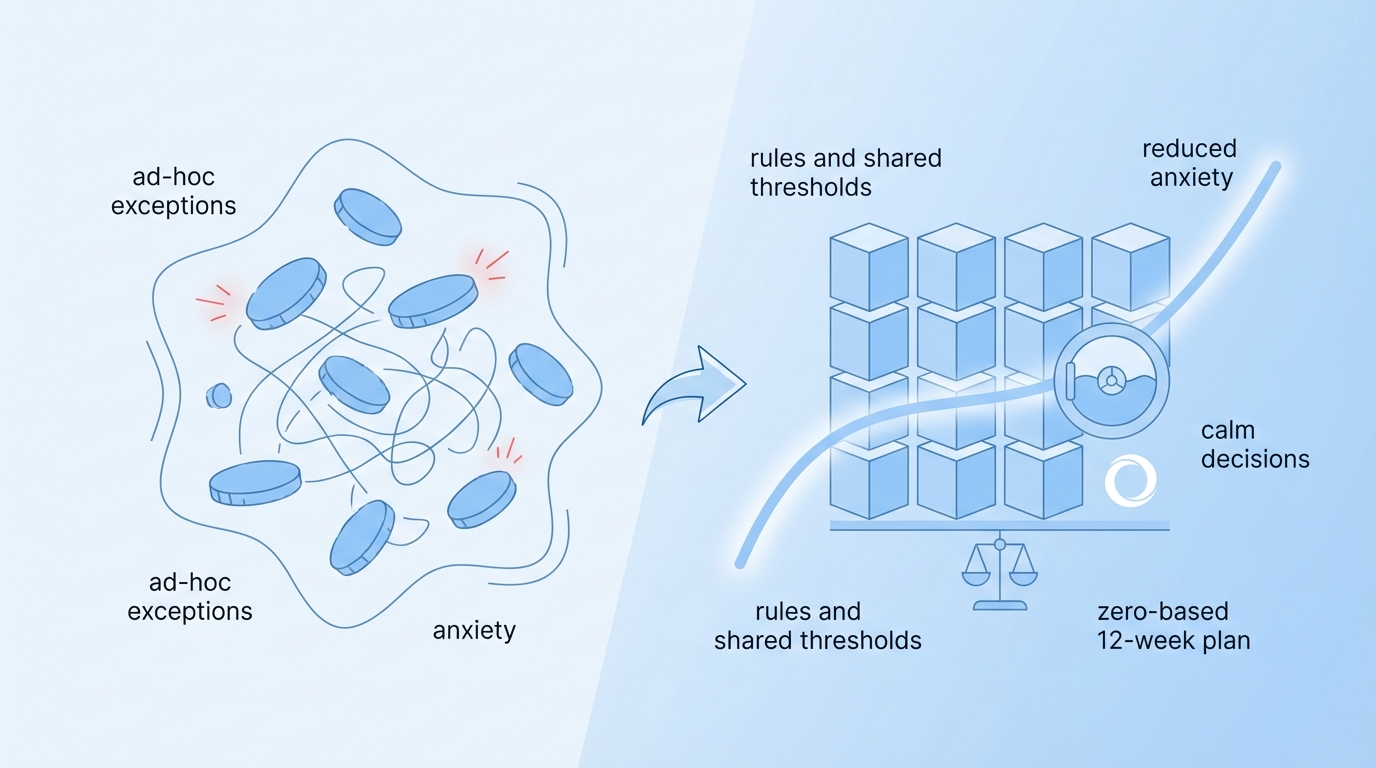
Zero-based budgeting for marketing means no line keeps money by default. You allocate from zero every week based on expected impact by job, with explicit CAC and payback thresholds. It’s strict, but it protects you from the slow, compounding waste that comes from familiarity and averages.
In practice, you define acceptable CAC and payback by motion. Self-serve can tolerate tighter windows, often under three months. Sales-assisted can stretch, often under twelve months, depending on ACV and gross margin. You’ll miss sometimes, and that’s fine. The point is every dollar is arguing its case, in your context, right now. Bain’s take on zero-based budgeting is a helpful primer on cutting to intent, not history.
Map Spend And Set 12-Week Objectives
Start with where money actually goes. Tag each dollar to a job, not a channel. Attach real conversion data from MQL to SQL to pipeline to revenue, then compute CAC and payback by motion. Don’t average. Segmentation exposes what the averages hide, and it will change your plan.
Once you have the map, pick one north-star metric for the next 12 weeks, like SQLs or pipeline. Quantify the lifts you need by stage. Then set three buckets: baseline capture, demand creation, and a reserve for tests. Add per-channel caps to prevent over-indexing. The goal isn’t elegance, it’s clarity. You’re giving every dollar a job and a rule set before it moves.
The Hidden Costs Draining Your Budget In Just 12 Weeks
Hidden costs show up when inherited lines don’t clear your CAC and payback gates. Even small misses compound over 12 weeks, crowding out higher-ROI work. Modeling each line with simple inputs and stop or scale rules exposes the drag quickly.
The Compounding Waste Of Inherited Spend
Let’s pretend you keep a 5,000 dollar monthly LinkedIn line that nets 10 MQLs at 500 each. If SQL rate is 10 percent, that’s a 5,000 CAC per SQL. If win rate is 20 percent and ACV is 8,000, you’re staring at a payback well beyond 12 months. In 12 weeks, you’ve burned 15,000 without proof.
That example feels small. It isn’t. In a lean team, those dollars could fund three weeks of evaluation content, a refresh of your core comparison pages, and a micro test on a capture channel that actually scales. The cost isn’t only money. It’s the opportunity you lost while a comfortable line drifted below the bar. I’ve kept lines like that out of habit. The data wasn’t unclear. I just didn’t look weekly.
A Simple Model And Why Small Teams Feel It
You don’t need a complex model. Track for each line: spend, reach, click-through or engagement, MQL to SQL conversion, win rate, ACV, and payback. Where data is thin, assign confidence intervals and treat low-confidence lines as provisional. Anything below threshold for two consecutive weeks moves to the watchlist, then loses dollars to your reserve pool automatically.
Small teams feel drag more because every misallocated dollar also steals time. You’re trading ad spend for research, copy, or enablement you actually need. Context switching, rushed reviews, and missed cadence show up as weaker narrative and slower pipeline. That’s the real tax. You don’t just lose the money, you lose the compounding effect of steady execution.
The Weekly Budget Anxiety You Can Finally Reduce
Weekly budget anxiety drops when you replace ad-hoc exceptions with rules and shared thresholds. A zero-based 12-week plan gives you language, a reserve pool, and a cadence for decisions. The result is fewer surprises and less friction across marketing, sales, and finance.
When Your Board Wants Pipeline And Headcount Is Frozen
You hear it all the time, hit the number, don’t hire. That’s when legacy lines look comforting. But they hide risk. A rolling 12-week plan lets you say, here are the rules, here’s the data, and here’s what we’re cutting or scaling on Monday. The conversation shifts from who’s loudest to what cleared the gates.
I’ve had boards ask for pipeline with zero new heads. Fair ask. The only way I’ve seen that work is when you make budget a weekly operating ritual, not a quarterly reset. You show how dollars map to jobs, where the bottleneck is this week, and which lines are scaling or stopping. People stop arguing opinions and start working the plan.
The 3 PM Slack From Sales Asking For More Leads
Sales needs air cover, now. Your reserve pool and weekly reallocation rules give you options. You can shift dollars to capture for two weeks without gutting creation, then return to plan once SQLs stabilize. It’s not perfect, but it’s a clear playbook, which will save you from a lot of back-and-forth and rework.
This also cuts the “we need it yesterday” chaos. When requests roll in, you have a path: what’s the job, what’s the expected impact, does it clear the gates, what gives to fund it. That clarity reduces the grind. And it keeps your narrative intact, because you’re not reinventing the plan every time someone pings you.
Want fewer fire drills and clearer tradeoffs every Monday? See how a job-first operating cadence feels in practice. Request A Demo.
A Zero-Based 12-Week Allocation System You Can Run Next Monday
A zero-based 12-week system is a simple set of steps: map spend by job, set objectives and rules, allocate from zero, then run weekly stop or scale decisions. You don’t need fancy software to start. You need a one-pager everyone agrees to, and the discipline to follow it.
Weeks 1–2: Audit Spend By Funnel Job And Unit Economics
Build your inventory. For each dollar, tag the job, note audience and intent, attach conversion steps from MQL to deal to revenue, then compute CAC and payback. Separate creation from capture. Creation generates the asset. Capture distributes or harvests intent. They’re scored differently, on purpose.
Segment by motion. Self-serve and sales-assisted behave differently. Define gates like target CAC under three months payback for self-serve, under twelve months for sales-assisted. This becomes your decision canvas. You’ll find lines that can’t be evaluated yet. That’s fine. Flag them as provisional and size their tests accordingly.
If you have nothing in evaluation, you’ve found your first bottleneck. If capture looks strong but creation is thin, you’ll hit diminishing returns quickly. The map will tell you where the next dollar should go, and what to pause so your reserve pool stays healthy.
Weeks 2–4: Define Objectives, Reserve, Experiments, Then Build The Template
Pick one north-star metric for 12 weeks. SQLs or pipeline created keeps it honest. Break budget into three pools: baseline capture, demand creation, and reserve for tests. Set weekly caps per channel to avoid chasing cheap clicks that don’t convert. Define test sizes, say 10 to 20 percent of total, and minimum detectable effect to call a result.
Now codify the plan in a one-pager. List your funnel jobs, expected outputs, CAC and payback gates, owners, reserve line, and an experiment tracker with start and stop dates. Allocate from zero using your rules. Write the scale or stop thresholds you commit to. For example, two consecutive weeks below target CAC triggers scale, two weeks above triggers pause and reallocate.
Keep the template light. If it takes more than 30 minutes to update weekly, it won’t survive the month. The point is speed, consistency, and a clear record of why dollars moved. You’ll be surprised how much disagreement fades once the rules are visible and applied the same way every Monday.
Weekly Cadence: Stop Or Scale, People Vs Paid, Scenario Triggers
Run a 30-minute review at the same time each week. If a line beats CAC and payback with enough sample, move dollars from reserve to scale it. If a line misses for two weeks, cut it to the watchlist. If a channel hits caps without improving down-funnel, hold it steady and shift tests elsewhere.
Decide when to convert paid budget into capacity or tooling. If modeled cost per outcome for in-house content beats paid capture, move dollars into people or systems that raise output quality and cadence. Keep a simple set of scenario triggers ready. If LTV shifts or churn pops, adjust acceptable payback windows and retest lines that are near threshold.
No heroics. Just the same rules, applied weekly. That’s how the budget starts working for you instead of against you.
How Oleno Operationalizes A Weekly Zero-Based Plan
Oleno operationalizes a zero-based plan by turning governance and job definitions into daily execution. You set the rules once, then Oleno runs job-specific pipelines with QA gates, steady cadence, and operational signals for your weekly calls. It reduces drift, rework, and the coordination tax that burns your budget.
Codify Jobs, Voice, And Product Truth Once
Governance is where you lock the rules your budget assumes. In Oleno, you define narrative, brand voice, product truth, allowed claims, and structure rules. Those constraints apply everywhere, automatically. Content maps to the right job without meetings, and nothing ships unless it clears the bar.
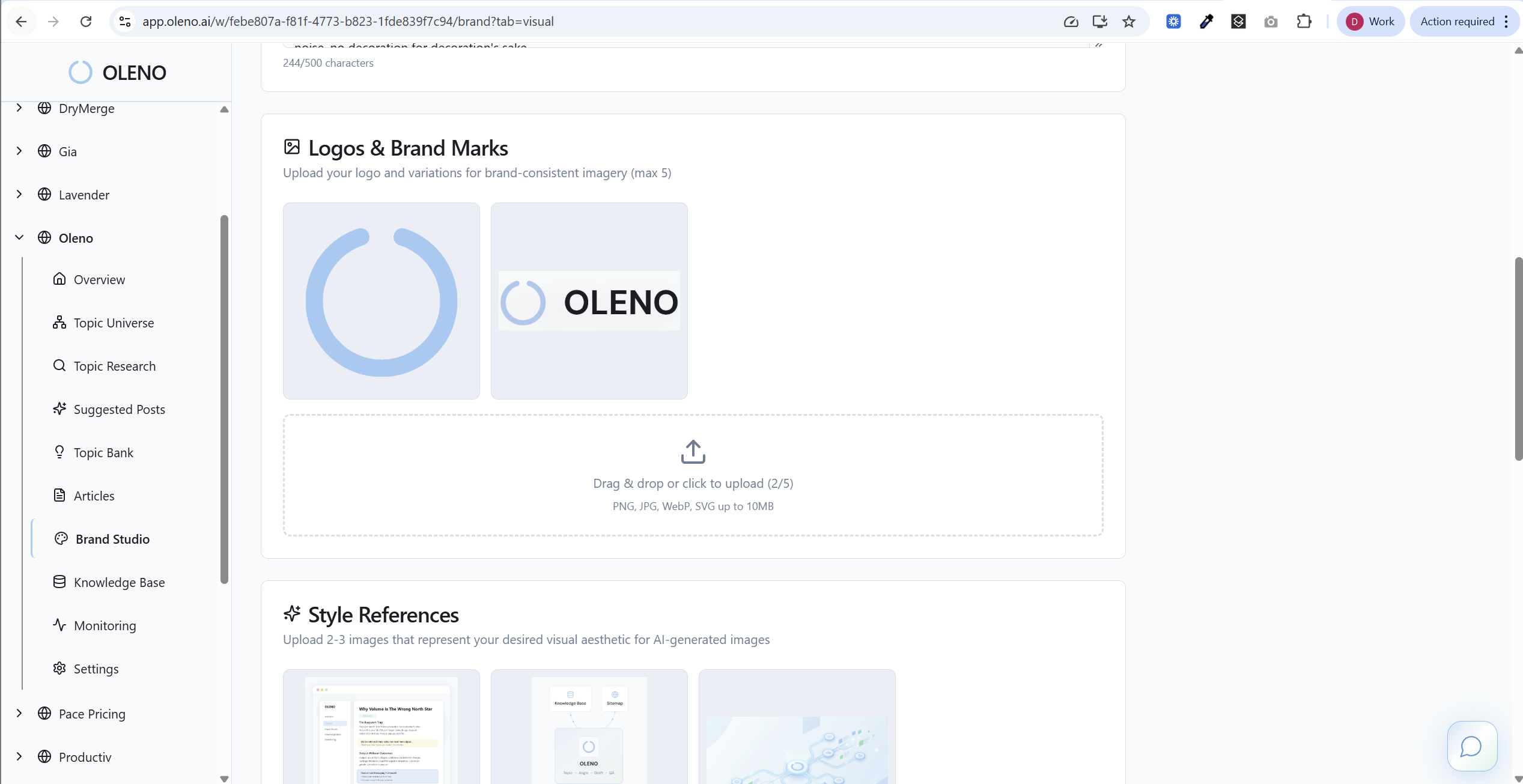
That sounds simple, and it’s the part teams skip. When we encoded voice, claims, and positioning once, the review grind dropped, and so did the “quick fix” spends that patch over messy execution. Less drift, fewer revisits, less frustrating rework. The system holds the guardrails so your 12-week plan doesn’t unravel midstream.
Run Job-Specific Pipelines On A Steady Cadence
Oleno runs studios for the jobs you enable, like programmatic SEO for acquisition, POV and education for category shaping, competitive and product content for evaluation, and customer proof for reinforcement. Every studio uses the same execution engine: Discover to Angle to Brief to Draft to QA to Publish, with QA gates before anything goes live.
Because the process is consistent, you can scale or pause lines in your plan without rewriting how work gets done. Publishing stays on schedule when priorities shift or people get pulled into other work. Outputs stay grounded in your rules. That’s how a small team keeps operating like a larger one, week after week.
Make Weekly Moves With Operational Signals And Tie Dollars To Outcomes
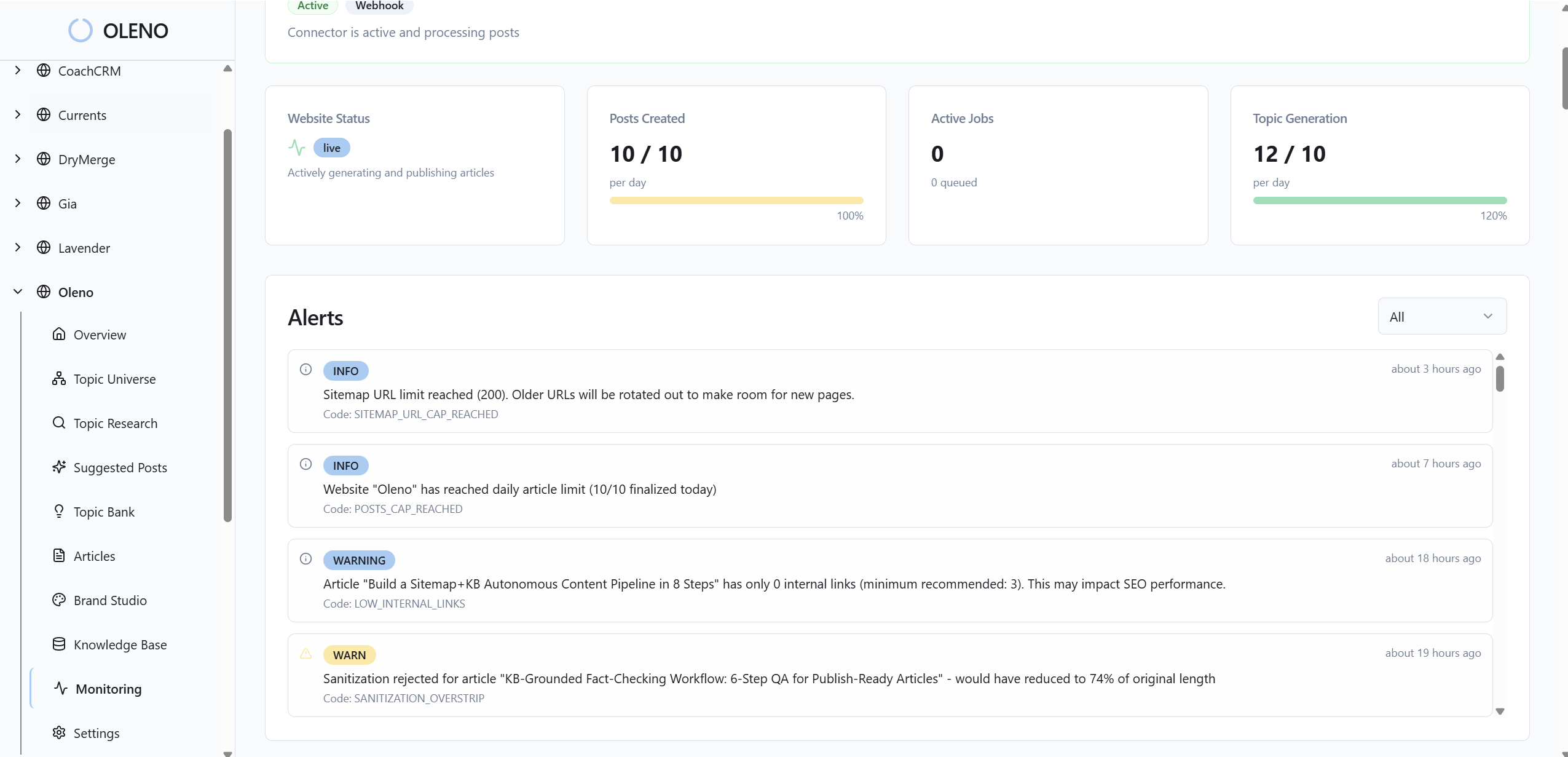
Oleno provides operational visibility into output volume, cadence, and quality trends, so your stop or scale calls rest on execution health, not vibes. If evaluation content dipped last week, you’ll see it, then place reserve dollars where they’ll lift real buying moments. It’s not financial analytics. It’s the system signal you need to move dollars with confidence.
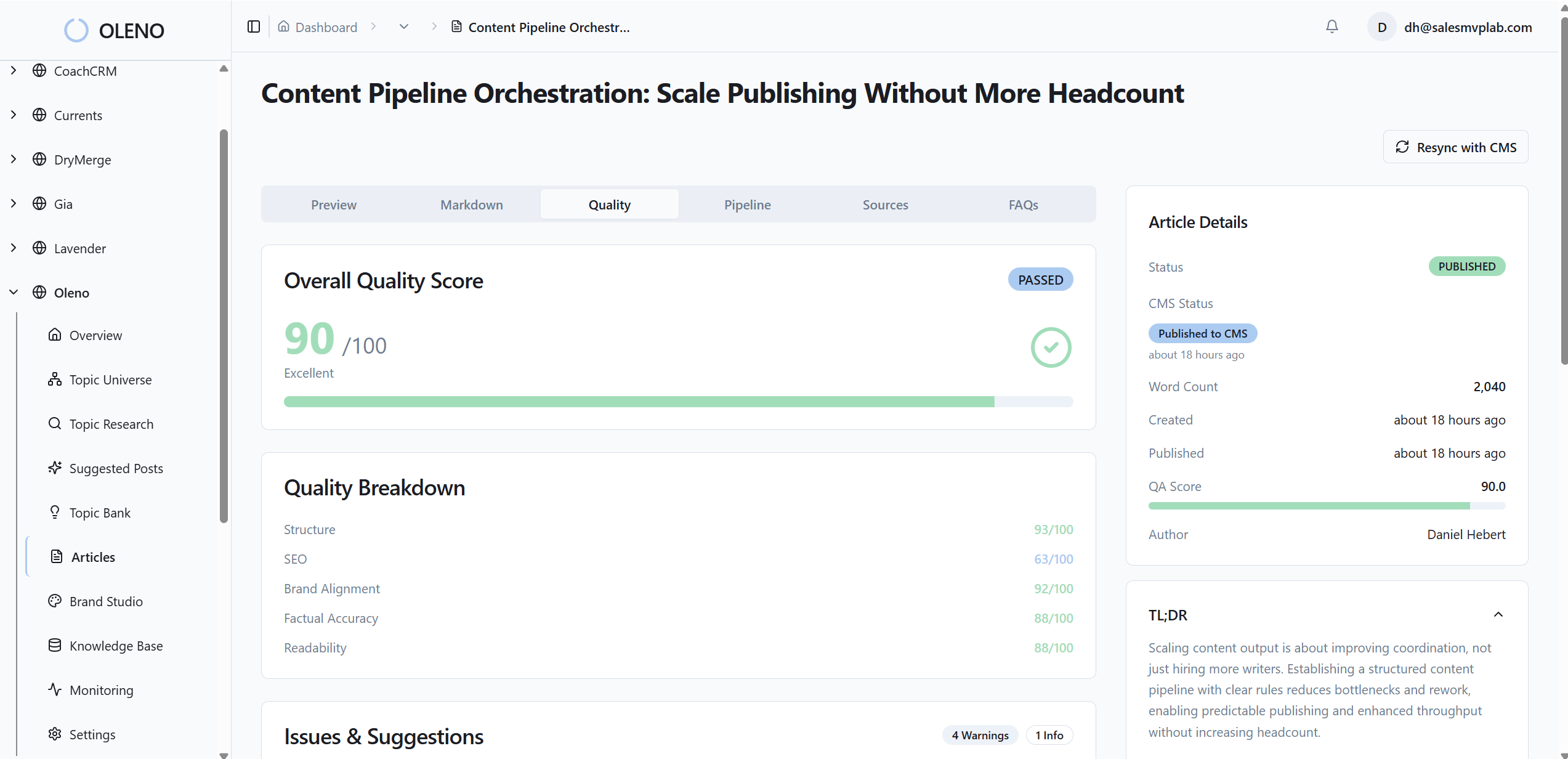
Because outputs are tied to specific demand-gen jobs, you can trace allocation to buyer movement. Comparison pieces support evaluation, programmatic SEO supports capture, category education supports creation. That makes your 12-week template real, and it lets you shift dollars to the highest converting activities without growing headcount. Oleno keeps the execution running while you steer the plan. That’s the leverage you want from a zero-based approach.
Ready to cut drift and keep a steady publishing cadence while you run the weekly budget? Oleno does the execution heavy lifting. Request A Demo.
Conclusion
Early SaaS doesn’t fail from a lack of ideas. It fails when budgets and execution lose the thread. A zero-based 12-week plan, backed by clear gates and a weekly cadence, puts every dollar to work on jobs that move revenue. You learn faster. You cut drift. And you stop paying the hidden tax of rework and resets.
Set the rules once, then let the system run. When the work composes itself day after day, budget turns back into a lever. That’s the point of the plan. Not more activity. More progress.
About Daniel Hebert
I'm the founder of Oleno, SalesMVP Lab, and yourLumira. Been working in B2B SaaS in both sales and marketing leadership for 13+ years. I specialize in building revenue engines from the ground up. Over the years, I've codified writing frameworks, which are now powering Oleno.
Frequently Asked Questions