Zero-Data Topic Discovery: Prioritize Content When You Have No Analytics

I get why early teams wait. You want numbers before you commit. Feels responsible. But here’s the friction: when you’ve got zero traffic, “waiting for analytics” is just a slower way to guess. I learned that the hard way while juggling sales and marketing with a three-person crew. We recorded founder chats, shipped transcripts, and hoped. Words went out. Learning didn’t.
The better pattern is small tests with structured inputs. Borrow signal. Choose topics that serve revenue moments, not vanity keywords. Then ship. You’ll generate the data you’re missing, quickly. It won’t be perfect. It’ll be enough to make your next move smarter, and keep sales from repeating the same explanations on every call.
Key Takeaways:
- Don’t wait for analytics; use proxies and micro-tests to create your own data
- Start with jobs-to-be-done and revenue moments to form topic hypotheses
- Make intent assumptions explicit and choose formats/CTAs accordingly
- Quantify waste vs waiting; small samples still teach fast when scoped right
- Build a simple scoring rubric to prioritize topics without analysis paralysis
- Run a weekly validation cadence and upgrade the yardstick as signals arrive
- When signals start accruing, let a system enforce differentiation and quality
Why Waiting For Analytics Stalls Early Teams
Waiting for analytics stalls early teams because there’s nothing to analyze yet. Without baseline traffic, “data-driven” becomes an excuse to pause, and your competitors fill the gap. Instead, use structured proxies, competitive SERPs, community threads, and buyer language, to run small tests that generate your first reliable signals.

The zero-data trap most startups fall into
Early teams think rigor means dashboards. It doesn’t, not at first. You’re asking spreadsheets to answer questions only real reactions can answer. So content sits in drafts, reps keep typing the same follow-ups, and the market learns from your competitors instead of you. The trap is subtle: “We’ll start once we can measure.” That’s a loop with no entry point.
When I ran point on sales at a SaaS company, we admired rankings that didn’t move revenue. Gorgeous charts, weak pipeline impact. I’ve also been the lone marketer writing four posts a week because we had a framework, not data. Which one built traction? The one that shipped. Not because guessing is good, but because feedback showed up fast enough to adjust. That’s the job.
The fix isn’t chaos. It’s constraints. Borrow demand patterns from competitive SERPs. Pull seed terms from your product language and actual customer emails. Scrape a few community threads. Call it a starting map, not gospel. Then move.
What is a workable substitute for traffic data?
When you have no analytics, you can borrow signal in three ways: competitive pages that already rank, language your buyers actually use, and unfiltered questions from communities. None of these are perfect. Together, they’re directional enough to decide what to test this week, not to “model the market.”
Here’s a simple approach we’ve used with tiny teams. Run a lightweight sweep of your category’s top SERPs and note the recurring problems and formats. Build a seed list from your feature names, competitor feature names, and phrases lifted from support tickets. Scan three communities your buyers frequent, look for repeated “how do I” and “is there a way to” posts. You’ll end up with ten to fifteen topic hypotheses worth a first pass.
Want to skip the theory and see outputs? Generate quick proof, then double down. Ready to move? Generate 3 Free Test Articles.
What Actually Drives Topics When You Have Zero Data
What drives topics with zero data is proximity to revenue moments, not keyword volume. Start with jobs-to-be-done, “aha” points in your product, and frequent sales blockers. Turn each into a testable topic hypothesis with an explicit intent tag and matching CTA. You’ll learn faster because every test ties to an outcome that matters now.

Map user journeys to revenue moments
Start with revenue, not keywords. List the jobs users hire your product for, the moments inside your product where people say “oh wow,” and the friction that consistently slows deals. Each one becomes a topic hypothesis. You’re not trying to predict traffic, you’re lining up content with the steps buyers already take.
Do this in a one-hour working session with someone who hears customers daily. Put “Trial-to-adopt aha,” “Onboarding blocker,” and “Objection: procurement” on the board. For each, sketch a content angle, the likely intent, and a practical CTA. Example: “How X Teams Ship ‘Board-Ready’ Reports in 30 Minutes” → intent: solution exploration → CTA: “Get the Report Template.” The dots will connect more easily for sales, because you started where sales lives.
How do you form business-led topic hypotheses?
Use prompts that expose revenue friction. Try, “When a buyer says ‘I wish I could…’, what comes next?” and “What must be true before a trial converts?” Pair this with product telemetry you already have, feature usage, channel where signups come from, and top support themes. You’re building hypotheses, not forecasts.
This is where jobs-to-be-done shines. If you need a refresher on framing, the perspective in Know Your Customers’ ‘Jobs to Be Done’ (Harvard Business Review) is an accessible primer. Write your hypotheses in plain language with an intent tag and a single CTA. Keep them short enough that you can kill or greenlight within a week.
The hidden complexity behind intent when signals are missing
Without analytics, intent is easy to misread. That’s fine, just make your guess explicit. Add a one-line intent statement to every topic: “Comparison intent, late stage, objection handling,” or “Problem discovery, top of funnel.” That tag informs format and CTA. It also gives you something to update when real data shows up.
This practice prevents apples-to-oranges tests. A “compare X vs Y” explainer with a “Start Trial” CTA will behave differently than a teardown with a “Send Me the Template” CTA. You can’t learn if your inputs are scrambled. It sounds rigid. It’s actually freeing. You’ll know why something worked, and what to try next.
The Real Costs Of Guessing Wrong On Content Priorities
Guessing wrong on content priorities burns hours and misses revenue moments. Ten light posts can cost 100 hours and $7,500 in loaded cost, with nothing useful for sales. Worse, waiting three months for “enough data” often costs more than controlled weekly tests. Small, well-scoped experiments teach faster and reduce rework.
The real math on waste versus waiting
Let’s pretend you ship ten light articles no one asked for. Two hours to brief, six to write, two to publish. Ten hours each. That’s 100 hours, and at a modest $75 loaded rate, $7,500. What did you buy? Maybe a handful of unqualified visits and a lot of shrugging in sales one-pagers. That’s the hard cost.
Now compare that to a month of micro-tests. Three tests per week for four weeks: twelve attempts. Each takes 90 minutes end to end because you’re validating a hook, not crafting a magnum opus. Eighteen hours total. Even if half flop, the survivors reveal which angles earn clicks and which CTAs get tapped. In usability, small samples teach fast; the same spirit applies here, see Why You Only Need to Test with 5 Users (Nielsen Norman Group). The punchline: wait less, learn more, spend smarter.
Why misaligned content hurts sales conversations
When content drifts from your product, sales can’t use it. I’ve seen teams rank for impressive terms that never map to what they sell. Traffic arrives. Pipeline doesn’t. Reps still resort to custom emails, rebuilding the narrative from scratch. It’s frustrating rework dressed up as “brand building.”
Tie topics to how buyers decide and adopt, not to what looks good on a dashboard. If an article doesn’t help a rep handle a common objection, unlock an “aha” moment, or de-risk a comparison, park it. You don’t need more pages. You need the right ones, written so your team can actually send them in a deal.
Still debating instead of testing? Spin up a quick cycle and let the results speak. Try an Autonomous Content Engine.
The Early-Stage Reality No Dashboard Will Save You
Dashboards won’t save early teams because there’s no stable signal yet. Momentum comes from rules, not reports: a small decision crew, explicit intent tags, and a weekly validation cadence. Ship narrow tests, then upgrade the yardstick as data arrives. You’ll reduce rework and keep decisions faster than debate.
A short story from the trenches
At a three-person company, we recorded founder chats, transcribed them, and turned them into posts. It worked, sort of. Words shipped. Intent didn’t. We were missing structure, intent tags, and clear CTAs. So we created traffic without learning, and we learned that the hard way when sales asked, “Which piece do I send for this objection?”
The lesson wasn’t “don’t be scrappy.” It was “be scrappy with guardrails.” A minimum set of constraints, intent tags, a scoring rubric, and a weekly review, turns chaotic publishing into a system. You cut the frustrating rework later because you made small, reversible bets now. It’s less romantic than inspiration. It’s also repeatable.
Who needs to be in the room, and when to change course
Keep the decision room small. You need three voices: the founder or product lead for narrative truth, someone who hears the customer daily (support or sales), and one person who can ship. That trio can define hypotheses, choose tests, and publish. Add more voices only when delay beats learning, which is rare early on.
Set a simple bar to change course. If a topic can’t earn a click or inquiry in seven days of micro-testing, retire it. If two CTAs outpull the others, double down. Don’t relitigate. Let the yardstick call it. As analytics roll in, upgrade the yardstick, tighten your scoring weights, refine your intents, and expand beyond the first proxy sources.
A Practical Playbook To Find, Score, And Ship Topics Without Analytics
A practical zero-data playbook uses low-cost proxies, intent tagging, a simple scoring rubric, and a weekly validation cadence. Borrow signal from SERPs and communities, triangulate with buyer language, score for business impact, then run three tests per week. You’ll create the data you need while staying tethered to revenue.
Low-cost proxies and intent triangulation you can run this week
Start with three inputs: competitive SERPs, product and competitor terms, and real customer phrasing from support threads. Use them to draft ten to fifteen topic hypotheses with an explicit intent tag and one CTA each. This gives you a focused, test-ready backlog aligned to how people talk and what they look for.
Layer in quick qualitative signal. Run five buyer interviews with jobs-to-be-done prompts and add a one-question micro-survey in your product or newsletter. If you want a helpful framing, skim Why the Lean Start-Up Changes Everything (Harvard Business Review). Don’t overcomplicate it. Consolidate themes into three intents, problem discovery, solution comparison, objection handling, and map each topic to one. Apples to apples.
A scoring rubric you can copy and modify
You’re prioritizing, not predicting. Use four factors, score each 1–5, and compute a weighted total. The factors: urgency to revenue, acquisition potential, defensibility, and production cost. This reduces debate and makes trade-offs explicit in five minutes, not five meetings.
Here’s how I weight early-stage programs. Urgency to revenue (40%) because sales needs help now. Acquisition potential (25%) because you still want attention. Defensibility (20%) to avoid me-too content. Production cost (15%) so you don’t overload the one person shipping. Keep it in a simple spreadsheet anyone can use. The goal isn’t perfect math; it’s consistent choices.
- Urgency to revenue (x4)
- Acquisition potential (x2.5)
- Defensibility (x2)
- Production cost (x1.5)
Interjection: if a topic scores high but can’t be shipped this week, defer it. Not killed, sequenced.
Validation experiments and a sensible cadence
Validate fast, then deepen. Use ephemeral landing pages, short-form posts that tease your thesis, and simple CTA click tests like “Get a teardown” or “Send me the template.” Each test should answer one question: did this hook and CTA earn attention from the right intent? No more, no less.
Run three tests per week. Do weekly commits and 30/60/90-day reviews to upgrade rules, not to relitigate every idea. If you’re wondering about sample size, a rough heuristic keeps you honest; see Optimizely’s overview of sample size for simple guardrails. You’ll avoid overinterpreting tiny blips while still moving faster than “wait for analytics.”
How Oleno Operationalizes Your Zero-Data Playbook Once Signals Arrive
Oleno operationalizes your playbook by shifting from proxies to governed inputs, enforcing differentiation upstream, and removing handoffs. Once you’ve got a basic sitemap and knowledge base, Oleno determines what to write, locks angles and structure, checks quality automatically, generates visuals, and publishes on schedule, without prompts or coordination.
From proxies to governed inputs, with quality enforced end to end
Here’s how the transition works in practice. As signals start to appear and you’ve built a small knowledge base, Oleno’s Topic Discovery analyzes your sitemap to identify coverage gaps, avoids duplicates, and selects topics that can be written safely from your KB. Daily. Predictable. No manual calendars. Angles are created and briefs are locked before writing, so differentiation isn’t a hope, it’s enforced upstream.
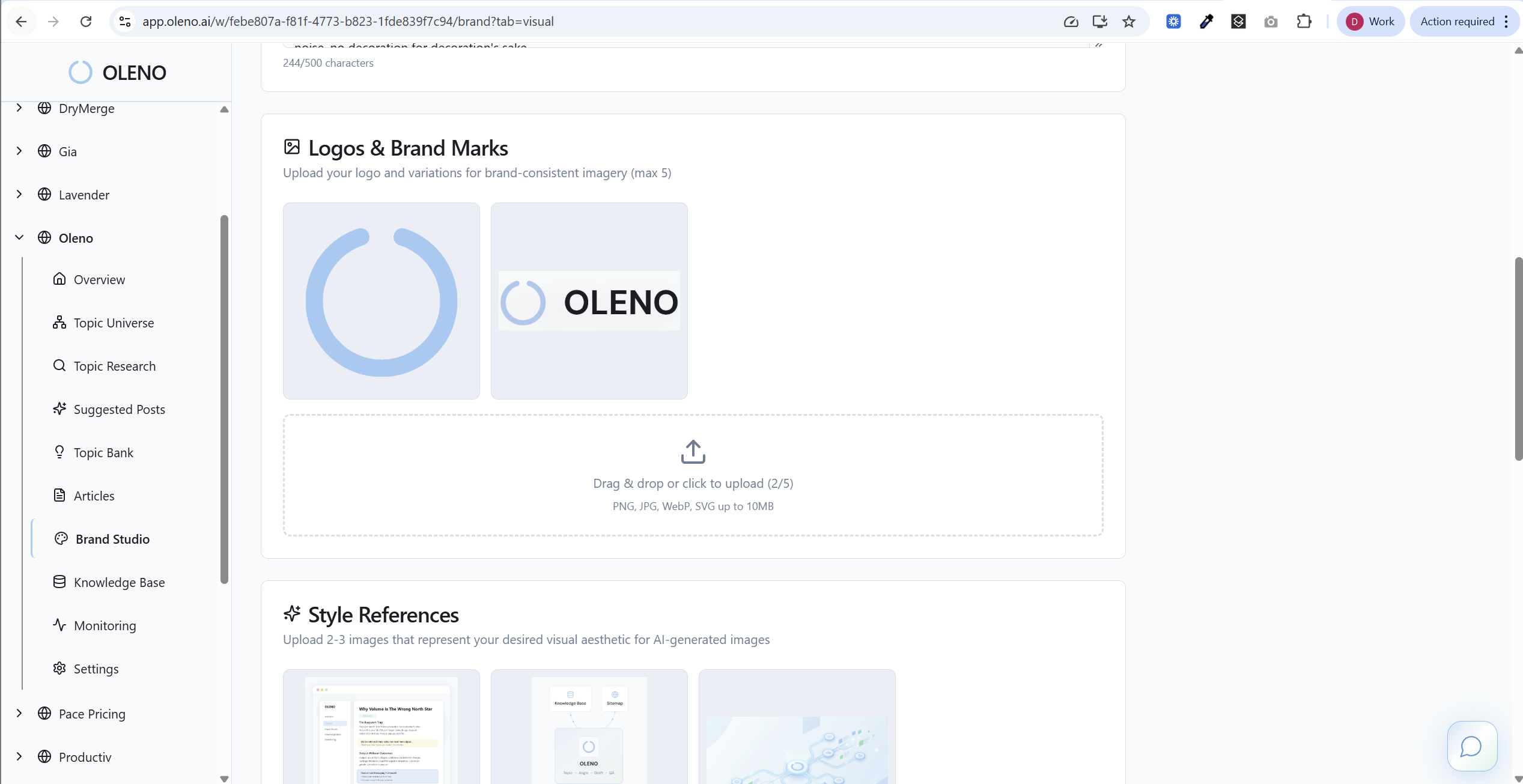
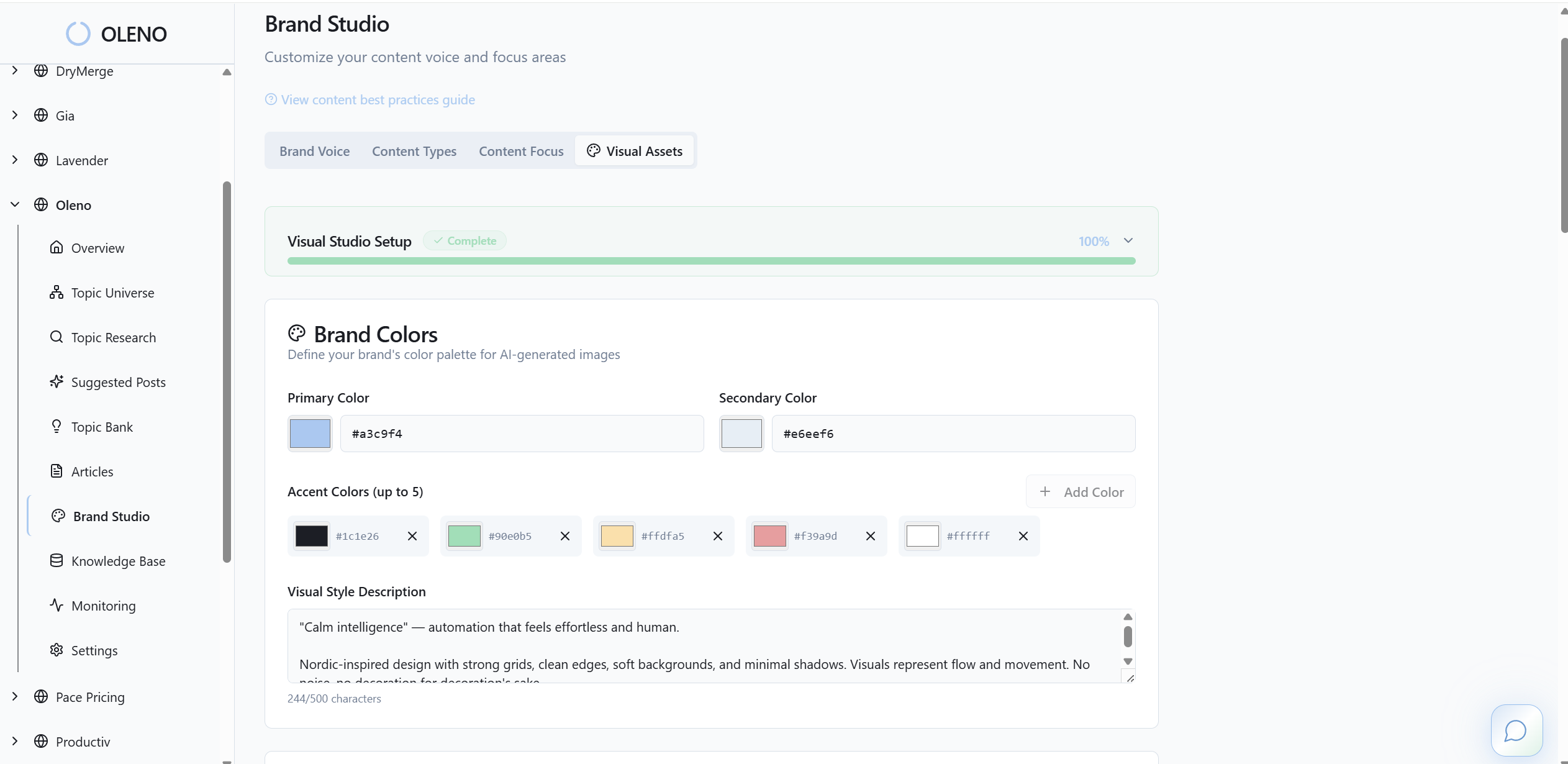
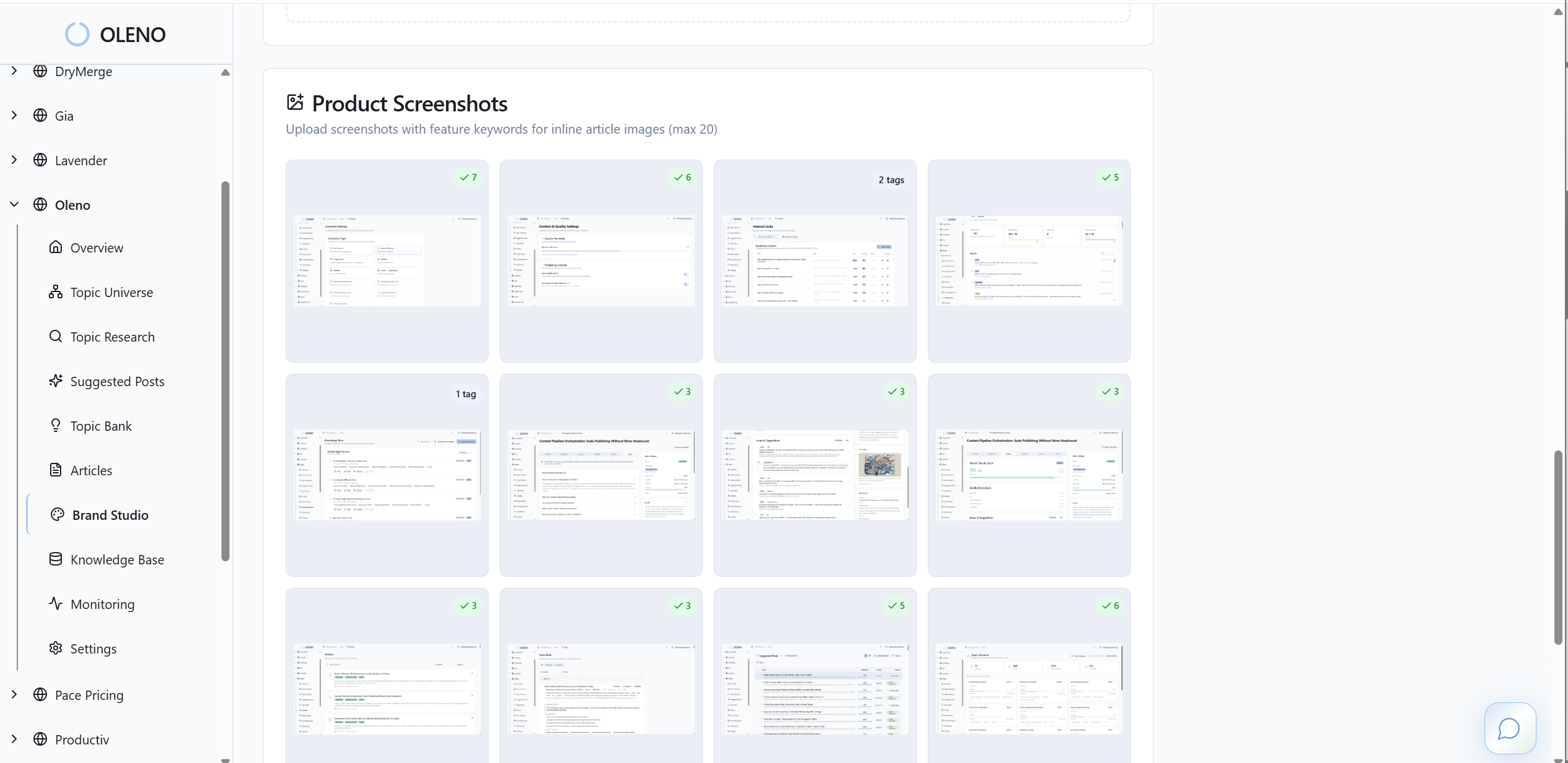
Drafts are written in your voice and grounded in your KB. Then Oleno’s QA Gate checks structure, voice alignment, clarity, and KB grounding; anything below threshold is revised automatically until it passes. Visuals are generated to match your brand, with SEO-safe filenames and alt text. Finally, Oleno publishes directly to your CMS (WordPress, Webflow, Storyblok, HubSpot, Framer, and more) with idempotency, so no duplicates. The result: the cadence you established during validation, now guarded by a system that reduces rework and keeps your team focused on what to test next, not on pushing buttons.
If you’re ready to trade “prompt and pray” for deterministic execution, this is the moment to try it on a live workflow. Try Oleno for Free.
Conclusion
You don’t need a dashboard to start. You need a method to learn. Borrow signal, tie topics to revenue moments, make intent explicit, and run small tests every week. As signals arrive, let a system enforce differentiation and quality so you keep momentum without drift. That’s how you move from guessing to compounding, on purpose, and on schedule.
About Daniel Hebert
I'm the founder of Oleno, SalesMVP Lab, and yourLumira. Been working in B2B SaaS in both sales and marketing leadership for 13+ years. I specialize in building revenue engines from the ground up. Over the years, I've codified writing frameworks, which are now powering Oleno.
Frequently Asked Questions