Turn your point of view into content buyers remember.
Oleno helps marketing teams create publish-ready content from their positioning, product truth, customer proof, and brand voice. Built for search visibility, AI answers, and buyers who don't want to read slop.
Bring your current Claude, agency, or content workflow. We'll compare it live.
Marketing teams already creating content with Oleno








Your strategy shouldn't die in a prompt box.
Claude can write a draft.
The problem is everything that happens before and after it.
Topics. Research. Briefs. Outlines. Product proof. Voice. QA. Internal links. CMS cleanup. All the unglamorous work that decides whether the article is actually worth publishing.
Oleno puts that whole path in one place, so every article starts with your real company context and moves through the same review process.
Your team keeps the judgment. Oleno handles the production work.
More content won't fix a weak point of view.
Buyers don't need another article explaining the category.
They have Google for that. And ChatGPT. And Reddit. And three competitors saying the same thing with different logos.
Your content has to do more.
It has to rank, get cited, and make a buyer think, "Okay, these people actually understand the problem."
Oleno builds each article around your market, your product truth, and your point of view, so the writing has something to say before it tries to sell.
Win the places buyers now look.
Structured articles with search intent, metadata, internal links, and topical depth baked in.
Clear headings, direct answers, source-backed claims, and enough context for LLMs to understand what you know.
Sharp arguments, real proof, and none of the "companies today are navigating complexity" filler.
Every article is checked against all three before it ships.
Use Claude for drafts. Use Oleno for the whole job.
Chat tools are great for quick rewrites, rough ideas, and small pieces of copy.
They get messy when a marketing team needs repeatable content tied to real positioning, proof, and publishing standards.
That's when the prompt doc turns into a side project. The side project turns into a workflow. The workflow turns into someone's Friday afternoon.
Oleno was built so marketers don't have to become AI ops.
ChatGPT, Claude, Notion AI
General-purposeFast for one-off writing.
Hard to keep consistent across a team. Voice, positioning, proof, and QA depend on whoever is prompting that day.
Jasper, Writer, Copy.ai
AI writersUseful for quick marketing copy.
Less useful when the article needs a strong angle, product depth, and a buyer-ready argument.
AirOps, Claude Code, in-house workflows
DIY pipelinesGreat if you want to build the machine yourself.
Less great if your marketing team has actual marketing to do.
Oleno
Built for marketersA controlled content process from topic to CMS-ready article.
Research, brief, outline, draft, QA, and publishing in one place.
See how Oleno stacks up.
Review the work before the draft becomes a problem.
Most AI tools hide the messy middle behind one big generate button.
Oleno shows the work.
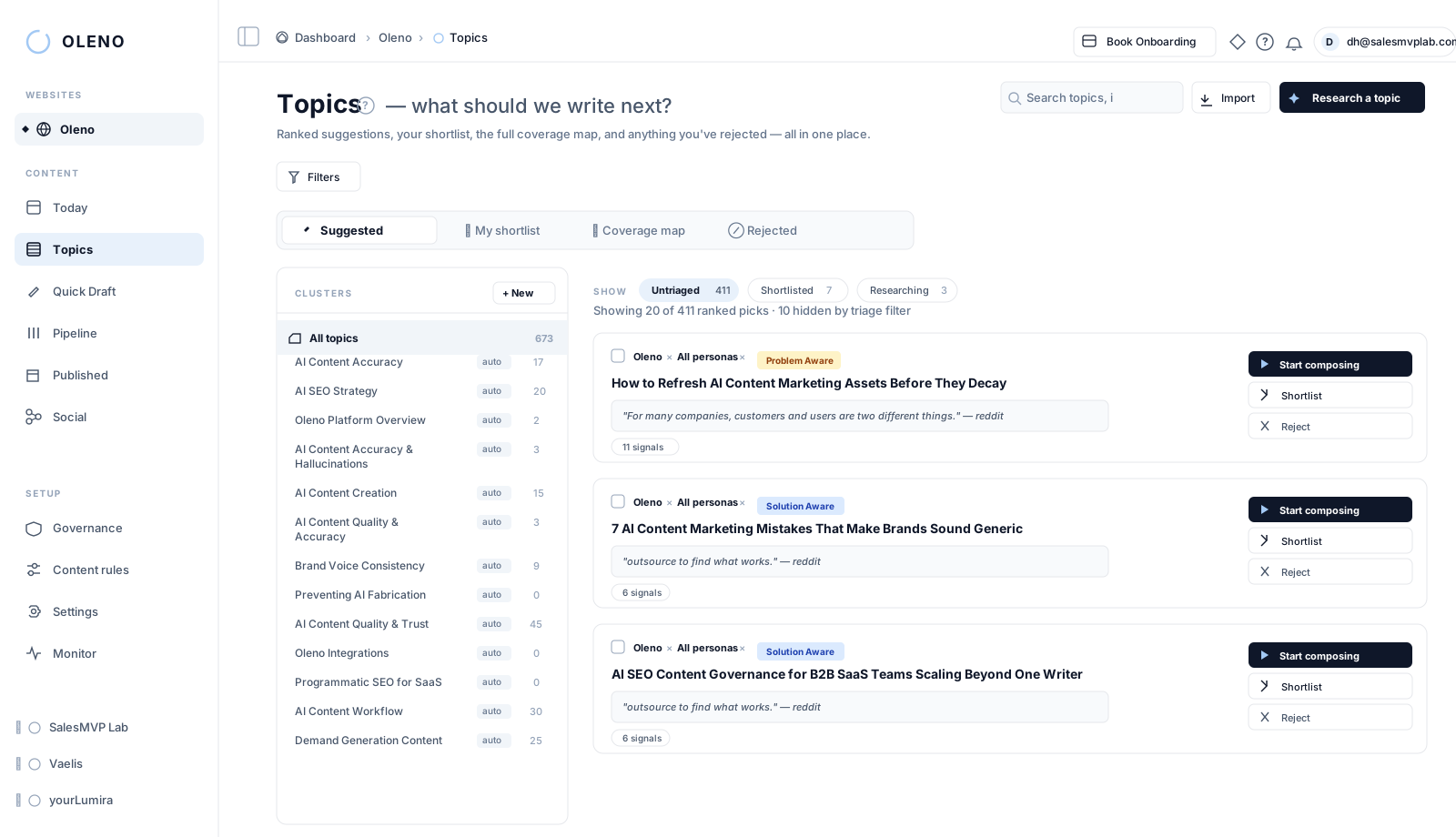
You can review the topic, research, brief, outline, and draft before anything reaches your CMS. Fix the angle early. Add proof where it belongs. Cut weak ideas before they turn into 900 words your team has to edit later.
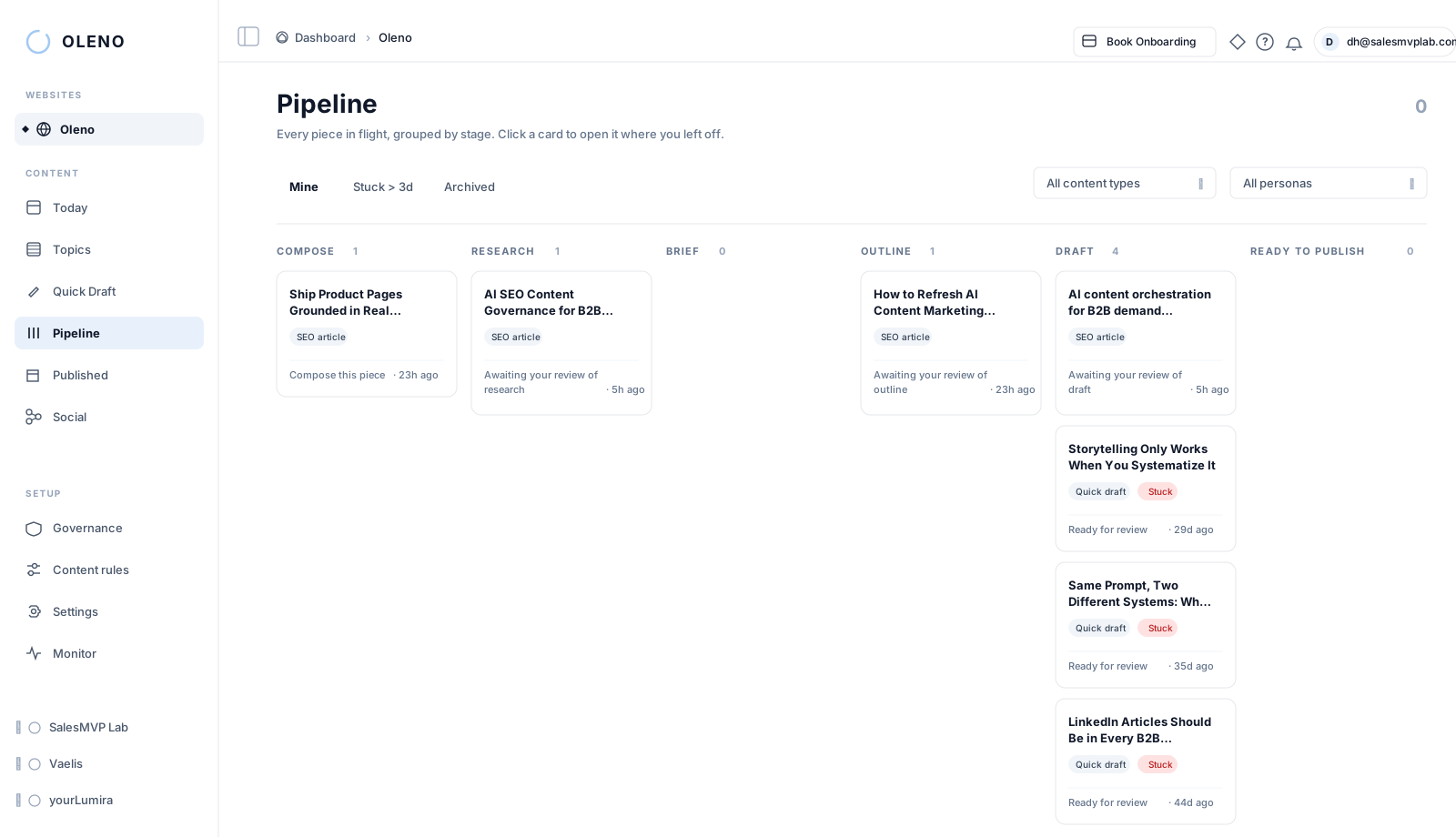
- Step 01
Pick a topic
Start with an Oleno topic, SEO keyword, competitor gap, sales-call insight, or AI visibility prompt. Shortlist what matters. Skip what doesn't.
- Step 02
Review the research
Check the sources, market context, competing angles, and claims before the brief gets written. Bad source? Cut it. Better proof? Add it.
- Step 03
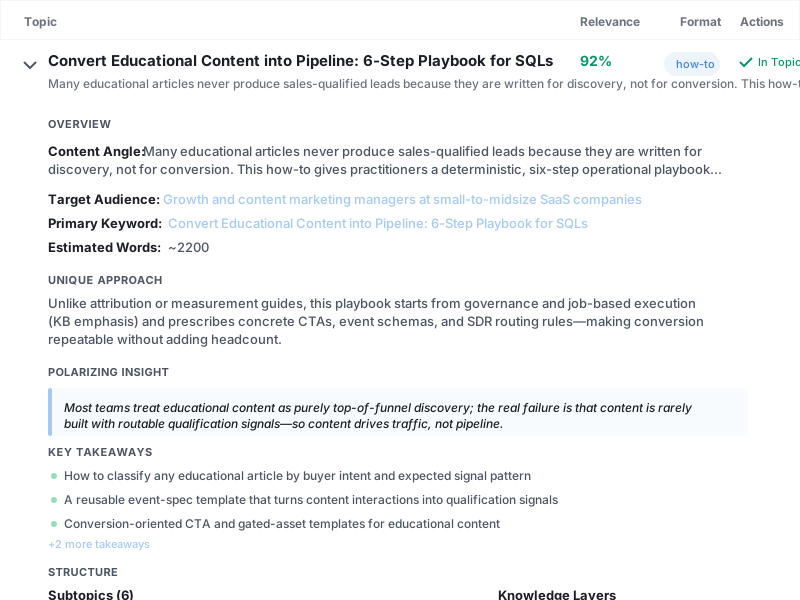
Approve the brief
Audience, angle, search intent, key claims, proof points, internal links, and article direction. A real brief. Not AI soup.
- Step 04
Shape the outline
Move sections. Rewrite headers. Kill weak ideas. Much cheaper here than after the draft exists.
- Step 05
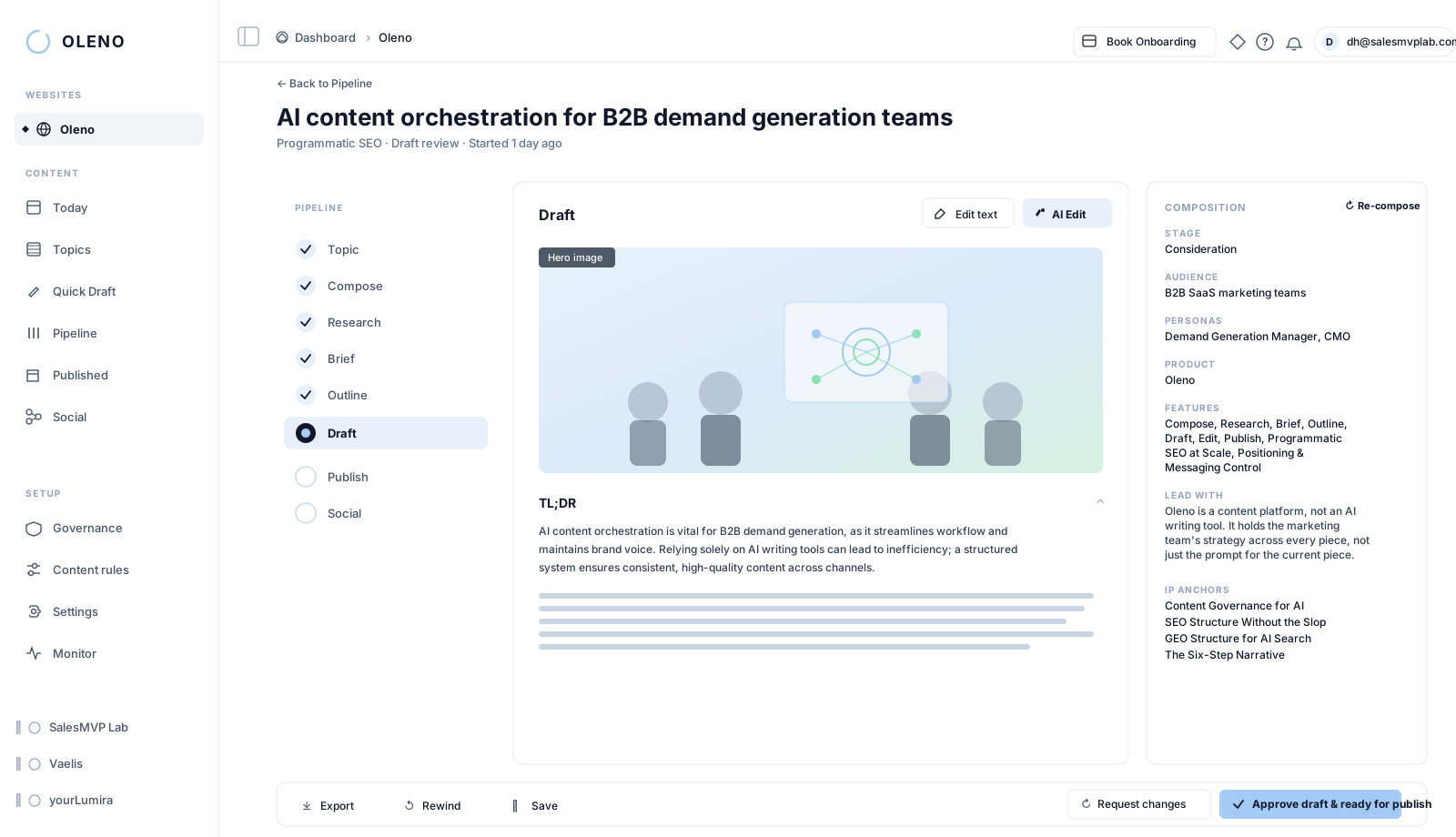
Review the draft
Edit the article, request changes, or approve it for CMS publishing. The draft comes back in your voice, grounded in your product, and checked against your standards.
Lock down the words your AI keeps messing up.
"Clear, smart, and helpful" is not a brand voice.
That's what AI writes when it has nothing better to work with.
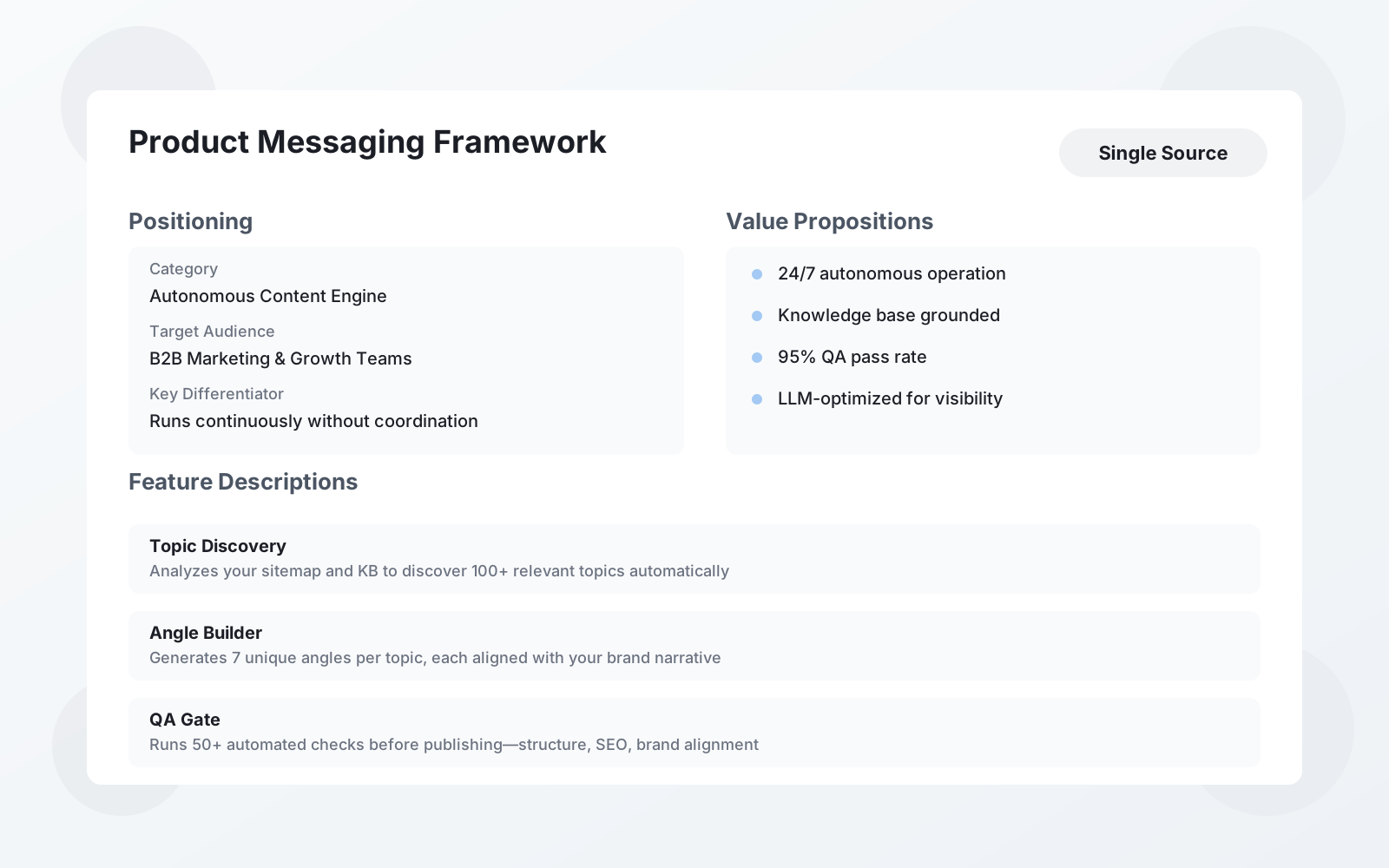
Oleno learns the stuff your team actually cares about: voice, positioning, product truth, claims, customer proof, screenshots, banned phrases, and the little wording choices that make content sound like you.
So every article starts from the same source of truth.
No more "we don't say it that way" comments on draft two.
Voice
Sentence length, pacing, vocabulary, tone rules, examples, and phrases to avoid.
Positioning
Who you're for, who you're not for, what buyers compare you against, and which problems you want to own.
Product truth
What your product does, what it doesn't do, what's still roadmap, and which claims sales shouldn't have to clean up later.
Proof
Customer stories, product screenshots, case studies, sales notes, and source material that make the article feel earned.
Stop sending senior marketers drafts they have to clean up.
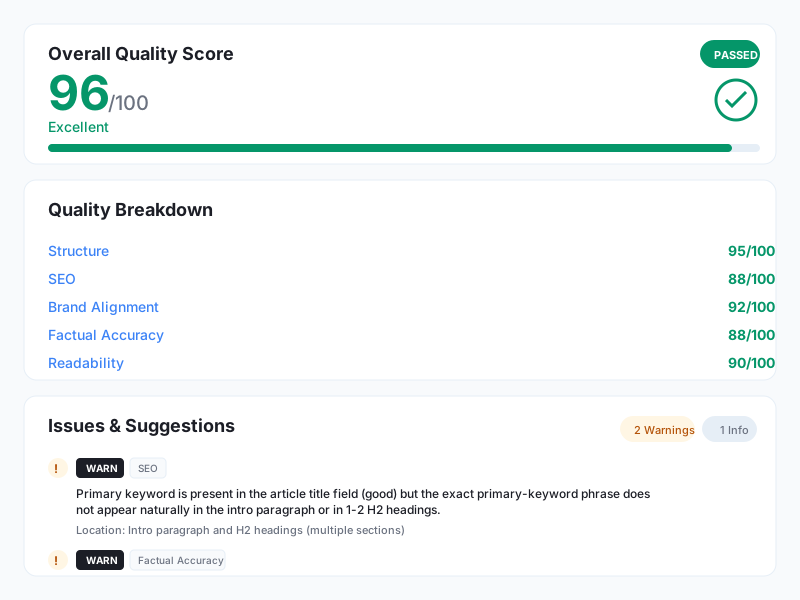
Bad AI content usually has decent grammar.
That's what makes it annoying.
The real issues are softer: weak angle, thin proof, fake-sounding intro, random internal links, vague product section, conclusion that could end any SaaS blog on earth.
Oleno checks for those problems before the draft lands in review.
Your team spends time on judgment, not cleanup.
Old content goes stale quietly.
Your positioning changes.
Your product improves. Competitors ship. Pricing moves. Sales hears new objections. The article from six months ago doesn't know any of that.
Oleno helps flag content that needs a refresh, then shows what changed and what to update.
Your content library keeps matching the company you are now. Not the company you were three launches ago.
If the draft misses the bar, it gets reworked before your team sees it.
"What got my attention with Oleno is that it zeroes in on quality over quantity. Better thinking and better writing perform better in search and AI discovery."

See live examples of Oleno produced content.
What Booth Traffic Management Gets Wrong About Visitor Flow
Most booth teams optimize for capture. The booths that actually convert optimize for flow.
Enforcing Least Privilege to Cut AI Security Incidents
AI agents now hold the same access humans do. Least privilege is the cheapest control you're not enforcing.
April Dunford's Positioning Framework Is Right. The Hard Part Starts After.
The workshop was excellent. Then everyone left the room and the real work started. That part takes a quarter.
Quit turning good strategy into forgettable content.
Your team already has the raw material: positioning, proof, product knowledge, customer stories, and a point of view. Oleno turns it into content your buyers can find, cite, read, and remember. Without hiring another writer. Without building your own AI machine. Without publishing slop you'll want to rewrite next quarter.
See example outputBest fit for B2B SaaS teams publishing weekly and unwilling to sound like everyone else.