Content System Blueprint: Use Topic Mapping to Build Authority

Most teams assume the bottleneck is writing velocity. It isn’t. You can crank out drafts all month and still watch authority stall if strategy, including the rise of dual-discovery surfaces:, differentiation, structure, visuals, and publishing live in separate tools. I’ve seen it as a marketer, a sales lead, and a founder. Faster words don’t fix fragmented systems.
Here’s the punchline: authority compounds when execution is coordinated. Topic mapping, saturation controls, and information gain do the heavy lifting upstream. Snippet-ready structure, deterministic links, brand visuals, and schema reduce cleanup downstream. Once you connect those pieces into a daily, governed flow, content stops being a project and starts behaving like infrastructure.
Key Takeaways:
- Stop chasing velocity; fix fragmentation across strategy, writing, visuals, and publishing
- Build a topic universe with saturation labels and cooldowns to prevent duplicates
- Enforce information gain in briefs so every draft adds something new
- Use snippet-ready openings, internal link rules, and programmatic schema to be citable
- Add a QA gate before publish to eliminate predictable rework and 404s
- Treat content as a system you run daily, not tasks you juggle monthly
Why Writing Faster Will Not Build Authority
Authority comes from coordinated execution, not word count. When strategy, differentiation, visuals, and publishing are disconnected, you create rework and noise. The fix is a system: topic mapping, enforced originality, and deterministic structure so each piece compounds instead of floating alone.

The real failure mode is fragmentation, not speed
If your ideas live in spreadsheets, your research in browser tabs, your drafts in prompts, your visuals in a stock site, and publishing in a frazzled CMS push, you don’t have a content engine. You have handoffs. Handoffs create inconsistency, miss details, and force humans to babysit structure and brand every time. Speed just amplifies the mess.
The teams that quietly pull away usually aren’t better writers. They’ve eliminated fragmentation. Topics roll in from a single map. Differentiation is enforced before anyone writes. Visuals aren’t bolted on; they’re governed by rules and assets. Publishing doesn’t break because fields, links, and schema are mapped. It’s not glamorous. It works.
When we tightened this in past roles, quality stopped depending on the mood of whoever was editing that day. Outcomes became predictable: fewer 404s, fewer off-brand images, fewer “didn’t we already cover this?” moments. That’s the shift. From creative luck to repeatable operations.
Why keyword-first roadmaps miss the system problem
Keywords help, but they’re inputs, not a plan. A list doesn’t tell you where you’re over-covered, when to revisit a topic, or how related pages should connect. Without saturation labels and cooldown policies, you’ll recycle angles and cannibalize intent. That’s a governance problem, not an ideation problem.
A topic map solves the part keyword lists can’t. Map hubs and spokes. Tag intent and ownership. Declare canonical anchors. Then force deterministic internal links, schema, and visual placement as outputs of the system—non-negotiable. When structure is governed, each piece reinforces the cluster, and crawlers (and LLMs) get clear signals.
You don’t need to ban keywords. You need to demote them. Use them to inform coverage gaps, then let the map, thresholds, and cooldowns control what enters the pipeline. That’s how you build authority over time instead of chasing volume spikes.
What is actually blocking authority growth?
It’s repeat coverage and shallow differentiation. That sneaks in when briefs start from what others have said, then add a nicer headline. The remedy starts upstream: compute information gain during brief generation and kill low-score angles early. Downstream, lock in internal links, schema, and snippet-ready sections so each piece is easy to cite.
Differentiation isn’t a hope; it’s a pass/fail. If a brief can’t articulate what’s new—missing perspectives, deeper examples, unique POV—don’t draft it. Then hold the line on structure: every H2 opens with a direct answer, paragraphs are sized for snippet capture, visuals support comprehension, not decoration. You reduce cleanup because the rules do the policing.
Ready to skip the theory and see a governed flow end to end? Try Generating 3 Free Test Articles Now.
The Real Reason Articles Do Not Compound
Articles compound when coverage is intentional and repeat coverage is gated. A single topic universe with saturation labels and cooldowns prevents duplicates and forces you to close gaps. It’s less about more content and more about the right content, in the right cluster, at the right time.
What traditional approaches miss about coverage and saturation
Ad hoc ideation doesn’t track the health of your clusters. You might publish three “sales onboarding” pieces one month because it seems hot, then ignore “enablement analytics” for a quarter. That looks productive, until you realize most of your velocity went into areas already “well-covered,” and the edges where you could win sit “underserved.”
Labeling matters. When a topic universe marks clusters as underserved, healthy, well-covered, or saturated, it becomes a guardrail. Saturated areas get a cooldown; underserved areas get priority. You stop over-watering the same plants and start growing the whole garden. Simple, but hard to do without a map that lives inside your workflow.
Cooldowns are the real unlock. Even a basic 90-day policy prevents accidental re-coverage and buys you time to improve hubs and spokes that actually need depth. It’s the difference between building a library and spinning your wheels.
Topic maps beat keyword lists for predictable authority
A strong topic map works like city planning. Hubs are neighborhoods; spokes are streets. You define intent, attach ownership, set canonical anchors, and then enforce internal links so people (and machines) don’t get lost. Deterministic linking means you always connect related pieces in known places, not wherever a writer remembers.
This is more than navigation. Internal linking concentrates context and clarifies relationships for crawlers. Google even calls out the importance of it; their internal linking best practices make the same point in different words. Add consistent anchors and you’ll reinforce relevance across the cluster.
Ownership helps too. When a cluster “belongs” to someone, accountability replaces inertia. They maintain the map, protect the canonicals, and schedule re-coverage intentionally. The map stays alive.
How do you turn ideas into a system?
You convert opinions into rules. Start by template-izing briefs: require information gain, snippet-ready openers, and target link destinations before drafting. Add a QA gate with a pass threshold. Enforce a 90-day cooldown so re-coverage is deliberate, not accidental. These aren’t fancy ideas; they’re enforced ones.
Then remove human luck where precision matters. Programmatic schema, including why content broke before ai, deterministic internal links, and visual placement rules shouldn’t depend on memory. When the system handles structure and plumbing, your team can argue narrative, not commas. That’s where their time is valuable.
If you’re currently prompt-ing your way through drafts, this shift can feel rigid. It’s not. It’s freeing. Rules carry the boring load so your best people can focus on what only they can do.
The Cost Of Fragmented Content Operations
Fragmentation burns time and credibility. If 20 posts ship monthly and 30% need fixes for links, visuals, or schema, that’s 12 avoidable hours—every month. Across a quarter, you’ve lost a full sprint. That’s before duplicate coverage splits equity and last-mile publishing breaks erode trust.
Engineering and editorial hours lost to rework
Let’s pretend your team ships 20 posts in a month. Six of them come back with broken internal links, off-brand hero images, or missing schema. Two hours to find, fix, republish, re-share. That’s 12 hours of cleanup—time you didn’t plan for and work that shouldn’t exist.
Stack that over a quarter and you’re giving away a full sprint. Meanwhile, the schedule slips, morale dips, and the backlog grows. When you turn recurring edits into rules—internal link injection, visual placement, schema generation—those 12 hours vanish. Not overnight, but predictably.
I’ve watched teams regain an entire day per week just by eliminating last-mile fiddling. It’s not a miracle. It’s governance doing what editing used to.
The hidden cost of duplicate coverage and cannibalization
Publishing near-duplicates splits relevance. Two pages fight over the same intent; both underperform. You burn writing hours on pieces that should have been a single, stronger canonical page or an intentional update. It looks like activity; it pays like waste.
A topic map with saturation labels and cooldowns reduces this risk dramatically. The policy is simple: if a cluster is “well-covered” or “saturated,” pause net-new and improve the hub. Google’s own guidance on consolidating duplicate URLs and canonicalization aligns with this—clarify the primary, connect related, stop splitting signals.
Even a lightweight threshold policy (“three net-new spokes per hub per month, then cooldown”) can save weeks per quarter. Less drift, more depth.
When publishing breaks at the last mile
You hit publish and find the schema malformed, the hero image mis-sized, or a key internal link pointing to a 404. That’s a credibility hit you didn’t need. It also forces a choreographed fire drill—editor, developer, designer—when everyone should be working on the next thing.
This is exactly where determinism helps. Link injectors that pull from a verified sitemap won’t fabricate anchors. Programmatic schema eliminates manual errors and aligns to references like Google’s Article structured data guidelines. You won’t catch every edge case, but the surprise rate drops sharply.
Still stitching drafts together by hand? There’s a simpler path. Try Using An Autonomous Content Engine For Always-On Publishing.
When Content Fails At The Worst Time
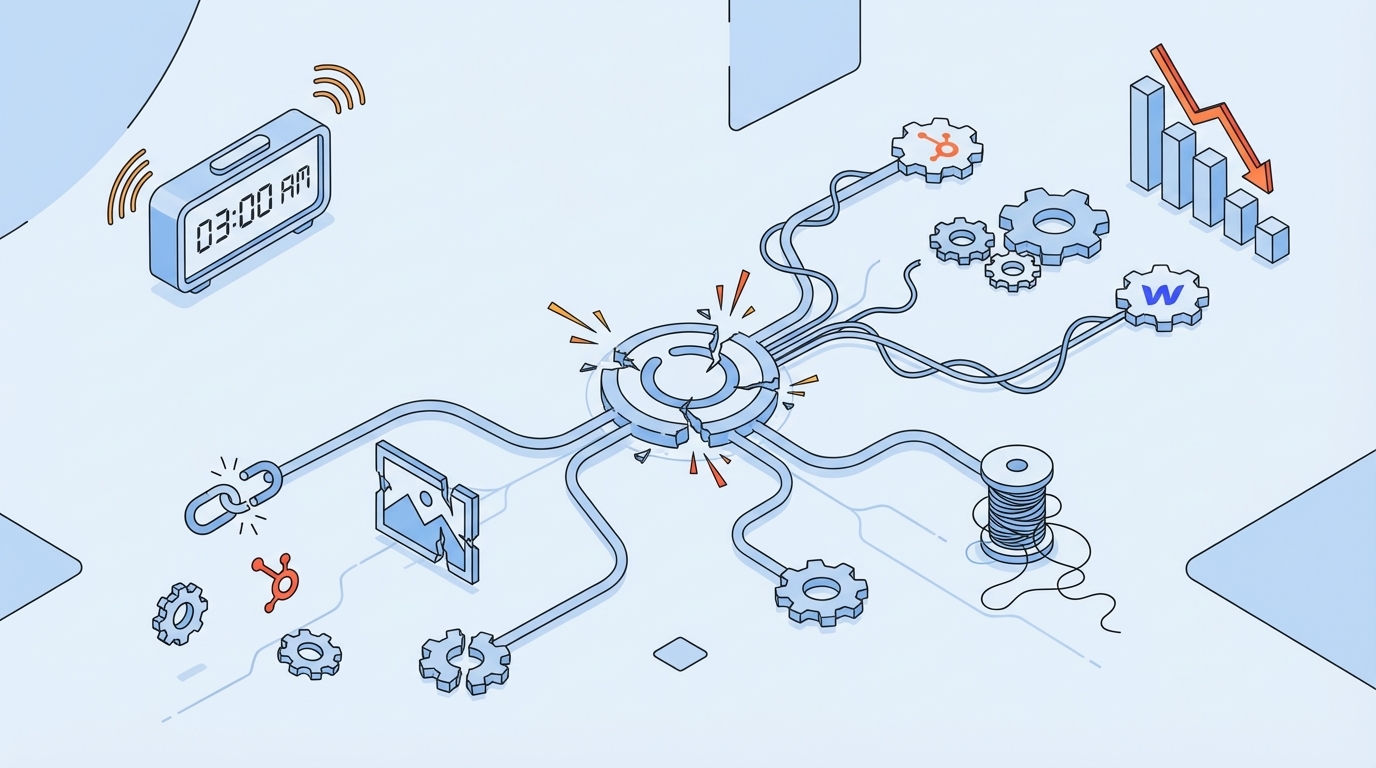
Failure shows up at 3am and at QBRs. Off-brand visuals, broken links, and threads of tools that barely hold together. Or founder-led sprints that publish fast but miss search intent, so traffic looks okay and pipeline doesn’t move. You don’t need more effort. You need fewer fire drills.
The 3am incident no one saw coming
You’ve been there. Post goes live, hero image looks off-brand, a high-traffic internal link 404s, and someone in sales sees it before you do. Suddenly you’re triaging in Slack. It’s stressful and, most days, avoidable. Visual rules and verified sitemap linking cut this risk down to size.
The harder part isn’t the fix—it’s the erosion of trust. The next time you ask for a launch slot on the homepage, someone remembers the last scramble. When structure, links, and schema are governed, your mornings get predictable and those memories fade. Not perfect. Just consistent.
And yes, there’s another failure mode: realizing you’re managing tools, not outcomes. Five apps open, ten tabs, three approvals, and then a publish. Barely. That’s not a system. That’s a juggling act with a high drop rate.
A founder-led sprint that missed search intent
I’ve done the “record a quick video, transcribe, publish” dance with a CEO. Fast, sure. But the structure missed how search works, so we ranked for the wrong stuff and couldn’t tie the story back to the product. It felt productive and moved zero pipeline. Painful lesson.
A topic map and snippet-ready sections would’ve saved us. We could’ve kept the founder’s voice and layered the structure machines understand: direct answers up top, clear hubs and spokes, internal links that reinforce meaning. Same story. Far better outcome.
When the system shapes the narrative instead of the other way around, intent and personality can coexist. That’s the goal.
A Blueprint That Treats Content As A System
Treat content like operations, not output. Build a topic map from your KB and sitemap, label saturation, enforce cooldowns, and require information gain before drafting. Then ship with snippet-ready sections, deterministic links, brand visuals, and programmatic schema. Do this daily and your library compounds.
Build your topic map with inputs, clustering, and tags
Start with three inputs: your knowledge base, your sitemap, and your focus areas. Cluster topics by pillar, then tag each topic with intent, owner, canonical hub, and status. Keep the map simple, visible, and connected to your pipeline so it drives suggestions and approvals—not just documentation.
This is where you prevent drift. When every topic knows its hub, owner, and status, you can make decisions in seconds. You’ll know what’s underserved, what’s due for re-coverage, and what’s saturated. That turns “what should we write?” into a system task, not a meeting.
A lightweight structure works:
- Columns: Topic, Intent, Type, Priority, Status
- Add: Saturation label and Cooldown date
- Make it: Your single source of truth, not a pretty artifact
Score saturation and prioritize coverage with simple thresholds
Perfect math isn’t the goal. Predictable behavior is. Label clusters as underserved, healthy, well-covered, or saturated using counts and cadence. Enforce a 90-day cooldown before re-covering a topic so updates are deliberate. Use these labels to prioritize gaps that strengthen hubs and reduce duplication.
A practical cadence helps teams breathe. When people know why a topic is paused (“saturated, on cooldown until June”), they trust the system and stop pushing pet ideas. That’s half the battle—alignment.
Keep it simple so it sticks:
- Define thresholds for each label
- Assign cooldown windows in days
- Always queue gap-filling topics first
Ship information gain briefs that force originality
Before writing, brief for what’s missing. Capture competing angles, including content strategy system prevent overpublishing build authority, list the shallow takes, and write the single sentence that explains your unique POV. Then score information gain. If the score’s low, adjust the angle or pick a cleaner gap. This kills polite rewrites early and rewards depth.
Structure matters here too. Include snippet-openers in the brief: a direct answer, supporting context, and a practical example. That pattern improves eligibility for featured answers; Google outlines the basics in its featured snippets guidance. You’re not gaming; you’re clarifying.
Template, don’t freestyle:
- Fields: Topic ID, Intent Summary, Competing Angles, Missing Perspectives, Unique POV, Info Gain Score
- Require: Target internal links and canonical anchor
- Pass/Fail: Don’t draft until it passes the bar
How Oleno Operationalizes This Blueprint End To End
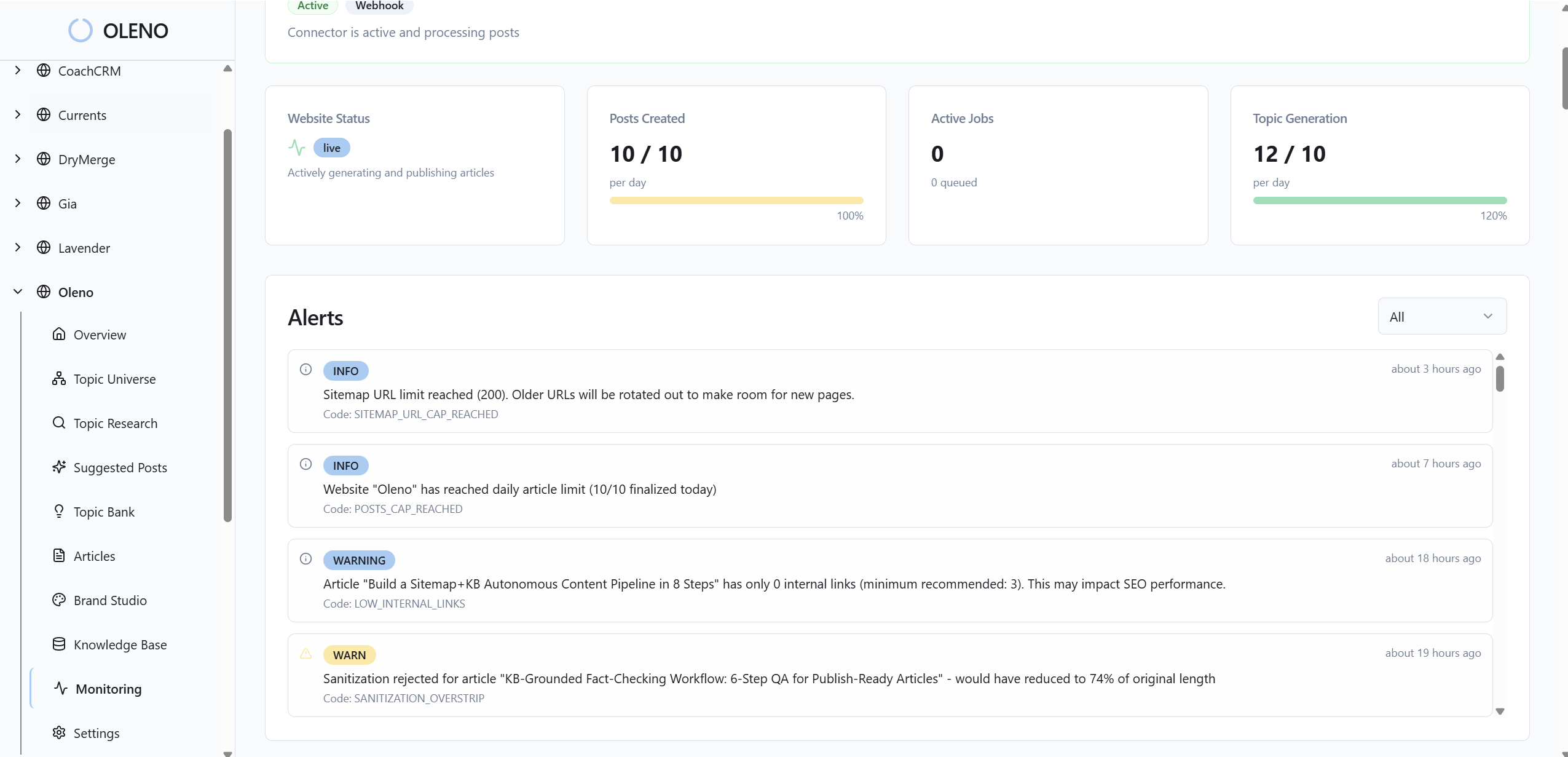
Oleno turns the blueprint into a daily system. Topic Universe maps clusters, tracks saturation, and enforces cooldowns. Brief generation runs competitive research and information gain scoring before any draft. Visual Studio generates brand visuals and matches product screenshots to relevant sections. Deterministic links, programmatic schema, an 80+ check QA gate, and CMS connectors handle the last mile.
From Topic Universe To Publish-Ready: What Actually Runs
This isn’t prompt engineering; it’s orchestration. Oleno discovers topics from your knowledge base and sitemap, groups them into clusters, and labels saturation states so you don’t over-publish the same ideas. A 90-day cooldown is enforced by the system, not memory. That alone reduces accidental duplicates and protects cluster integrity.
During brief generation, Oleno performs competitive research, including why content now requires autonomous, identifies common coverage and missing perspectives, and assigns an information gain score. Low-scoring briefs trigger a rethink before writing, so draft time is spent on unique value, not rephrasing what already exists. In our experience, this materially cuts frustrating rework and raises QA pass rates.
Visuals aren’t an afterthought. Visual Studio pulls from a Brand Asset Library—colors, logos, style references, and tagged product screenshots—to generate hero and inline images that look like you. It matches product screenshots to relevant sections using semantic similarity and prioritizes solution areas, while generating alt text and filenames automatically. The result: brand-consistent images placed where they matter.
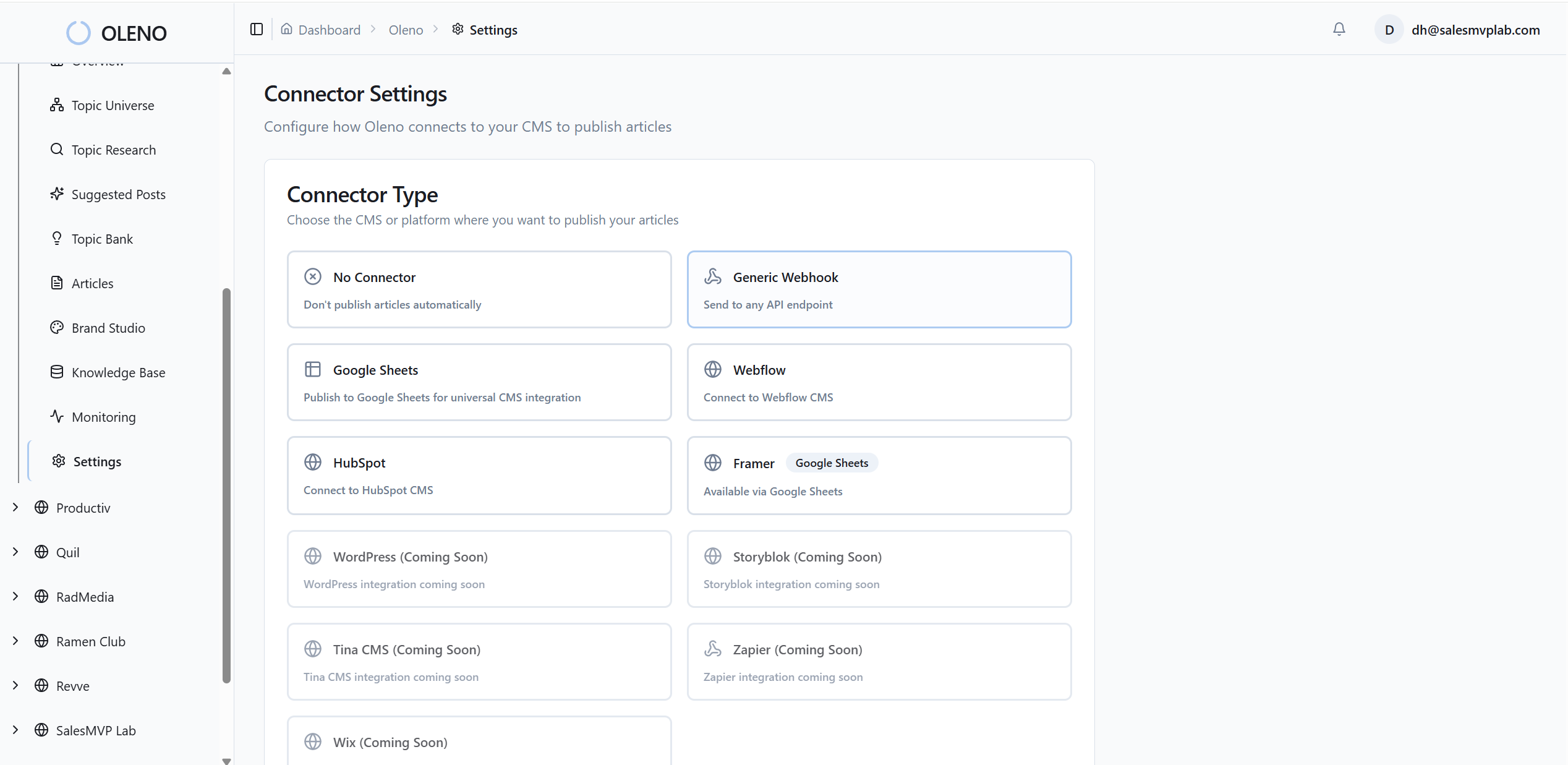
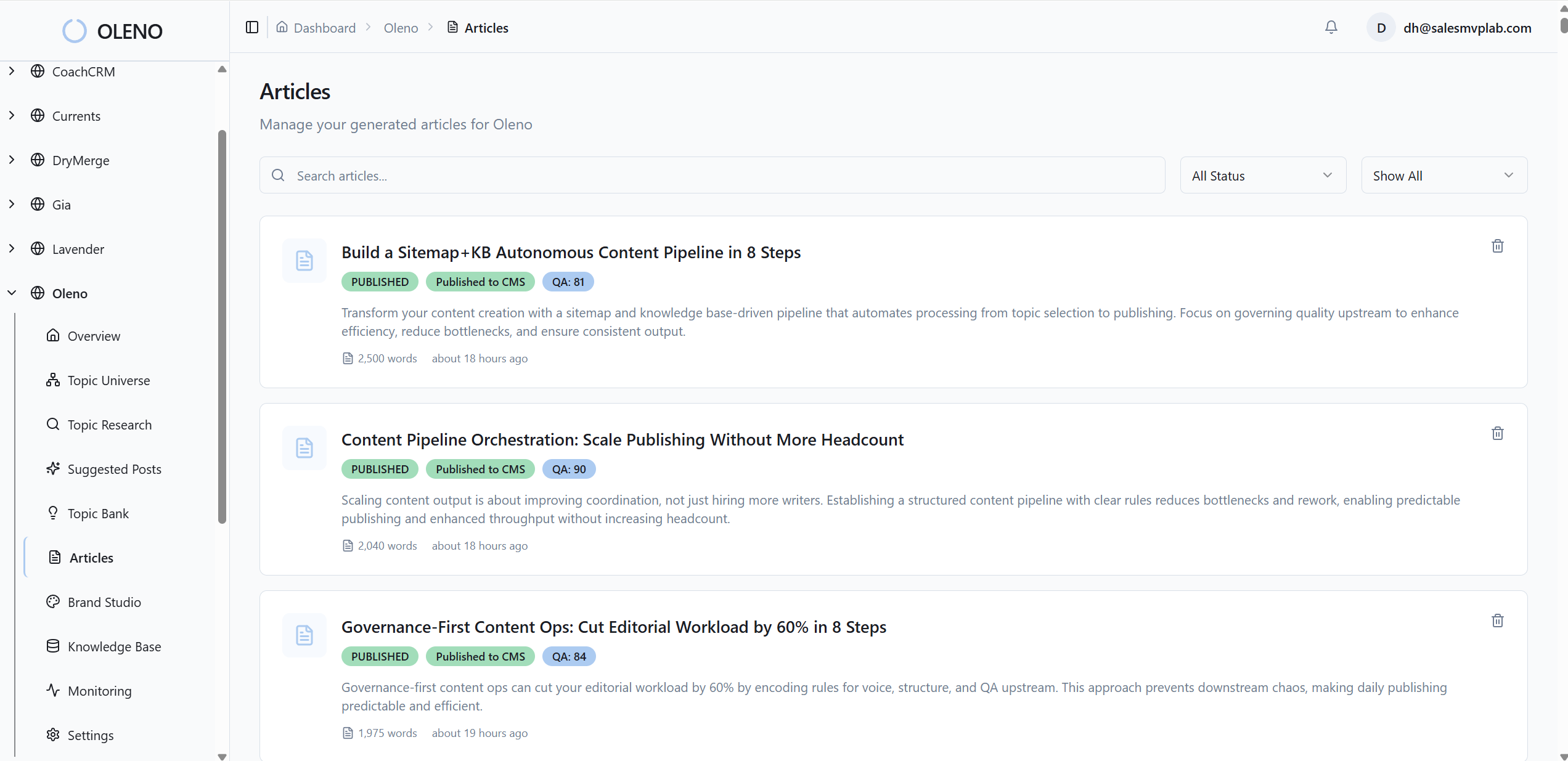
The last mile is deterministic. Internal links are injected from a verified sitemap with exact-match anchors. Schema is generated programmatically (Article, FAQ, BreadcrumbList). An automated QA gate checks structure, tone, information gain, visuals, and snippet readiness against 80+ criteria before publishing. Connectors push clean HTML to WordPress, Webflow, or HubSpot with duplicate prevention and field mapping. Oleno isn’t trying to be an analytics suite. It’s the execution engine that makes “publish-ready” the default.
If you’re ready to move from tool-juggling to governed outcomes, let the system carry the load. Try Oleno For Free.
Conclusion
Most teams don’t lose because they write slowly. They lose because the work is fragmented. When you replace keyword lists with a topic map, enforce information gain before drafting, and let rules handle links, schema, visuals, and QA, content starts compounding. That’s the quiet advantage. Fewer fire drills. More authority, built on purpose.
About Daniel Hebert
I'm the founder of Oleno, SalesMVP Lab, and yourLumira. Been working in B2B SaaS in both sales and marketing leadership for 13+ years. I specialize in building revenue engines from the ground up. Over the years, I've codified writing frameworks, which are now powering Oleno.
Frequently Asked Questions